Funeral Costs & Options in Arizona: 2026 Guide
End of Life Planning Guide | By Sara Marsden-Ille | Updated April 2026
Planning a funeral in Arizona — whether for yourself or a loved one — can feel overwhelming, especially when you’re also navigating grief and urgent decisions. This comprehensive guide explains what funerals actually cost in Arizona, how to compare burial and cremation options, how to navigate Arizona’s funeral laws, and where to find help if money is tight.
With average traditional funerals in Arizona running close to $8,000 and direct cremation available from as little as $950, understanding your options can save thousands of dollars and bring peace of mind.
Key Takeaways – Funeral & Cremation Planning in Arizona
- Direct cremation in Arizona starts from $950 (DFS Memorials Phoenix); the statewide average is $1,490, while a full-service traditional funeral averages $7,784.
- Arizona has a 24-hour mandatory cremation waiting period; the legal next of kin or authorizing agent must sign a cremation authorization form before cremation can proceed.
- Green (natural) burial is available in Arizona, typically costing $1,500–$4,000; aquamation is legal but currently has no active providers in the state.
- Preneed funeral plans in Arizona can be funded through a trust account, a funeral insurance policy, or a Payable-on-Death (POD) bank account.
- Home burial is legal on private property in Arizona, subject to local county zoning regulations and compliance with the Arizona Department of Health Services.
- Death certificates are available from the Office of Vital Records in Phoenix at $20 for the first certified copy.

Quick Facts – Funeral & Cremation Costs in Arizona (2026)
The table below provides an at-a-glance overview of what families can expect to pay for common funeral and cremation services in Arizona in 2026. Prices are sourced from Funeralocity and DFS Memorials data.
| Service Type | Average Cost | Affordable Option |
|---|---|---|
| Direct Cremation (DFS Memorials) | From $950 | Phoenix $950 / Tucson $995 |
| Direct Cremation (State Avg.) | $1,490 | Shop locally for best value |
| Full-Service Cremation | $5,372+ | Includes ceremony & viewing |
| Affordable Burial | $4,480 | Simple service & casket |
| Full-Service Traditional Funeral | $7,784+ | Viewing, service & burial |
| Green (Natural) Burial | $1,500–$4,000 | Biodegradable casket/shroud |
Prices are approximate 2026 averages and will vary by provider and location. Cemetery costs (plot, marker, opening/closing) are additional. Always request a General Price List (GPL) from any funeral home you are considering.
Understanding Your Funeral & Cremation Options in Arizona
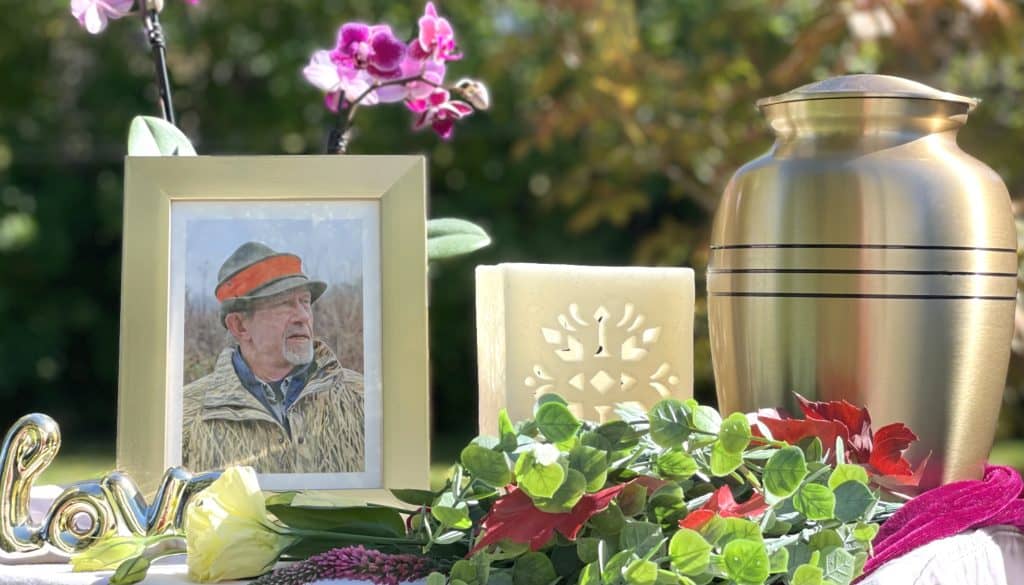
When making funeral or cremation arrangements in Arizona, it helps to understand the main options available. There are around 190 funeral homes and cremation providers in Arizona, concentrated in Phoenix, Mesa, and Tucson. Choosing the right provider is one of the most important decisions you will make.
Arizona has one of the highest cremation rates in the nation, with over 75% of families now choosing cremation. This has led to a competitive market with many cremation-focused providers offering affordable packages. Whether you are planning a traditional full-service funeral, a memorial service with cremation, or a simple direct cremation, it is advisable to consult with more than one provider and compare their General Price Lists.
The main types of service you may consider include:
Traditional full-service funeral with burial — This includes a viewing or visitation, a funeral ceremony, a hearse, a casket, embalming, and burial in a cemetery. This is typically the most expensive option, averaging $7,784 or more in Arizona before cemetery costs are added.
Full-service cremation with ceremony — This combines a memorial or funeral service with cremation. It may include embalming for a viewing, use of the funeral home’s chapel, staff coordination, and the cremation itself. Costs average $5,372 or more in Arizona.
Memorial service cremation — The cremation is performed first, and a memorial service is held afterward with the urn present. This is less expensive than a full-service cremation with viewing and typically costs between $2,500 and $4,500.
Direct cremation — The simplest and most affordable cremation option. No ceremony, viewing, or embalming is involved. The average cost in Arizona is $1,490, though DFS Memorials providers offer direct cremation from $950 in Phoenix.
Before contacting funeral directors, it can be helpful to write down exactly what you require so you are not confused when making inquiries. The Arizona State Board of Funeral Directors and Embalmers publishes a Consumer Guide pamphlet that state law requires funeral establishments to provide to you. It clearly outlines your rights as a consumer.
Be aware that Service Corporation International (SCI) operates several funeral and cremation brands in Arizona, including Dignity Memorial, Neptune Society, National Cremation Society, Advantage Funeral, and Cremation Services. It is important to know whether you are dealing with a large corporate chain, as their prices tend to be higher than independent, family-owned providers.
For tips on what questions to ask and what to prepare, visit our Planning Ahead page.
Direct Cremation in Arizona

A direct cremation is the least expensive funeral disposition option in Arizona. It is a straightforward service where the deceased is collected from the place of death, required paperwork is completed, and the cremation is performed after the mandatory 24-hour waiting period. No viewing, visitation, or funeral ceremony takes place at the funeral home.
A typical direct cremation package in Arizona includes: basic services of the funeral director, collection of the deceased (within a standard service area), refrigerated storage until cremation, completion and filing of all required documents and permits, a basic cremation container, the cremation itself, and a temporary urn for returning the ashes to the family.
The statewide average cost for a direct cremation in Arizona is $1,490. However, prices vary significantly between providers. DFS Memorials offers direct cremation from $950 in Phoenix and $995 in Tucson — well below the state average. Corporate chains such as the Neptune Society (an SCI brand) typically charge $1,700 to $2,600 for essentially the same service.
Many families choose direct cremation because it separates the cremation process from any memorial observance. This “cremation first, memorial later” approach gives families more time and flexibility to plan a personalized celebration of life at a time and location of their choosing — whether at a church, a park in the Sonoran Desert, or a family home.
Additional fees you may encounter beyond the base package include: extra mileage for collection outside the standard service area, a residential collection surcharge (which may require additional assistance), removal of a pacemaker or other combustible medical devices, and a bariatric (overweight) cremation surcharge. Third-party fees for the cremation permit and death certificates are also typically separate.
If you are concerned about funeral costs, Arizona’s DFS Memorials providers offer low-cost cremation and affordable burial services. All DFS Memorials providers guarantee to offer a ‘best value’ direct cremation package.
For a detailed comparison of cremation prices by city in Arizona, visit our Guide to Cremation Costs in Arizona.
Funeral & Cremation Laws in Arizona

Arizona funeral law is governed by the State Board of Funeral Directors and Embalmers and codified primarily in Arizona Revised Statutes (A.R.S.) Title 32, Chapter 12 and Title 36, Chapter 3. Understanding some key legal requirements can help you make informed decisions and protect your rights as a consumer.
Authorizing agent: Arizona law designates an “authorizing agent” who has the legal right to make funeral arrangements and decisions about the disposition of remains. This is typically the surviving spouse, next of kin, or a person named in a healthcare power of attorney. If the deceased was legally separated from their spouse or had a pending divorce petition, the spouse may not serve as the authorizing agent.
Cremation authorization: A cremation may only be performed once a Cremation Authorization Form has been signed by the legal next of kin and the county medical examiner or coroner has issued the cremation permit. If there are multiple next of kin (for example, siblings), all must agree to and sign the cremation authorization.
Waiting period: Arizona mandates a 24-hour waiting period after death before a cremation can proceed. In practice, it usually takes about 3 days to complete all necessary paperwork and authorizations.
Embalming: Embalming is not required by Arizona state law if the deceased is refrigerated, cremated, or buried within 24 hours. However, a funeral director may recommend embalming if a viewing or open-casket ceremony is planned, or if the funeral will be delayed. Note that not all funeral establishments in Arizona are required to have refrigeration facilities, so this may be a consideration when selecting a provider.
General Price List (GPL): Arizona law, consistent with the FTC Funeral Rule, requires funeral establishments to provide you with a General Price List, a casket price list, and an outer burial container price list. If you proceed with their services, they must provide a statement of funeral goods and services listing everything you have selected. Review your contract carefully before signing, as once signed, you are obligated to pay for the services requested.
Cash advances: Items provided by third parties (such as flowers, obituary notices, death certificates, and celebrants) are referred to as “cash advances” and typically must be paid for upfront. These are separate from the funeral home’s own charges.
For more information about cremation authorization requirements, visit our guide on Understanding Cremation Laws.
Caskets & Alternative Containers in Arizona
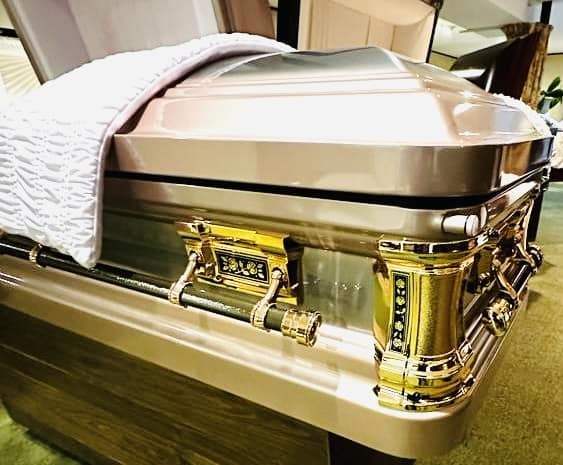
A casket is not required by Arizona state law for burial, and only a “rigid, combustible container” is required for cremation. Most crematories and cemeteries will have their own minimum requirements, so it is important to check with them, but do not feel pressured into purchasing a casket if it is not legally required.
Under the Federal Trade Commission’s Funeral Rule, you have the right to purchase a casket from a third-party retailer, and the funeral home must accept it without charging a surcharge. This can save considerable money, as funeral homes have historically marked up caskets by as much as 500%.
Many online casket retailers ship across the United States and offer next-day delivery directly to your chosen funeral home. Standard caskets from reputable retailers can be found for as little as $995. Even Costco and Walmart sell caskets online. Just be sure to deal with a retailer that provides excellent customer service and timely delivery.
For cremation, a basic cremation container (usually reinforced cardboard or plywood) is included in most direct cremation packages. Some funeral homes also offer rental caskets for families who wish to hold a viewing or funeral service before the cremation takes place.
A casket, whether rubber gasket-sealed or not, will not prevent natural decomposition. If a funeral provider implies otherwise, they are being misleading.
Cemeteries & Burial Options in Arizona
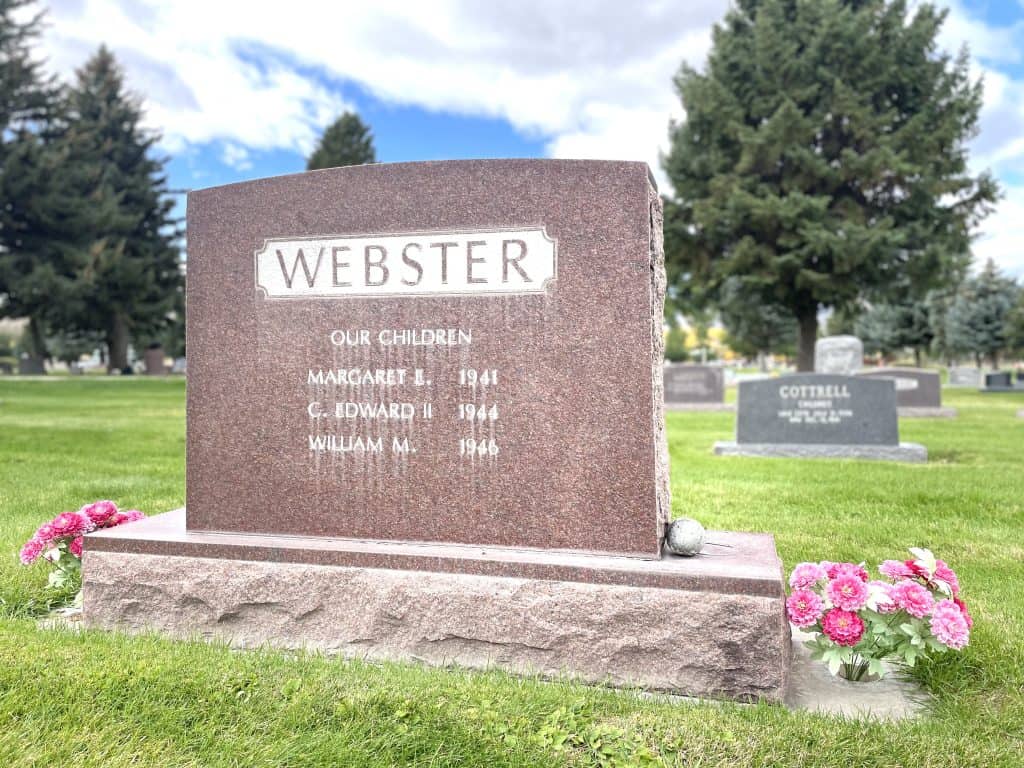
Arizona has a variety of cemeteries ranging from large municipal and faith-based cemeteries in Phoenix and Tucson to smaller rural cemeteries across the state. All cemeteries will have specific regulations governing the burial plots they manage, including requirements for a minimum container (casket) and often a grave liner or vault to protect the plot’s structural integrity and prevent the gravesite from collapsing over time. Already own a plot you no longer need? See our guide to buying and selling cemetery plots.
Some cemeteries may also have restrictions on the type of grave marker that can be erected and the time frame for its installation after burial. Many Arizona cemeteries also offer above-ground interment in mausoleums and cremated remains interment in columbarium niches.
Home burial in Arizona: Arizona law does permit burial on private property, subject to local county zoning regulations. There is no specific state statute prohibiting home burial, but you must comply with any applicable local health and zoning ordinances. A death certificate and burial-transit permit are required regardless of where the burial takes place. It is advisable to check with your county health department and planning office before proceeding.
Green Burial & Eco-Friendly Options in Arizona

Interest in green and natural burial options is growing in Arizona. A green burial typically involves the use of a biodegradable casket or shroud, no embalming chemicals, and burial in a way that allows the body to return to the earth naturally. In Arizona, green burial costs typically range from $1,500 to $4,000, depending on the cemetery and the type of container used.
While Arizona does not yet have a Green Burial Council-certified conservation cemetery, several cemeteries in the state offer green or natural burial sections. Additionally, Arizona’s allowance for home burial on private land makes it possible for families to arrange a green burial on their own property, subject to local zoning rules.
Aquamation (alkaline hydrolysis): Water cremation, also known as aquamation or resomation, is legal in Arizona. However, as of 2026, we are not aware of any active funeral service providers in the state currently offering this service. Aquamation uses water and an alkaline solution to reduce the body to bone fragments, resulting in a significantly lower carbon footprint than flame cremation. As demand grows, providers are expected to begin offering this service in Arizona.
Human composting (natural organic reduction): As of 2026, human composting is not yet legal in Arizona. Only a handful of states have legalized this process so far.
For more information about natural burial options, visit our Green Funerals Section and our Directory of Green Burial Sites to find a green cemetery near you.
Pre-Planning a Funeral or Cremation in Arizona

Pre-planning your funeral or cremation in Arizona is one of the most considerate things you can do for your family. It removes the burden of difficult decisions during an emotional time and can help lock in current prices before costs rise further.
In Arizona, you can fund a preneed funeral plan in several ways: by placing funds into an irrevocable trust account held by the funeral home, by purchasing a funeral insurance policy through a licensed insurance agent, or by setting aside funds in a Payable-on-Death (POD) bank account. Each method has different implications for Medicaid eligibility and asset protection, so it is worth understanding the differences.
Arizona preneed law requires funeral providers who sell preneed contracts to comply with state regulations governing the safeguarding and accounting of trust funds. Consumers should ensure they receive full documentation of any preneed agreement and understand the cancellation and refund terms before signing.
If you are pre-planning a cremation, you can also pre-sign the required cremation authorization forms. This makes things much easier for your surviving family when the time comes, as they will not need to navigate the authorization process during their grief.
For more information, read our guide on Putting Money in a P.O.D. Account to Make Funeral Provisions.
If you are a snowbird who winters in Arizona, this Guide to Funeral Planning if You Winter Away From Home will help you prepare.
What to Do if a Death Occurs Away From Home
Dealing with the death of a loved one is distressing enough, but it can be even more difficult if the death occurs while they are away from home. As we are an increasingly mobile society — and Arizona attracts many seasonal visitors, retirees, and travelers — this situation arises more often than many families expect.
If a loved one dies away from Arizona, you will need to decide whether to ship the deceased home for burial or to have a cremation performed at the place of death and ship the cremated remains back to Arizona. A local funeral director at the place of death can coordinate with your chosen Arizona funeral home to manage the transfer.
Domestic funeral shipping (transporting a body within the United States) can cost from $3,000, while international repatriation can start at around $6,900. These costs include embalming, a shipping container, airline cargo fees, and coordination between funeral homes.
Read our section on ‘What to Do When a Loved One Dies Away From Home‘ for more information and guidance.
If you regularly travel for work, pleasure, sports, or snowbirding, you may wish to consider the great-value Travel Protection Plan. This plan costs just $450 for an individual for lifetime protection against the costly expense of returning a body home if a death occurs 75 miles or further from your residence. It also provides global coverage.

Visit our article on Travel Protection: Your Guide to Affordable Funeral Shipping, or click on the image above to enroll today.
End-of-Life Support & Death Doula Services in Arizona
Planning for end-of-life care in Arizona goes beyond legal documents and funeral arrangements — it is about ensuring comfort, clarity, and dignity during one of life’s most vulnerable transitions. End-of-life support professionals, often known as death doulas or end-of-life doulas, provide non-medical, holistic guidance to individuals and families before, during, and after death.
Their services may include advance care planning, emotional and spiritual support, legacy projects, family advocacy, bedside presence, and grief support — always tailored to the resources and care options available in Arizona. Whether working alongside hospice or supporting families independently, death doulas help reduce fear, ease decision-making, and ensure that a person’s final wishes are understood and honored.
Families can explore local end-of-life doulas and support services through our Arizona Death Doula Directory.
Veterans Funeral Benefits & Cemeteries in Arizona
Arizona honors its veterans with several dedicated burial options. Eligible veterans and their spouses can receive burial benefits through the U.S. Department of Veterans Affairs, which may include a free burial plot in a national or state veterans cemetery, a government-furnished headstone or marker, a burial flag, and a Presidential Memorial Certificate.
National cemeteries in Arizona:
National Memorial Cemetery of Arizona (Phoenix) — Located at 23029 N. Cave Creek Road, Phoenix, AZ 85024. This is Arizona’s primary VA national cemetery and is open for new interments, serving the greater Phoenix metropolitan area.
Prescott National Cemetery (Prescott) — Located at 500 Highway 89 North, Prescott, AZ 86301. This historic cemetery is generally closed to new first interments but may accept subsequent interments in existing gravesites.
State veterans cemeteries: Arizona also operates the Arizona Veterans Memorial Cemetery at Camp Navajo in Bellemont (near Flagstaff), which provides burial services for veterans and eligible family members in northern Arizona. A second state veterans cemetery is located in Sierra Vista, serving southern Arizona.
In addition to cemetery benefits, veterans may be eligible for a VA burial allowance to help cover funeral and burial costs. The amounts vary depending on whether the death was service-connected. Contact your local VA office or visit the VA Burials & Memorials website for current eligibility information.
Body Donation & Whole-Body Gifts in Arizona
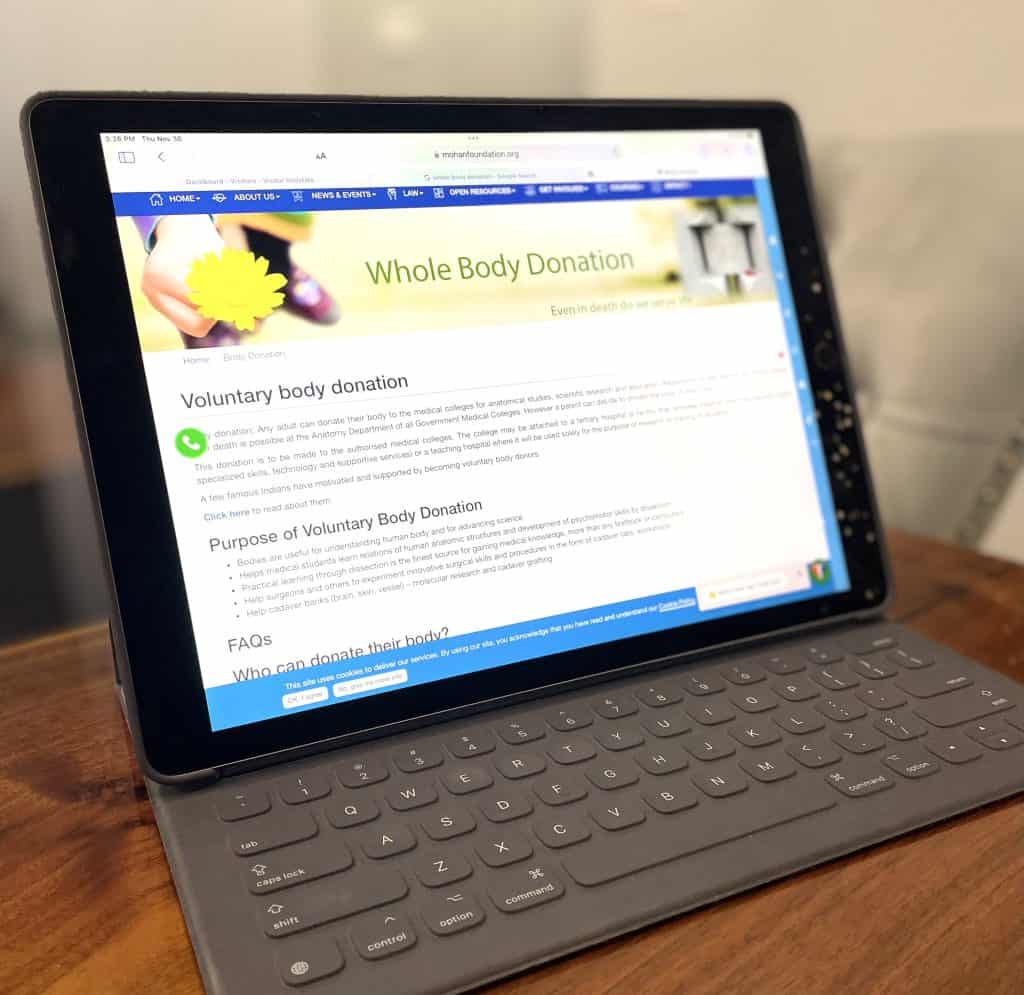
Donating your body to science is an option in Arizona that can also help offset funeral costs, as most body donation programs cover transportation and cremation after studies are completed. The cremated remains are typically returned to the family.
Key body donation programs in Arizona include:
University of Arizona College of Medicine (Tucson) — The Willed Body Program accepts whole-body donations for medical education and research. Donors must register in advance, and there may be specific acceptance criteria at the time of death.
Midwestern University (Glendale) — This medical university also operates an anatomical donation program serving the Phoenix metropolitan area.
There are also national organizations such as Science Care and MedCure that accept body donations in Arizona. However, you should be aware that an anatomical donation may not always be accepted at the time of death (due to factors such as the manner of death, certain medical conditions, or program capacity), so it is advisable to have a provisional funeral plan in place.
For more information about body donation, visit our guide on Donating a Body to Science.
Scattering Ashes in Arizona
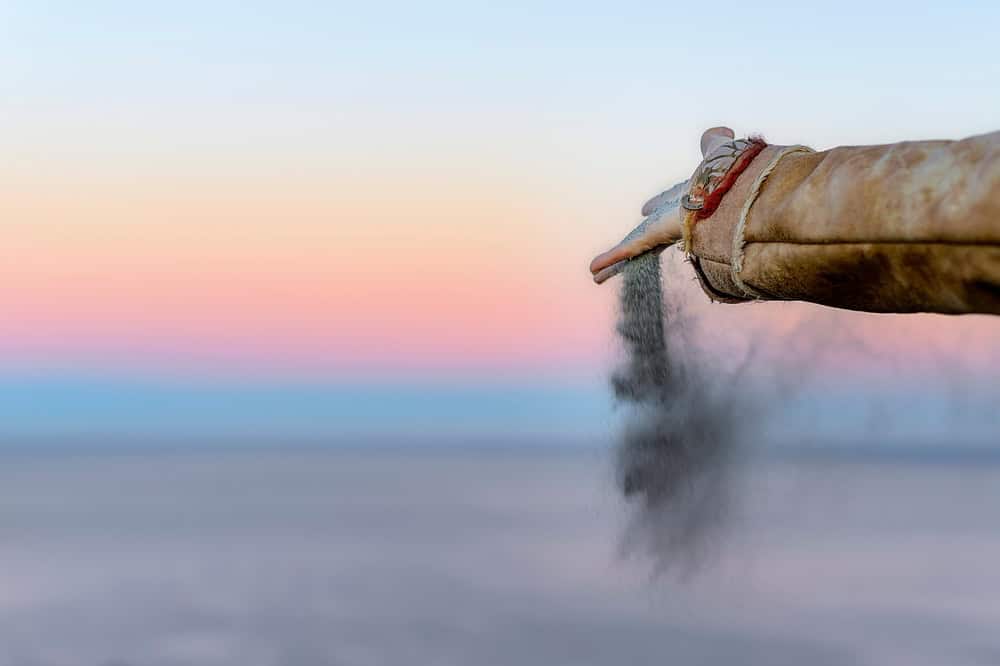
With over 75% of Arizona residents choosing cremation, ash scattering has become an increasingly popular memorial choice. Arizona’s dramatic landscapes — from the Sonoran Desert to the Grand Canyon, the Superstition Mountains, and the red rocks of Sedona — offer extraordinary locations for a meaningful scattering tribute.
You can generally scatter cremated remains on public land in Arizona without a specific permit, though it is courteous to scatter discreetly and away from developed areas or waterways. If you wish to scatter remains on your own private property, you are free to do so. For other private lands (such as golf courses or resorts), you must obtain the landowner’s permission.
National parks and federal lands: The National Park Service generally permits scattering in areas away from trails, waterways, and facilities, but some parks (including Grand Canyon National Park) may require a special use permit. Always contact the specific park in advance to confirm their requirements.
Aerial scattering: Several companies in Arizona specialize in aerial ash scattering over the desert and the Grand Canyon. You must comply with FAA-approved dispersion routes. Prices start at around $400 for basic desert scattering and around $550 for the Grand Canyon area, with additional costs for services such as witness flights.
To read more about how and where to scatter ashes, visit our section on Ash Scattering.
Death Certificates in Arizona

In Arizona, a death certificate must be filed with the local registrar within 72 hours of the death. The attending physician or medical examiner completes the medical portion, and the funeral director files the completed certificate with the county.
Certified copies of death certificates can be obtained from the Office of Vital Records (OVR), Arizona Department of Health Services, located at 1818 West Adams, Phoenix, AZ 85007. The cost is $20 for the first certified copy. You can also order copies through the county recorder’s office or through VitalChek (an authorized online ordering service).
It is advisable to order multiple copies of the death certificate, as you will need them to close bank accounts, settle insurance claims, transfer property titles, file probate, and notify government agencies. Most families find that 5 to 10 copies are sufficient, though complex estates may require more.
Financial Assistance With Funeral Costs in Arizona
If you are struggling to cover the cost of a funeral or cremation in Arizona, there are several sources of assistance to explore.
County indigent burial programs: Most Arizona counties have a budget to cover basic funeral or cremation costs for residents who are on welfare or who lack the funds to pay for a disposition. The amounts are quite limited — typically $485 for a direct burial and $385 for a direct cremation, paid directly to the funeral establishment. Eligibility requirements are strict, and you should contact your county’s Social Services Department or the County Public Fiduciary to inquire.
Social Security lump-sum death benefit: If the deceased qualifies, a one-time payment of $255 is available through the Social Security Administration. Your funeral director can usually assist with this claim.
FEMA funeral assistance: In cases where a death is related to a federally declared disaster, FEMA may provide up to $9,000 in funeral assistance per deceased individual.
Veterans’ burial benefits: Eligible veterans may receive a VA burial allowance and free burial in a national or state veterans cemetery. Contact your local VA office for details.
Body donation: Donating a body to a medical school or accredited research program typically covers all transportation and cremation costs. The cremated remains are returned to the family after studies are completed.
Some funeral service providers in Arizona also offer discounts for hospice patients or may offer payment plans to help families manage costs over time.
Visit our Guide to Social Assistance Funeral Programs for more information about financial help with funeral expenses.
Filing a complaint: If you have a complaint about funeral services or products you have purchased, first attempt to resolve the matter directly with the funeral home. If this is unsuccessful, you can file a written complaint with the Arizona State Board of Funeral Directors and Embalmers at 1400 W. Washington, Suite 230, Phoenix, AZ 85007. The Funeral Consumers Alliance of Arizona (P.O. Box 12661, Tucson, AZ 85732, phone 520-858-5447) also actively advocates for consumer rights.
Sending flowers to a funeral in Arizona? Our funeral flowers guide covers what to send, typical costs, card messages, and how to make sure flowers reach the funeral home in time.
Resources:
DFS Memorials – Save on Cremation Costs in Arizona
Funeral & Cremation Planning Guide – Phoenix


