As the cost of traditional funerals continues to rise, many families in Michigan are turning to cremation as a more affordable and flexible alternative. Different cremation options are available to families, and deciding what type of cremation service is required is important.

Listed below is a breakdown of average & best direct cremation prices by area in Michigan.
| City | AVERAGE PRICE | BEST PRICE | CALL NOW – DFS |
|---|---|---|---|
| Ann Arbor | $2,513 | $1,199 | (269) 254-9525 |
| Dearborn | $1,710 | $1,099 | |
| Detroit | $1,194 | $1,099 | |
| Grand Rapids | $1,893 | $1,099 | (616) 348-8474 |
| Kalamazoo | $2,645 | $1,099 | (269) 254-9525 |
| Lansing | $2,320 | $1,099 | (517) 366-5499 |
| Livonia | $2,543 | $1,099 | |
| Warren | $2,222 | $1,099 |
[Average prices from online GPLs & Funeralocity data ~ DFS prices from partner locations in MI.]
Families seeking affordable cremation options can compare providers through the DFS Memorials network, which connects families with licensed cremation providers offering transparent pricing.
The most economical service is a direct cremation, in which the deceased is taken into the care of a funeral home/cremation provider, all necessary legal paperwork is completed, and the body is cremated. There is generally no viewing or service with a direct cremation.
What are the different types of cremation service options and costs in Michigan?

There are 3 main types of cremation available to families in Michigan, and we have outlined the differences below.
Direct Cremation – a direct cremation involves the immediate cremation of the deceased without a formal funeral service being held. This basic cremation service has become popular for its simplicity and cost-effectiveness. In Michigan, the average cost for an affordable direct cremation is $2,264.
However, it is crucial to note that prices can vary significantly by location, with major metropolitan areas like Detroit and Grand Rapids generally offering lower costs than rural regions.
This discrepancy can be attributed to increased competition, higher population density, and greater availability of cremation facilities.
Cremation Memorial Service – a cremation memorial typically refers to the cremation before a memorial service is held. The memorial service can be held at the funeral home, chapel, church, place of worship, or at any chosen location. Some families today choose to hold memorial services at community venues.
The memorial service will usually be held with the cremation urn present as a focal tribute to the deceased. However, memorial services are also held without the cremated remains present.
It is not as simple to give an overview of the costs of cremation memorial services, as the ‘variable’ of the memorial service will dictate the final cost. Much will depend on whether the funeral home and other ancillary services conduct the memorial service. Such as the type of cremation urn selected, flowers, photographs, and other tribute materials.
As a guide, a Cremation Memorial Service in Michigan can cost between $1,875 – $5,249.
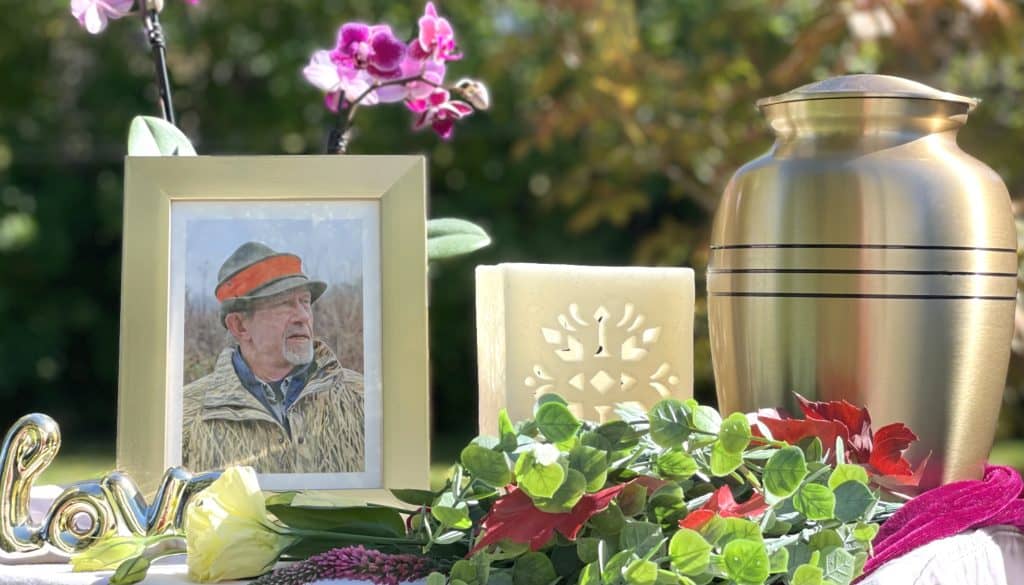
Full-Service Cremation Funeral – This type of service is a full-service funeral, with the cremation conducted after the service. Some families want to hold a visitation, wake, or formal funeral ceremony, even if they choose cremation.
A viewing, visitation, or vigil can be held at the funeral home. Family and friends can gather for a funeral service, typically with the deceased present. Following the funeral ritual, the deceased is transferred to the crematory for cremation, and the cremation ashes are then returned to the family.
This type of cremation service is like a traditional funeral service, except that the deceased is cremated after the ceremony and services, rather than transferred to the cemetery for burial.
This option enables a family to have all the traditional funeral rituals without the additional expense of a cemetery plot. Or a family may have a cemetery plot where they wish to inter the cremated remains.
As a guide, the average price for a Full Service Cremation Funeral in Michigan is $6,550*.
Understanding average cremation costs in Michigan today?

As discussed, cremation service costs vary by service type and provider. So, quoting “average” costs can be difficult. One funeral home can charge $1,095 for direct cremation, while another charges $2,543.
They are both offering the exact same service. Meaning the higher end of the pricing spectrum can skew an “average” price for a direct cremation.
Summary – Cremation Options & Costs
- Cremation services have gained popularity as cremation offers a much more affordable death care alternative. Whether the cost is the driving factor, or for those families and individuals who want a simple, flexible, and more creative option.
- Direct cremation offers families an extremely cost-effective option to manage an immediate death or preplan for a simple cremation.
- Choosing cremation allows a family to personalize memorialization. There are many options for conducting a memorial service and creating memorial artifacts from cremated remains.
Direct cremation
Pros:
- Offers the most economical cremation option.
- Can eliminate many ancillary funeral expenses.
- Can be arranged without visiting the funeral home.
- It is easy to make arrangements from out-of-state & have cremated remains shipped to the family for a memorial service elsewhere.
- Allows for the disposition of a body to be handled in a quick yet dignified manner. And enable the family to postpone a funeral memorial service until later.
Cons:
- May require the family to submit online forms with the information required to process the cremation. This often helps a direct cremation provider collate data and manage staff arrangement time/costs.
- The cremated remains are usually returned in a temporary cardboard container unless you choose to add a cremation urn to your direct cremation service package.
Cremation Memorial Service
Pros:
- A family can still gather for a ceremony, but since cremation is conducted first, the time frame for a memorial service is more flexible.
- Memorial services can be uniquely personalized, allowing the family to be creative in designing the service.
- Offers a more affordable funeral celebration/ritual event.
Cons:
- As Memorial services, or a Life Celebration Memorial, can get quite creative, the ancillary costs for the memorialization can easily escalate.
Traditional Cremation Service

Pros:
- A funeral service is held at the time of passing and can help families to say goodbye.
- It will cost less than a traditional burial service.
- More funeral homes offer rental caskets for cremation services to help reduce casket costs.
Cons:
- As you are conducting a traditional service with the help of a funeral director, it can be easy to find that ancillary expenses can add up.
- A traditional cremation service is generally held fairly soon after the deceased passes. A direct cremation or cremation memorial can enable the family to defer the need for immediate services.
What Can You Do with Cremation Ashes in Michigan?
After a cremation service, a family has several options for what to do with the cremated remains. This may depend on their preferences and beliefs or the costs associated with cremation memorialization choices.
Listed below are the main options for you to consider:
1. Keep the ashes at home: Many families choose to keep the ashes in an urn or a special container at home. This allows them to create a comforting presence and keep their loved ones nearby. Some families even choose to display the ashes in a special area or create a memorial space.
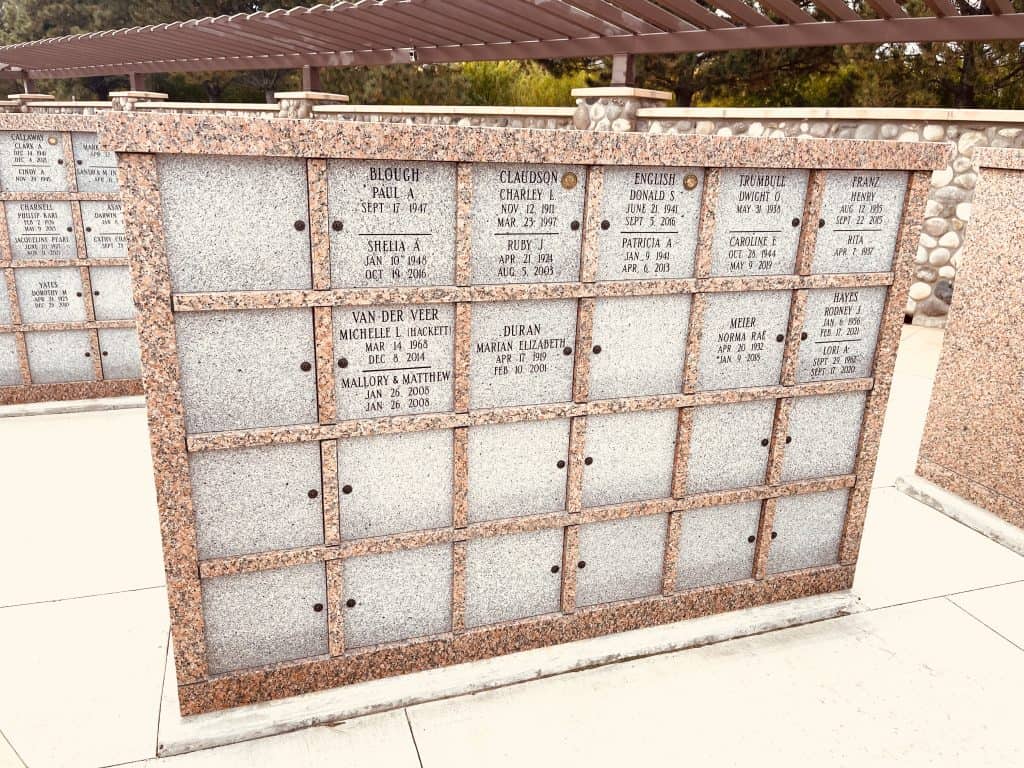
2. Bury the ashes: Families can choose to bury the ashes in a cemetery or a designated burial plot. This provides a more permanent resting place and allows for future visits and remembrance. Aside from cemetery burial plots, more cemeteries now offer dedicated cremation columbarium niches and bespoke memorial scattering gardens. Some gardens offer small plaques or benches to create a long-lasting tribute.
3. Scatter the ashes: Scattering the ashes can be a meaningful way to honor the deceased’s memory. Ash scattering is now a popular choice for many families. Scattering cremation ashes can hold great symbolism for many people. It represents releasing and returning a loved one’s physical remains to the elements, freeing their spirit. The act of scattering ashes can symbolize letting go, saying goodbye, and allowing the deceased to become part of the natural world.
These are just a few suggestions, and they ultimately depend on the family’s wishes and cultural or religious practices. It may be helpful to consult a funeral director, who can provide guidance and support as you decide.
Remember that there is no timeframe for when or how to memorialize a loved one. So, if you are unsure, do not make a rushed decision.
What Michigan Legislation Governs the Requirements for Cremation Arrangements?
In Michigan, the laws governing cremations are primarily outlined by the Michigan Board of Mortuary Science. The Board regulates the requirements for the cremation process to ensure it is conducted safely and legally.
The main key points are:
Authorization: Before a cremation can occur, the person with the legal authority to decide on the deceased’s remains must provide written authorization. This is generally referred to as the Cremation Authorization.
Permit for disposition: A permit for disposition of the body is required for cremation. This permit is issued by the local registrar or the state’s vital statistics office. The funeral home or crematory typically handles obtaining this permit.
Identification: Michigan law requires that the deceased be properly identified and tracked throughout the cremation process. This helps ensure that the correct remains are returned to the family.
Documentation: Detailed records must be maintained throughout the cremation process, including information about the deceased’s identity, the date and time of the cremation, and any medical devices or implants present.

Cremation container requirements: Michigan law does not require the use of a casket for cremation. Families can use a simple container made of combustible materials, such as a cardboard casket, or an alternative container specifically designed for cremation. The choice of container may depend on personal preference or any specific requirements set by the funeral home or crematory.
Crematory requirements: Crematories must meet specific standards and obtain the necessary permits and licenses to operate legally in Michigan.
Disposition of remains: After the cremation, the cremains must be properly handled in accordance with the wishes of the deceased or their authorized representative.
It’s important to note that these requirements may vary slightly by funeral home or crematory. It’s advisable to consult with a licensed funeral director or cremation provider to fully understand the legal requirements and procedures for cremation in Michigan.
Pre-Planning Cremation in Michigan
Pre-planning your cremation arrangements is one of the most meaningful gifts you can give your family. It removes guesswork during a painful time, legally protects your wishes, and can lock in today’s pricing.
Michigan Pre-Need Funeral Contracts
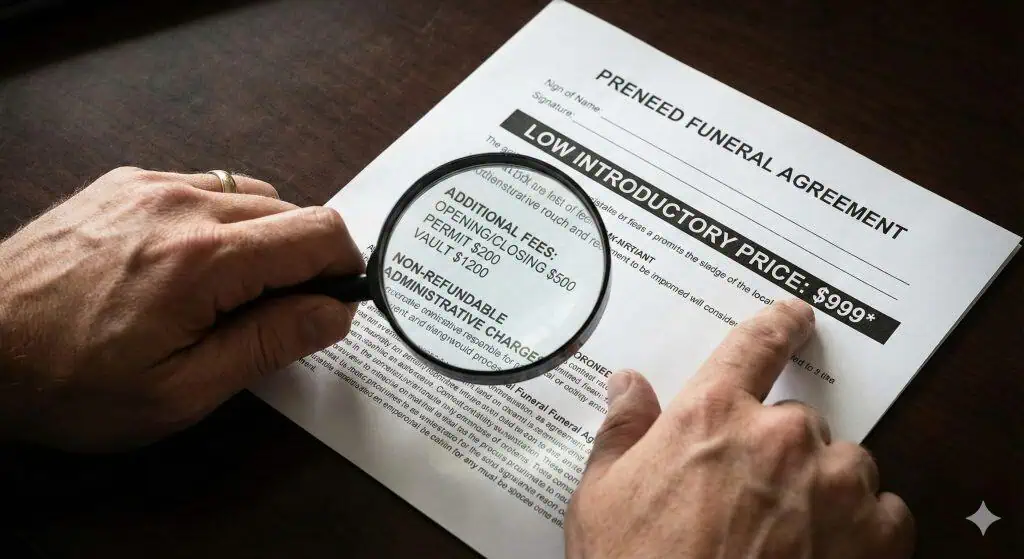
Michigan law regulates pre-need funeral contracts under the Michigan Prepaid Funeral and Cemetery Sales Act (Act 255 of 1986). Key protections include:
- All funds paid into a pre-need contract must be placed in a state-regulated trust account, or an insurance policy — the funeral home cannot simply pocket the money.
- You are entitled to a full refund (minus a small administrative fee) if you cancel within 30 days.
- Pre-need contracts are generally transferable if you move — important in a state like Michigan, where many retirees relocate between the Lower Peninsula, the U.P., and southern states.
- Upon death, the provider must account for all trust funds and deliver the agreed-upon services.
The Michigan Department of Insurance and Financial Services (DIFS) oversees pre-need funeral providers. You can verify a provider’s standing at michigan.gov/difs.
Expressing Your Wishes Without a Cremation Contract
You don’t need a formal pre-need contract to make your wishes known. Michigan residents can:
- Execute a written Disposition of Remains document specifying your preference for cremation, which has legal weight under Michigan law
- Include cremation preferences in your durable power of attorney for health care
- Write a letter of instruction (not legally binding, but practically powerful) outlining your wishes for services, scattering, and keepsakes
- Register your preferences with DFS Memorials at no cost
Do you have to employ a funeral director for a direct cremation? Can the family deal directly with the crematory?
By law, a licensed funeral director must oversee the final disposition of a body in Michigan. State law says that the “handling, disposition, or disinterment of a body must be under the supervision of a person licensed to practice mortuary science in this state.” (Mich. Comp. Laws § 700.3206.)
After filing the death certificate, the funeral director will obtain the necessary permits for transporting the body and for burial or cremation. In Michigan, the transport permit is called a “permit for disposition.” (Mich. Comp. Laws § 333.2848.)
How long does a cremation in Michigan take?
In Michigan, the medical examiner must sign the authorization for final disposition before any cremation can proceed (MCL 333.2848). Completing the legally required paperwork usually takes at least 24 hours. So, it is fair to say that a cremation usually takes 3-7 days. (Longer if there are any issues with consent or issuing a death certificate)
The deceased will be sheltered in refrigerated storage during this time. A direct cremation service package generally includes refrigeration for up to 10-14 days. If the funeral home must store the deceased for longer than expected, there may be an additional daily refrigeration fee.

The Cremation Process
The body is placed in a cremation chamber, also known as a retort. The chamber is heated to a high temperature (typically around 1,600 to 2,000 degrees Fahrenheit) using flames, gases, or a combination of both. This process reduces the body to bone fragments, which are then further processed into cremated remains or ashes.
After the cremation process is complete and the remains have cooled, the ashes are carefully collected from the chamber. Any metal or other non-combustible items, such as surgical implants or jewelry, are removed from the ashes. The ashes are processed to ensure that they are finely ground and free of any remaining fragments.
The processed cremation ashes are then placed in a temporary container or an urn, as chosen by the family or provided by the funeral home.
Green / Eco-Friendly Cremation (Alkaline Hydrolysis) in Michigan
Alkaline hydrolysis — sometimes called water cremation, aquamation, or green cremation — is an alternative to flame cremation that uses water and a chemical solution to dissolve the body. It produces a smaller carbon footprint than traditional cremation and is becoming more widely available.
Michigan law does permit alkaline hydrolysis as a legal form of disposition. While availability in Michigan is still limited compared to traditional cremation, it is increasingly offered in major metro areas. Ask DFS Memorials about providers in your area.
What is the least expensive cremation service?
Direct cremation is your least expensive cremation option. This is when cremation is carried out without a service or ceremony. It is a simple, dignified cremation of the deceased with minimal ‘fuss’ and at a minimal cost.
The cremated remains are returned to the next of kin after everything has been taken care of. A family can hold a memorial service if they wish, when they are ready, which can even be conducted at home for much less.
Direct cremation addresses the immediate need to arrange the deceased’s disposition. Still, it can also enable the family to defer the need for a memorial service or to craft their own bespoke, personalized ‘send off.’
Are there any additional fees for a low-cost cremation service package?

The service charge for a direct cremation is listed on the funeral provider’s General Price List. It should include the funeral director’s basic services, the collection and transfer of the deceased, the completion of the legal paperwork, and the cremation. It usually includes a simple cardboard cremation container and a temporary urn.
The funeral director will pay third-party fees to the local county to obtain the death certificate and pay for any permit charges. These fees are added to the direct cremation service fee.
In Michigan, the fee for a death certificate is $34.00. The funeral director must submit the death certificate to the Medical Professional within 5 days to certify the death. The Physician then has 5 days to sign off on the cause of death and return the form to the funeral director.
You may require more than one death certificate because you must simultaneously send them to multiple institutions, organizations, or government offices.
Most authoritative bodies that need evidence of death, such as a life insurance company, will require an original death certificate. Certified copies of a death certificate are usually available within ten days after the death.
Additional copies of a death certificate can be obtained from the Michigan Department of Health and Human Services.
There can also be additional charges if any of the following services are required:
- Residential collection
- Removal of a pacemaker
- Overweight surcharge (above 250 pounds)
- Family arrangement consultation
- Mailing of cremated remains
What about a “no-cost” cremation in Michigan?
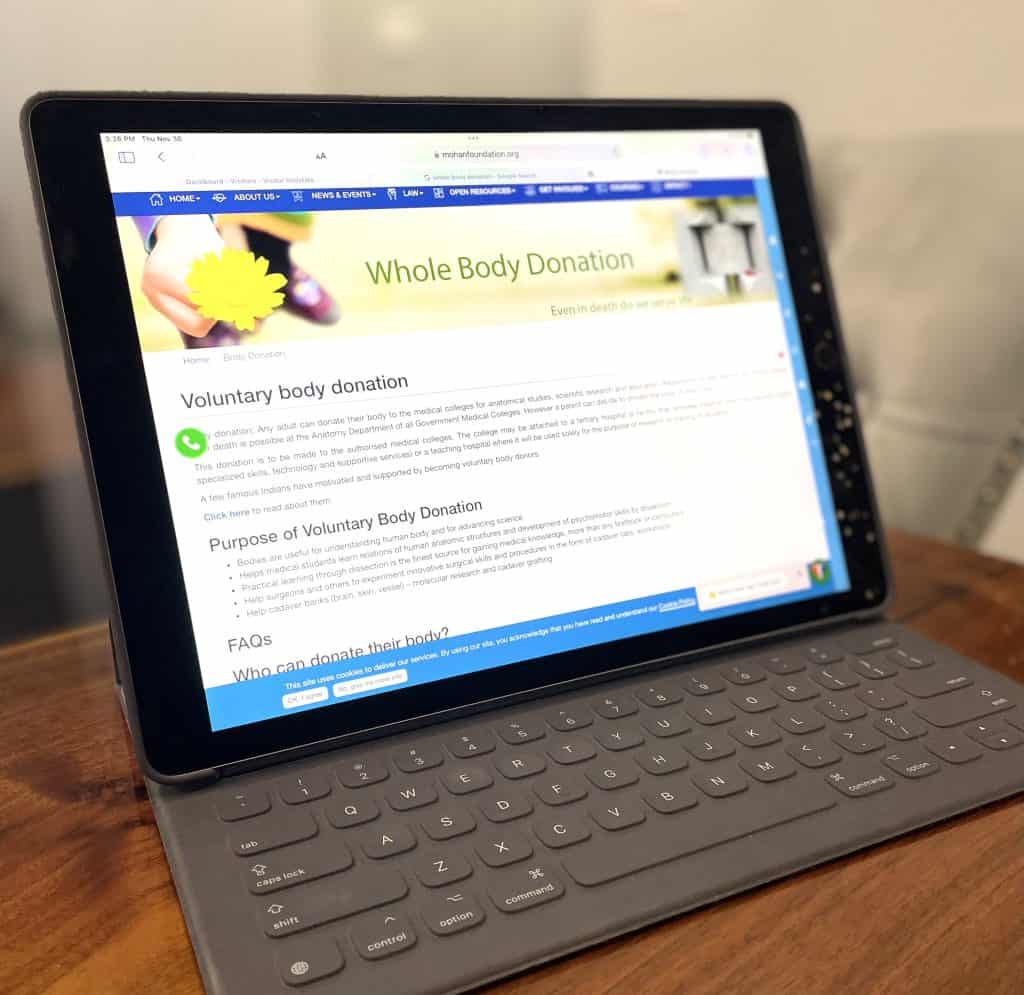
What is sometimes called a “free” cremation or “no-cost” cremation is a whole-body donation. Once the donation is performed, the remains are cremated free of charge. However, in some cases, there are costs associated with transporting the deceased and obtaining death certificates.
Donating your body to medical science has been an end-of-life choice for some time now. However, it has certainly gained more popularity in recent times. For many, it now seems a valuable disposition method, so it is commonly called an “anatomical gift.”
Several national organizations offer anatomical gift programs that allow you to donate your body to science to benefit future generations.
They arrange the collection of the deceased, medical donation, cremation of remains, and return of cremains to the family, usually at no charge. A number of Universities and Medical Schools in Michigan also operate whole-body donation programs.
Michigan State University, Willed Body Program, Division of Human Anatomy, Central Fee Hall, 939 Wilson Road, E206 East Lansing, MI 48824. Phone: (517) 353-5398. Fax: (517) 884-9540. Click here for more information on their website.
University of Michigan, Anatomical Donations Program, 3767 Medical Science Building II, 1137 Catherine St., Ann Arbor, MI 48109-5608. Phone: 734-764-4359. Fax: 734-763-6523. Click here to request a brochure from the university.
Wayne State University, School of Medicine, Department of Anatomy & Cell Biology, 540 E. Canfield Room 525, Detroit, MI 48201. Phone: 313-577-1188 or 313-577-1198. Fax: 313-577-6091. Click here for donor forms.
Do understand that an anatomical donation cannot always be accepted at the time of death. It can be affected by the needs of medical and research institutions and transportation services at the time.
Visit our Body Donation page to read further about this option.
Does Michigan offer any financial assistance towards cremation costs?

Michigan offers assistance through the Home & Burial Services program. Applications must be made within 10 business days of the death, and the remains must reside in Michigan.
When the descendant’s estate, mandatory copayments, etc., are insufficient, burial payment assistance may be available to cover burial, cremation, or donation of a body to a medical school. Payment is paid directly to the funeral director. The maximum amount paid is $555.
Federal Resources: Social Security may pay a $255 lump-sum death benefit if the death is qualifying, and certain veterans’ benefits are available.
What happens if I cannot pay for a cremation in Michigan?
As covered above, there are Federal, State, and County programs the family can explore if the deceased and surviving family are eligible. If the deceased had no prepaid funeral plan or life insurance, the responsibility for paying the funeral bill fell to the immediate next of kin. This can be very stressful if you lose a family member and become responsible for the funeral arrangements without any resources.
Find Your Local Social Services Department – Michigan (Health & Social Programs)
Check out this guide to What to do if I cannot afford a funeral to learn about other possible funding and charity organizations.
What happens if the deceased is at the Medical Examiner’s morgue?
If the deceased is at the coroner’s office, you must arrange for a funeral director to collect the body when the coroner signs the release form. You must authorize the funeral director to collect your loved one and transfer him or her into their care.
Since most funeral directors regularly work with the coroner’s office, and the ME issues the authorization and permit to cremate, this can make the arrangements easier. For this reason, some funeral homes can offer a budget direct cremation when handling remains from the Medical Examiner.
Click here to open our directory of Medical Examiners in Michigan.
How to Make a Complaint if You Are Dissatisfied with a Cremation Service Provider
If you had a bad experience with a cremation service in Michigan, you must notify the correct licensing and legal authorities. This way, appropriate action can be taken, and other consumers can be protected. We have detailed below some steps you can take to register a complaint.
1. Gather information: Firstly, ensure you have all the necessary details about the cremation provider, such as their name, address, and contact information. Additionally, note down the specifics of your complaint and any supporting documentation you may have.
2. Contact the provider: Start by contacting the cremation provider directly. Explain your concerns and see if they can address and resolve the issue to your satisfaction. If they are unresponsive or you are not satisfied with their response, proceed to the next step.
3. File a complaint with the Michigan Board of Mortuary Science: The Board oversees funeral and cremation services. You can file a complaint with the Michigan Board in writing to Ottawa Building, 611 W. Ottawa, P.O. Box 30004, Lansing, MI 48909.
Do note: The Board can only take action if it finds sufficient evidence that the funeral director has violated funeral legislation in implementing cremation regulations. If the complaint concerns a dispute regarding cremation fees, please note that the Board has no jurisdiction over the fee amount charged, only the mandated disclosure of the fee, as per the FTC Funeral Rule.
If your complaint concerns fees charged or any other consumer issue, you may wish to file a formal complaint with the Federal Trade Commission. You can file a complaint with the FTC online or call 1-877-FTC-HELP (382-4357).
The FTC cannot resolve individual consumer problems, but it can act against a funeral/cremation company if it sees a pattern of violations of the law.
4. File a complaint with the Michigan Attorney General: Another option is to contact the Attorney General’s Office. Online complaints can be submitted here.
MI Attorney General’s Office, G. Mennen Williams Building, 525 W. Ottawa Street, P.O. Box 30212, Lansing, MI 48909. Phone: 517-335-7622.
5. Seek legal advice: If the issue remains unresolved or you feel further action should be taken, you might consider consulting with an attorney specializing in funeral law or consumer protection. They can provide you with legal guidance and help explore your options for further action.
If you have any further questions about cremation services or costs in Michigan that we have not answered, please get in touch with us. We are here to assist you.
Frequently Asked Questions About Cremation in Michigan
Is there a waiting period before cremation can take place in Michigan?
Yes. Michigan law requires the county medical examiner to sign the cremation authorization, and the authorization for final disposition must be obtained within 72 hours of death. This allows time for identification, Cremation Authorization paperwork to be completed, and any legal holds or investigations to be communicated to the funeral home. Direct cremation providers, including DFS Memorials network providers in Detroit and Grand Rapids, handle the paperwork and scheduling so that cremation can proceed as soon as the medical examiner has signed the authorization. The full process from death to return of cremated remains typically takes 3 to 7 days.
Do I have to use a funeral director for cremation in Michigan?
Yes. Michigan is one of the strictest states in the country when it comes to funeral director involvement. Under Mich. Comp. Laws § 700.3206, a licensed funeral director must supervise the final disposition of every body in Michigan — whether burial, cremation, or body donation. Unlike some states where families can go directly to a crematory or conduct fully independent home funerals, Michigan families must work with a licensed funeral director. However, affordable direct cremation providers still offer significant savings — DFS Memorials providers in Detroit and Grand Rapids start at just $1,099.
What financial assistance is available to help pay for cremation in Michigan?
Several resources can help Michigan families cover cremation costs. The Michigan Department of Health and Human Services administers the State Emergency Relief (SER) Burial Services program, which can pay up to $555 toward funeral home charges and $145 toward cemetery or crematory costs for eligible low-income residents (apply within 10 business days of the funeral). Federal resources include the $255 Social Security death benefit and veterans’ burial benefits for eligible service members. Additionally, direct cremation through DFS Memorials providers starts at just $1,099 in Michigan, making it an affordable option for families on tight budgets.
For a comprehensive overview of all funeral costs in Michigan — including burial, green burial, pre-planning, and financial assistance — see our complete guide to funeral costs in Michigan.
Part of our Complete Guide to Cremation
This Michigan guide is one of our state-by-state cremation resources. Explore more:
- The Complete Guide to Cremation — how cremation works, costs, options & your rights
- Average Cost of Cremation — national & state-by-state pricing
- Compare Cremation Providers — top U.S. cremation brands & prices
- Cremation Laws Explained — the rules that govern the process
- Nearby states: Ohio, Indiana, Illinois


