Death doulas — also called end-of-life doulas, death midwives, or EOLDs — have become one of the fastest-growing roles in American end-of-life care. Membership in the National End-of-Life Doula Alliance (NEDA) grew more than fivefold between 2019 and 2024, reflecting a profound shift in how families are approaching death, dying, and the support they want at life’s final passage.
This guide is a complete US resource for families, caregivers, and anyone wanting to understand what a death doula does, how to find one in your state, how much they cost, how the role differs from hospice, and how doula support fits alongside funeral and end-of-life planning.
US Funerals Online is an independent consumer resource. We are not a training organization, we do not place graduates, and we do not charge doulas to be listed in our state directories. Our goal is to help families find support and make informed choices at a difficult time.
Death Doulas in the United States.
Find a Death Doula in Your State
Browse end-of-life doulas currently known to be serving families across the United States. Select your state below to view local listings. US Funerals maintains these directories as an independent resource — listings are not affiliated with or endorsed by US Funerals. Each practitioner operates independently, and families are encouraged to interview and vet doulas directly before engaging their services.
Northeast
Midwest
South
US Territories
What Is a Death Doula?
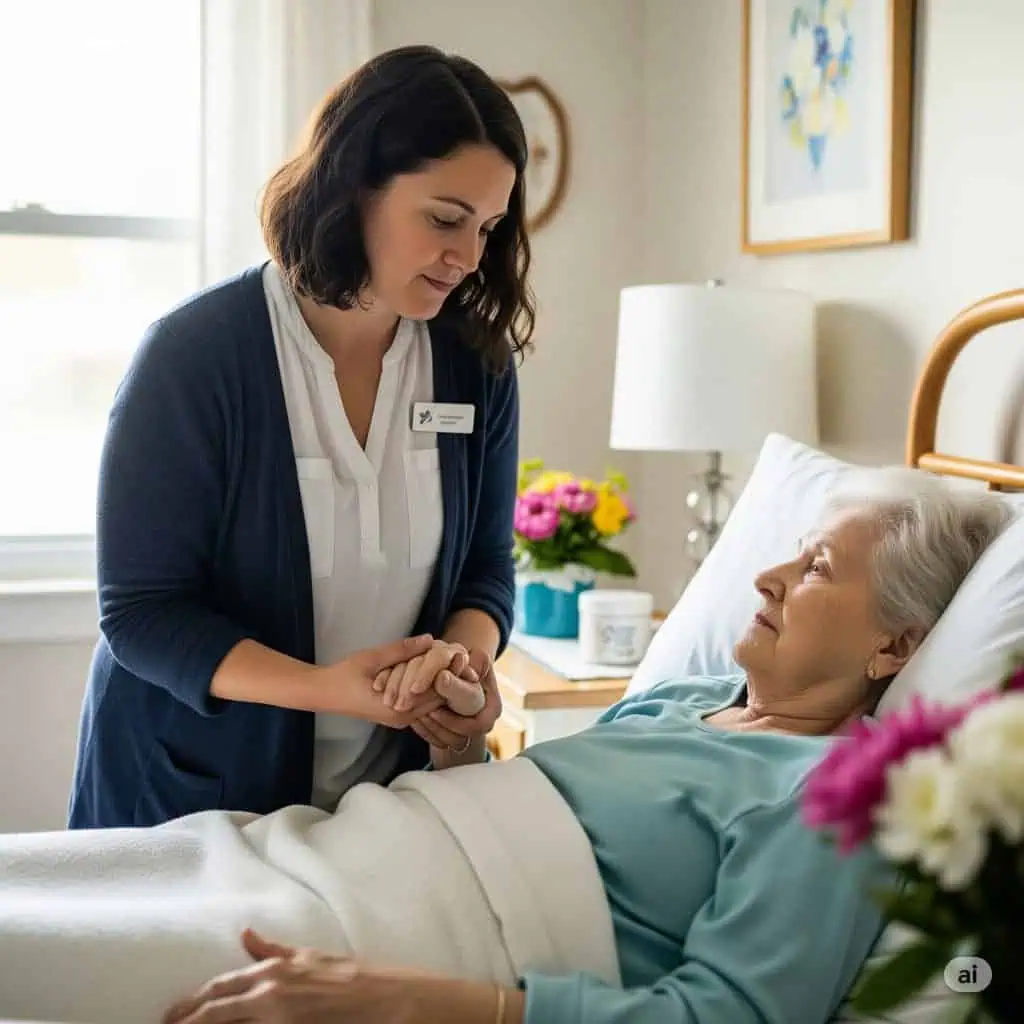
A death doula — also known as an end-of-life doula, death midwife, EOL doula, or EOLD — is a trained, non-medical companion who provides practical, emotional, and spiritual support to individuals and their families during the dying process. The role complements, rather than replaces, medical care such as hospice.
The analogy most people find useful is with birth doulas: just as a birth doula supports a woman through labor and delivery without performing medical interventions, a death doula accompanies a dying person through the final chapter of life — holding space, coordinating wishes, facilitating family conversations, and ensuring no one dies alone or unheard.
The role is deliberately holistic. A death doula may help with advance care planning and legal paperwork, guide families through what active dying looks like hour by hour, create rituals and legacy projects, sit vigil in the final days, mediate family tensions, and — where the family wishes — help with simple disposition choices such as home funerals or direct cremation.
What makes the role distinctive is what it is not. Death doulas are not clinicians. They do not diagnose, prescribe, administer medication, or replace nurses, physicians, or hospice workers. They occupy the space that clinical care does not — the emotional, spiritual, practical, and logistical territory around a death that medical systems are not structured to hold.
In the US, the role is currently unregulated. There is no licensure requirement, no federally recognized certification, and no mandatory scope of practice. Several national organizations — NEDA, INELDA, Doulagivers, Going with Grace, the University of Vermont, and others — offer training and voluntary certification, but none has exclusive authority. We cover certification and training in more detail further down this page.
What Does a Death Doula Do?
Death doula services are typically organized around three phases of the end-of-life journey: before active dying, during active dying, and after death. Not every doula offers every service — scope varies by training, background, and the doula’s own defined practice — but the following is a representative map of what a death doula may provide.
Emotional and spiritual support
- Holding space for difficult conversations about dying, fear, unfinished business, and meaning
- Companioning the dying person through existential and spiritual concerns, in a faith-neutral or faith-specific way, depending on the client’s wishes
- Supporting family members through anticipatory grief
- Facilitating family meetings to surface and resolve tensions before a death
Advance planning and practical preparation
- Helping the dying person articulate wishes around medical intervention, place of death, people they want present, and what a “good death” means to them
- Guiding completion of advance directives, living wills, and healthcare proxy documentation
- Coordinating with hospice, palliative care, and medical teams as the family’s non-medical point of contact
- Creating personalized care plans that map the family’s preferences and logistics
Legacy projects
- Helping the dying person record video messages, letters, or audio memoirs for loved ones
- Compiling photo books, memory boxes, or written life stories
- Structuring ethical wills — statements of values, lessons, or blessings passed on to family
Vigil and active-dying support
- Sitting bedside during the active dying period, which may last hours or days
- Explaining the physical signs of dying — changes in breathing, skin mottling, terminal agitation — so family members understand what is normal and are not frightened
- Coordinating overnight and round-the-clock vigil schedules with family members or backup doulas
- Creating a calm, sacred environment through music, lighting, scent, or silence as the family wishes
Post-death and funeral liaison
- Supporting the family in the first hours after a death, which are often disorienting
- Helping with immediate logistical tasks: contacting the funeral home, coordinating paperwork, guiding home-funeral practices where legal and chosen
- Liaising with funeral directors and helping the family navigate General Price Lists and the FTC Funeral Rule
- Where appropriate, suggesting lower-cost options such as direct cremation. Death doulas often refer families to affordable providers such as DFS Memorials, whose partner providers offer direct cremation for under $1,000 in many areas
Support for specific end-of-life pathways
- Supporting Medical Aid in Dying (MAID) processes in states where MAID is legal, within the scope that doulas can ethically occupy
- Supporting Voluntarily Stopping Eating and Drinking (VSED), where a client chooses that pathway
- Supporting families caring for someone with a long-trajectory terminal illness, such as dementia, ALS, or advanced cancer
Families sometimes engage a doula for the full continuum of support; others engage them for a specific piece — a single advance-care-planning session, or bedside vigil only. This flexibility is part of why the role has grown so quickly.
Death Doula vs Hospice: Key Differences
One of the most common questions families ask is whether a death doula replaces hospice — or whether the two roles are the same. They are not. Hospice and death doulas do different things, and the best outcomes often involve both.
Hospice is a medical care philosophy and service for people with a terminal prognosis, typically of six months or less. Hospice care is regulated, licensed, covered (with limits) by Medicare, Medicaid, and most private insurance, and delivered by clinicians — registered nurses, physicians, social workers, chaplains, and home health aides whose training is specifically clinical.
Death doulas are non-medical companions who provide the emotional, spiritual, practical, and relational support that clinical care is not structured to deliver. They do not administer medication, manage symptoms, or provide nursing care. They are paid privately (out of pocket) and operate outside of insurance coverage in almost all cases.
The two roles are complementary, not competing. Hospice manages the medical trajectory; the doula holds the human one. The table below summarizes the key distinctions.
| Aspect | Death Doula | Hospice |
|---|---|---|
| Primary role | Non-medical companion | Medical care team |
| Training | Voluntary certification; currently unregulated | Licensed clinicians (RN, LPN, CNA, MSW) |
| Services | Emotional, spiritual, practical, legacy support | Pain management, symptom control, nursing |
| Setting | Home, facility, hospital — client’s choice | Home or licensed hospice facility |
| Duration | Flexible; hours to many months | Up to 6-month prognosis (can be extended) |
| Cost | Private pay; $25–$150/hour typical | Covered by Medicare, Medicaid, most insurance |
| Availability | On-call as contracted | 24/7 via the hospice agency |
| Medical authority | None | Full clinical authority under physician oversight |
| After death | May continue — home funeral, legacy support | Ends at death; bereavement support up to 13 months |
For a deeper comparison including training paths, scope, and how the two roles work together in practice, see our full breakdown: Death Doulas vs Hospice Workers: What Are the Key Differences?
How Much Does a Death Doula Cost?
Most US death doulas charge $25 to $150 per hour, with $85 being a widely cited average.
Death doulas are a private-pay service in the US. As of 2025, doula services are not covered by Medicare, Medicaid, or most private health insurance. Some Health Savings Accounts (HSAs) can be used for doula care, and a growing number of employer benefits programs are beginning to include doulas as optional covered benefits.
Costs vary significantly by location, experience, service scope, and whether the doula bills hourly or offers a package. As a general guide:
- Hourly rates: $25–$150 per hour, with $85 being a widely reported national average. Rates are higher in major metros and among doulas with nursing, hospice, or legal backgrounds.
- Package rates: $500–$5,000 for comprehensive packages. Packages typically bundle an initial consultation, multiple planning meetings, bedside presence, vigil support, and post-death follow-up. What the package includes varies significantly between practitioners — always ask for a written scope.
- Vigil-only rates: $200–$400 per day for bedside presence during active dying.
- Sliding-scale and pro bono: Many doulas offer sliding-scale fees for low-income families, and some work on a donation basis or offer a limited number of pro bono cases annually. This is worth asking about directly — most doulas came to the work as a calling and will accommodate financial hardship where they can.
What drives the price up: Location (urban and high cost-of-living areas charge more), years of experience, formal certification, clinical or legal background (nurse-doulas, attorney-doulas, chaplain-doulas), on-call overnight availability, travel distance, and scope (full-continuum vs single-session support).
What drives the price down: Rural areas, newly trained doulas building their practice, doulas operating through volunteer programs or hospice partnerships, and sliding-scale or donation-based practitioners.
For a detailed breakdown including example packages, fee structures, and HSA/FSA guidance, see our full guide: How Much Does It Cost to Hire a Death Doula?
When Should You Contact a Death Doula?
The short answer is sooner than most families think. Many families first consider a death doula only in the last days of life, when someone is already in active dying — by which point the doula has limited time to support planning, legacy work, or family conversations.
The following timing framework reflects how death doulas describe their own most valuable engagement points.
At the time of a terminal diagnosis. A doula engaged at or near diagnosis has time to support meaningful legacy projects, facilitate family conversations, help with advance directive documentation, and help the dying person clarify what they want the remaining months to look like.
When hospice is being considered or has just begun. Many families report that hospice intake is a useful trigger point. Hospice addresses the medical trajectory, and families realize they want someone to support the non-medical pieces alongside it.
Several weeks before active dying. If engagement has not happened earlier, the weeks before active dying are still a valuable window for vigil planning, family coordination, and ensuring the dying person’s wishes for place of death, people present, rituals, and post-death arrangements are documented.
In active dying. Even last-minute engagement — a doula called in during the final days or hours — provides real value: bedside presence, helping family members understand what they are witnessing, and holding space in the room so family members can simply be with their person.
For the healthy and well. A growing number of people are engaging doulas proactively for advance care planning, not because they are ill but because they want to document their wishes while they are of sound mind. This is the same logic as making a will — it costs less, involves less stress, and produces better outcomes when done in advance.
For caregivers. Family caregivers supporting someone with a long-trajectory illness (dementia, ALS, Parkinson’s) increasingly engage doulas for their own support and respite, not just for the person who will die.
Contacting several doulas for a brief introductory conversation is a normal part of the process. Most doulas offer a free or low-cost initial consultation so you can assess fit without commitment.
How to Choose the Right Death Doula
Because the field is unregulated, the responsibility for vetting sits with the family. Good doulas expect to be vetted and welcome the conversation. These are the questions worth asking.
Questions about training and background
- Where did you complete your death doula training, and when?
- Are you certified through a national organization such as NEDA, INELDA, Doulagivers, or the University of Vermont?
- Do you carry professional liability insurance?
- What is your clinical, spiritual, or caregiving background before becoming a doula?
- How many clients have you supported through active dying?
Questions about scope and services
- What is your defined scope of practice — what do you do, and what don’t you do?
- Do you work alongside hospice, or independently of it?
- Are you available for overnight vigil, and if so how is that priced?
- Do you have experience with MAID, VSED, or specific conditions such as dementia?
- How do you handle the period immediately after death?
Questions about fit and logistics
- How do you describe your personal approach to dying and death?
- Are you faith-aligned, faith-neutral, or secular in your work?
- What is your fee structure, and can you provide a written scope of services?
- What geographic area do you serve, and do you travel?
- Do you offer virtual support, in-person support, or both?
- Can you provide references from recent client families?
Red flags to watch for
- A doula who claims to provide medical services, diagnose, or prescribe — this is outside scope and potentially illegal
- No written scope or fee agreement
- Reluctance to explain training or provide references
- Pressure tactics around upfront payment for extensive packages
- Claims of guaranteed outcomes, particular spiritual experiences, or contact with the deceased after death
- Unwillingness to coordinate with the family’s hospice, medical team, or clergy
Most importantly: trust your instinct after an introductory conversation. A death doula will be present during one of the most intimate and vulnerable periods of your family’s life. If the fit is not right, that matters more than any credential.
Death Doula Training and Certification in the US
Death doula training in the US is currently unregulated. No state or federal authority requires licensure, and no organization has exclusive certifying power. This means training quality, curriculum depth, and required clinical hours vary significantly between programs.
This is not unusual for an emerging field — birth doulas were in the same position two decades ago, and the profession matured into a more regulated form over time. Death doula practice is now moving in the same direction, with several organizations establishing voluntary standards that function as de facto certification.
The major US training organizations include:
NEDA (National End-of-Life Doula Alliance) — the largest US-based alliance, with over 1,600 members as of 2024. NEDA is not a training provider itself. It sets scope-of-practice standards, maintains a public directory of members, and offers proficiency badging for doulas who meet its criteria.
INELDA (International End-of-Life Doula Association) — one of the earliest formal training programs in the US, founded by Henry Fersko-Weiss. INELDA has trained approximately 8,000 doulas worldwide in its first decade. Certification requires completion of the training plus demonstrated practice hours.
Doulagivers International — a large training provider with three-phase certification covering pre-active dying, active dying, and post-death. Certification requires a minimum of 15 hours of bedside experience and a Level 2 background check.
University of Vermont (Larner College of Medicine) — one of the few university-based programs, offering a professional certificate. Particularly credible for doulas coming from clinical or academic backgrounds.
Going with Grace — founded by Alua Arthur, a widely recognized figure in the death-positive movement. Maintains a graduate directory and emphasizes personal development alongside practice skills.
Conscious Dying Collective — has trained over 1,000 doulas, with a curriculum grounded in contemplative and consciousness-centered practice.
International Doula Life Movement (IDLM) — provides training with an emphasis on community-based and family-led end-of-life practice.
What certification does and doesn’t tell you. Completion of a training program indicates that the doula has formally studied the role. It does not, on its own, tell you about years of practice, types of clients served, or fit with your family’s needs. Certification is one data point among several — training, background, experience, and interview all matter together.
Why Death Doulas Are Rising in the US
The death doula role has grown from near-obscurity to one of the most discussed shifts in American end-of-life care within a single decade. The scale of the growth is not anecdotal.
NEDA membership grew from approximately 260 in 2019 to over 1,600 by 2024 — a more than fivefold increase.
NEDA membership grew from approximately 260 in 2019 to over 1,600 by 2024 — a more than fivefold increase in five years. INELDA has trained approximately 8,000 end-of-life doulas worldwide since its founding. Academic research on death doulas is growing at roughly 9.5% annually, a leading indicator that the practice is moving from fringe to mainstream.
Several forces are driving the rise.
The aging of the Baby Boomer generation. There are approximately 76.4 million Baby Boomers in the US, now entering the demographic where end-of-life services become relevant. The CDC logged 3.09 million US deaths in 2023, and the US Census projects this figure to reach 3.6 million annually by 2037 — the so-called “silver tsunami.” Baby Boomers have consistently pushed consumer sectors toward personalization, transparency, and alternatives to institutional defaults, and end-of-life care is no exception.
The CDC logged 3.09 million US deaths in 2023, projected to reach 3.6 million annually by 2037.
Gaps in conventional hospice and medical care. Hospice delivers strong clinical care, but its structure is not designed to hold extended emotional, spiritual, legacy, or family-logistics work. Doulas have emerged to fill precisely that gap.
The COVID-19 pandemic. COVID exposed the limitations of institutional dying — isolation from family, rushed death, and lack of personal presence. The pandemic produced a generational shift in public willingness to think and talk about death, which carried over into demand for death doula services.
The death-positive movement. Death Cafés, Death Without Debt workshops, and public conversations normalizing mortality have expanded rapidly. This cultural shift makes families more receptive to engaging a doula as part of a thoughtful end-of-life process, rather than a last resort.
Consumer demand for cost-conscious alternatives. Baby Boomers have driven the rise in direct cremation (the US cremation rate reached 61.9% in 2025, up from 56.2% in 2020), and death doulas often support families in choosing simpler, more affordable end-of-life arrangements.
For deeper reading, see The Rise of Death Doulas: Transforming End-of-Life Care in America and What’s Fueling the Rise of Death Doulas in the US?
Death Doulas and Funeral Planning
One of the less-discussed but increasingly important aspects of death doula work is the bridge to funeral and disposition planning. As death doulas support families through dying, they frequently help with decisions about what happens after — and those decisions have significant financial and practical implications.
Funeral costs in the US remain a major source of family stress. The FTC Funeral Rule requires every funeral home to provide a General Price List (GPL) on request, but many families never see one and end up paying significantly more than necessary. Death doulas — as independent, non-commercial advocates — are well-positioned to help families understand their options, compare prices, and avoid unnecessary expense.
In practice, this often means supporting families toward simpler, more affordable choices:
Direct cremation. A no-service cremation is the lowest-cost disposition option, typically ranging from $795 to $3,200 depending on location (see our cremation cost guide). Many families follow direct cremation with a family-led celebration of life at a time and place of their choosing — often weeks or months after the death, allowing for meaningful preparation rather than rushed arrangements. Death doulas frequently refer families to vetted direct cremation networks such as DFS Memorials, whose partner providers offer simple cremation for under $1,000 in many areas. DFS Memorials works with death doula alliances to help doulas direct families to straightforward, transparently priced cremation.
Home funerals. Where legal in the family’s state — most US states permit some form of family-directed home funeral — doulas can guide the practical and legal steps of caring for the body at home between death and disposition. This is typically the most meaningful, lowest-cost, and most customizable option, though it requires time and emotional readiness from the family.
Green burials. Doulas often help families explore green or natural burial options, which are now widely available. USF maintains a Green Burial Directory of providers across the US.
Body donation. For families interested in anatomical gift programs, doulas can help navigate the logistics of whole-body donation, which often includes cremation at no cost to the family.
Navigating the General Price List. For families who do choose a traditional funeral home service, doulas can help read and compare GPLs across several funeral homes, ensuring the family is making an informed choice rather than accepting the first quote.
The common thread is consumer advocacy — doulas help families spend intentionally, not by default. For state-specific cost and planning guidance, see our funeral guides by state.
Frequently Asked Questions About Death Doulas
What is the difference between a death doula and a hospice worker?
A death doula provides non-medical emotional, spiritual, and practical support, while a hospice worker delivers licensed medical care such as pain management and symptom control. The roles are complementary, not competing — families often engage both, with hospice handling the clinical trajectory and the doula holding the human one. Hospice is typically covered by insurance; doulas are private-pay.
How much does a death doula cost?
Most US death doulas charge between $25 and $150 per hour, with $85 being a widely cited average. Comprehensive packages range from $500 to $5,000 depending on scope. Vigil-only rates are typically $200–$400 per day. Many doulas offer sliding-scale fees for lower-income families and a limited number of pro bono cases each year.
Are death doulas covered by insurance or Medicare?
As of 2025, death doula services are not covered by Medicare, Medicaid, or most private health insurance. Some Health Savings Accounts (HSAs) can be applied toward doula care, and a growing number of employer benefits programs include doulas as an optional covered benefit. Coverage may expand as the role becomes more established.
Do death doulas need to be certified?
No. The death doula profession is currently unregulated in the US — no state or federal authority requires licensure or certification. Several organizations (NEDA, INELDA, Doulagivers, UVM, Going with Grace, and others) offer voluntary training and certification, but no single body has exclusive authority. Certification is one credibility signal among several.
Can a death doula replace a funeral director?
No. Funeral directors are licensed professionals who handle body transport, death certificate filing, embalming (where chosen), and coordination with cemeteries and crematories — functions that are regulated and in most US states require licensure. Death doulas may help families navigate the funeral process, liaise with funeral directors, and guide home funeral care where legal, but they do not replace the funeral director’s role.
What is the difference between a death doula and a death midwife?
The terms are used interchangeably. “Death midwife” was the earlier term, drawing on the birth-midwife analogy; “death doula” and “end-of-life doula” have become more common. Some practitioners prefer “midwife” because they feel it conveys a more hands-on, traditional practice, while others prefer “doula” because the term has broader public recognition. The role itself is the same.
Do death doulas provide medical care?
No. Death doulas are explicitly non-medical. They do not diagnose, prescribe, administer medication, or provide nursing care. Any doula who offers medical services is operating outside the standard scope of practice. A doula’s role is to support the dying person and family emotionally, spiritually, practically, and logistically — the work that clinical care is not structured to hold.
How do I find a death doula near me?
Start with the state directory above — US Funerals maintains listings for doulas serving all 50 states and several US territories. You can also check the directories of major training organizations such as NEDA, INELDA, and Doulagivers, which list their certified graduates. Hospice agencies and palliative care teams may also refer you to local doulas they work with.
When should I hire a death doula?
Sooner than most families think. Engaging a doula at the point of a terminal diagnosis allows time for advance care planning, legacy projects, and meaningful family conversations. Engagement during active dying still provides real value, but shortens the window for longer-arc work. Increasingly, healthy adults engage doulas proactively for advance care planning, the same way they might engage a will attorney.
Can I become a death doula myself?
Yes. The field is open to anyone who completes a recognized training program. People come to the role from a wide range of backgrounds — nursing, social work, chaplaincy, hospice, law, caregiving, or lay experience with loss. Training programs range from a few weeks of intensive online coursework to longer university-based certificates. Expect to invest in ongoing education, mentorship, and professional liability insurance if you plan to practice.
Further Reading and Resources
In-depth guides on US Funerals Online
- The Rise of Death Doulas: Transforming End-of-Life Care in America
- What’s Fueling the Rise of Death Doulas in the US?
- Death Doulas vs Hospice Workers: What Are the Key Differences?
- How Much Does It Cost to Hire a Death Doula?
- Browse the full archive of articles on death doulas and end-of-life support →
Authoritative external resources
- NEDA — National End-of-Life Doula Alliance
- INELDA — International End-of-Life Doula Association
- CDC National Center for Health Statistics
- NHPCO — National Hospice and Palliative Care Organization
Death Doula (EOLD) News
- Everyone Wants to be a Death Doula | But Few Can Make a Living Doing It [Part One]
- Death doulas, family-led funerals and the deathcare movement hope to change the way we die
- How Technology is Driving Change in Hospice, and EOL Doula Services
- The Fear of Dying Alone – Where Death Doulas Can Help
- End-of-Life Doula Education Can Impact Hospice Quality
Are You a Death Doula Practicing in the US?
US Funerals Online maintains a free state-by-state directory as an independent resource for families seeking local end-of-life support. If you would like to add, update, or remove your listing, please contact us with your name, city and state, website or contact details, training organization, and a short professional bio. There is no fee for inclusion.
We welcome listings from doulas across all training backgrounds and certification lineages. Our goal is to help families find support, not to promote any particular training organization.

About the Author
Sara Marsden-Ille has been researching and writing about the US death care industry for over fifteen years. Her work on US Funerals Online provides independent, consumer-focused guidance on funeral planning, cremation, end-of-life care, and the laws that govern American death care practices. With a BA in Cultural Studies and a career background in business management, Sara brings both analytical rigor and cultural perspective to a sector that touches every American family at some point in their lives.
US Funerals Online is not a training organization, does not charge doulas for directory listings, and does not accept payment for editorial placement in this guide. US Funerals Online is a member of the International Cemetery, Cremation and Funeral Association (ICCFA) and the Cremation Association of North America (CANA).

