Cremation is now the way most American families choose to care for a loved one after death. According to the National Funeral Directors Association’s 2025 Cremation & Burial Report, the U.S. cremation rate reached 63.4% in 2025 — more than double the burial rate — and it is projected to climb to 82.3% by 2045. The Cremation Association of North America (CANA) annual collated data matrix is slightly differentiated by percentile – 62.8% – [due to source data collection/assimilation variances]. Yet for a disposition practice that is becoming so common, the process itself is still widely misunderstood. The U.S. is now firmly a Cremation Nation; something we were told back in 2009 as we prepared to launch a nationwide cremation network was a ‘fad’.
This guide explains cremation from start to finish: what actually happens during a cremation, the different types of cremation and service options available, what it costs, the legal steps involved in authorizing it, the newer alternatives to conventional flame cremation, and the choices families have for memorializing a loved one afterward. Wherever a topic deserves its own detailed treatment — costs, laws, direct cremation, water cremation — we link you to a dedicated guide.
In this guide
- What is cremation?
- How cremation works: what actually happens
- Types of cremation and service options
- How much does cremation cost?
- The Cremation Process Explained
- Religious & cultural considerations
- Cremation laws and authorization
- Alternatives to flame cremation
- After the cremation: ashes and memorialization
- Cremation FAQs
What is cremation?
Cremation is a method of final disposition that uses intense heat to reduce a body to bone fragments, which are then processed into the fine, uniform material most people know as “ashes.” It is an alternative to burial, and in the United States it has become the more common of the two.
Contrary to a common assumption, cremation does not produce literal ash. What remains after the process are bone fragments, which are then reduced mechanically to a sand-like consistency. The correct term for the result is cremated remains — often shortened to “cremains” — though nearly everyone still calls them ashes.
Cremation can stand entirely on its own, or it can be paired with the same kinds of services a family would hold around a burial: a viewing, a funeral, or a memorial gathering. That flexibility is a large part of why families choose it. A cremation can be as simple and private as a direct cremation with no ceremony at all, or as full as a traditional funeral service followed by cremation rather than burial. Understanding the difference between the method (cremation) and the services a family builds around it is the key to understanding all of the options that follow.
⚱️How cremation works: what actually happens
Families often want to understand, step by step, what happens to their loved one during a cremation. The process is carefully regulated and, at reputable providers, closely documented at every stage.
1. Transfer into care and identification
After death is pronounced and the necessary paperwork is underway, the funeral home or crematory transfers the deceased into its care. A rigorous identification process follows — reputable providers assign a unique identifier that stays with the deceased throughout, precisely because individual tracking is central to how the process is managed.
2. Authorization and permits
A cremation cannot proceed until it has been legally authorized by the next of kin or a legally designated agent, and until the required permit has been issued by the local authority — typically the county, coroner, or medical examiner. Many states also require a short waiting period between death and cremation, commonly in the range of 24 to 48 hours, although this varies from state to state. Because cremation is irreversible, this authorization step is deliberately more involved than it is for burial. The legal details are covered in full below and in our → dedicated guide to cremation laws.
3. Preparation of the body
Before the cremation, the body is prepared. Jewelry and personal belongings are removed and returned to the family unless they have asked for an item to remain. Certain medical devices must be removed for safety— for example, a pacemaker contains a battery that can explode under high heat. The body is then placed in a rigid, combustible container. This does not need to be an expensive casket; a simple cremation container made of reinforced cardboard or plain wood satisfies the requirement, which is one reason cremation can cost so much less than burial.
4. The cremation itself
The container is placed into the cremation chamber, sometimes called a retort, which is heated to roughly 1,400 to 1,800°F. The intense heat reduces the body over a period of about one and a half to three hours, depending on factors such as body size and the equipment used. Each cremation is carried out individually in the chamber.
5. Processing the remains
After the chamber cools, the remaining bone fragments are removed. Any metal — surgical implants, screws, or pins — is separated out at this stage, often with a magnet, and recycled or disposed of responsibly rather than returned. The bone fragments are then processed into a fine, consistent, sand-like material. The result typically weighs between three and nine pounds, with around five pounds being common, largely a function of the person’s bone structure rather than their body weight.
6. Return to the family
The cremated remains are placed into a temporary container, or into an urn the family has provided, and returned to the family. Depending on the provider and the paperwork involved, this usually happens within a few days to a couple of weeks.
💬 Types of cremation and service options
There is no single “cremation.” What families are really choosing between is the level of service they want to build around the cremation itself. The main options, from simplest to most involved, are below.
1. Direct cremation
Direct cremation — also called simple or immediate cremation — is the most straightforward and affordable option. There is no viewing and no funeral service beforehand. The provider collects the deceased, completes all the required paperwork and permits, carries out the cremation, and returns the ashes to the family, usually in a temporary container. Families are free to hold their own memorial gathering later, on their own terms and in their own place. Direct cremation has grown quickly in popularity, both for its lower cost and for the flexibility it gives families.
Because it is such a significant option in its own right, we cover it in depth in our → direct cremation guide, including how to find a reputable, verified provider near you.
2. Cremation with a memorial service
Here, the cremation takes place first, and the family gathers afterward for a memorial service. Because the body is not present, this kind of service can be held anywhere and at any time that suits the family — a funeral home, a place of worship, a home, or an outdoor setting — often with the urn present.
3. Cremation with a traditional funeral service
This option most closely resembles a traditional burial-based funeral, but ends in cremation rather than burial. It typically includes a viewing or visitation and a formal funeral service with the body present, after which the cremation takes place. It offers families the full ritual of a traditional funeral together with the choice of cremation.
4. Attended or witnessed cremation
Some providers allow family members to be present when their loved one is placed into the cremation chamber. For certain families and faith traditions, witnessing this moment is an important part of saying goodbye.
A separate distinction worth understanding is the method of cremation. Everything described above refers to conventional, flame-based cremation, which remains the standard across the United States. A newer, gentler method — water-based cremation — is now legal in a growing number of states and is covered in the alternatives to flame cremation section below.
💰How much does cremation cost?
| Service / Disposition Type | Typical Cost Range | Viewing or Service Included? | Key Features & Best For | Environmental Impact |
|---|---|---|---|---|
| Direct Flame Cremation | $795 – $2,200 | No formal viewing or ceremony | Most affordable option. Body is cremated shortly after death in a basic container. | Standard carbon footprint (high heat, gas emissions) |
| Cremation with Memorial Service | $2,000 – $4,500 | Memorial service (without body present) | Allows families to hold a ceremony at a later date with the urn present. Flexible scheduling. | Standard carbon footprint |
| Full-Service Cremation Funeral | $4,000 – $7,500+ | Full viewing/visitation & funeral service | Traditional funeral ceremony followed by cremation rather than burial. May require rental casket or embalming. | Higher impact (if embalming fluids or traditional viewing merchandise are used) |
| Water Cremation (Aquamation / Bio Cremation) | $1,500 – $3,500 | Direct or with family goodbye viewing | Uses water and alkaline hydrolysis instead of flame. Eco-friendly alternative available in 26 states. | 75% lower carbon footprint, zero direct greenhouse gas emissions |
Cost is one of the main reasons families choose cremation, but “the cost of cremation” can mean very different things depending on the services involved. Broadly, there are three tiers:
- Direct cremation is the least expensive option. The 2026 national average is around $2,202, according to Funeralocity — but prices vary enormously by region and provider, from a few hundred dollars to well over three thousand for the very same service. Through the DFS Memorials network, direct cremation is available in many areas from as little as $795, all-inclusive.
- Cremation with a memorial service generally falls somewhere between roughly $3,000 and $6,000, depending on the service chosen and where you live.
- Cremation with a full traditional funeral costs the most. The NFDA’s median for a funeral with viewing and cremation is around $6,280 — still typically less than a comparable burial funeral.
The single most important thing to understand about cremation pricing is how widely it varies between providers in the same area. Two funeral homes a few miles apart can quote hundreds or even thousands of dollars apart for an identical direct cremation. Comparing cremation providers and itemized prices is the surest way to avoid overpaying — and by law, every funeral home must provide an itemized price list on request.
For a full breakdown by state and by service type, see our → guide to the average cost of cremation 2026 by State. Or jump straight to your state with our cremation costs by state directory. To compare verified, transparently priced local providers, visit → DFS Memorials Local Provider Prices by area.
🔥 The Cremation Process Explained
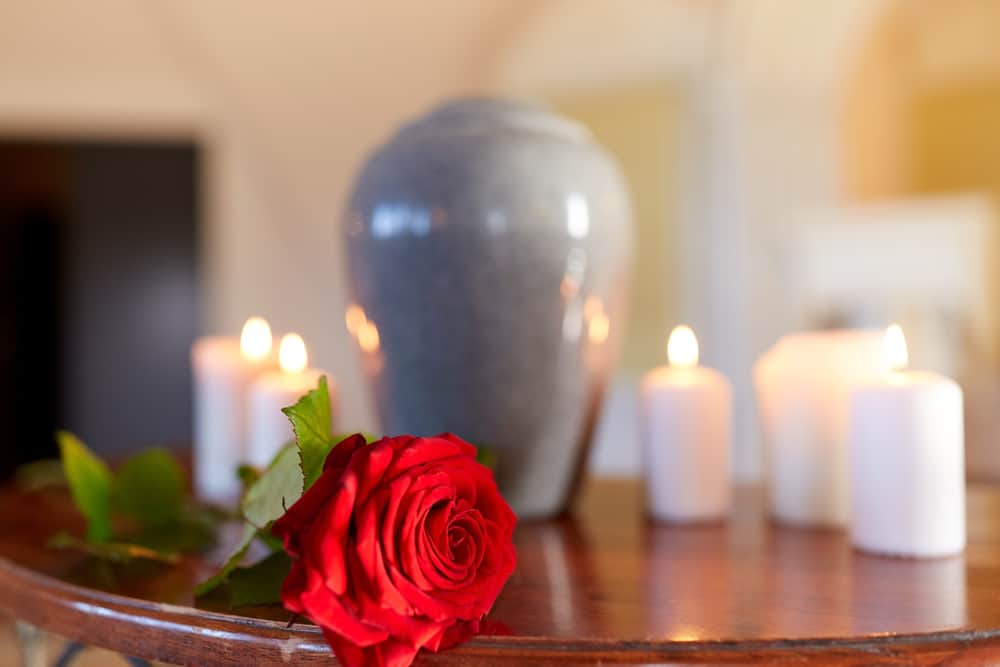
Flame cremation reduces a deceased body to ashes by applying an intense fire temperature, which vaporizes organic matter and reduces a human body to bone fragments. This process occurs inside a cremation retort, a chamber that heats to around 2,000 degrees Fahrenheit. The process can take between two and a half and four hours to complete (depending on the grade of cremation equipment).
The remains are then removed from the retort and allowed to cool before being transferred to a cremulator, where any remaining large bone fragments are ground to a finer consistency, and any small metal elements (such as dental fillings and metal pins) are filtered out.
The resulting ‘cremains’ are then transferred to a cremation urn in readiness for returning to the family.
A metal ID tag is logged with the body once it enters the funeral home or crematory, and this tag remains with the body throughout the process to ensure proper ID cross-checks are made. The metal tag is enclosed with the cremated remains in the urn as it is returned to the family.
Certain steps are followed to prepare a body for cremation. Certain medical implants like pacemakers must be removed, as these can combust and explode when subjected to such intense heat.
Other radioactive therapeutic implants may be removed if they are known to contain mercury, as mercury emissions are detrimental to the environment. Jewelry items may also be removed from the deceased prior to cremation.
The deceased is cremated in a “suitable combustible container.” This is most commonly a sturdy cardboard casket box these days. This is inexpensive and saves on the unnecessary cost of a casket.
Note: If a funeral service is being held before cremation, many funeral homes will now offer rental caskets for the service. A specially designed rental casket will hold the inner cremation container so that it can be easily removed after the service without disturbing the body.
⚖️ Cremation laws and authorization
Cremation is legal in every U.S. state, but the rules that govern it — who may authorize it, how long you must wait, and what paperwork is required — are set at the state level and differ from place to place.
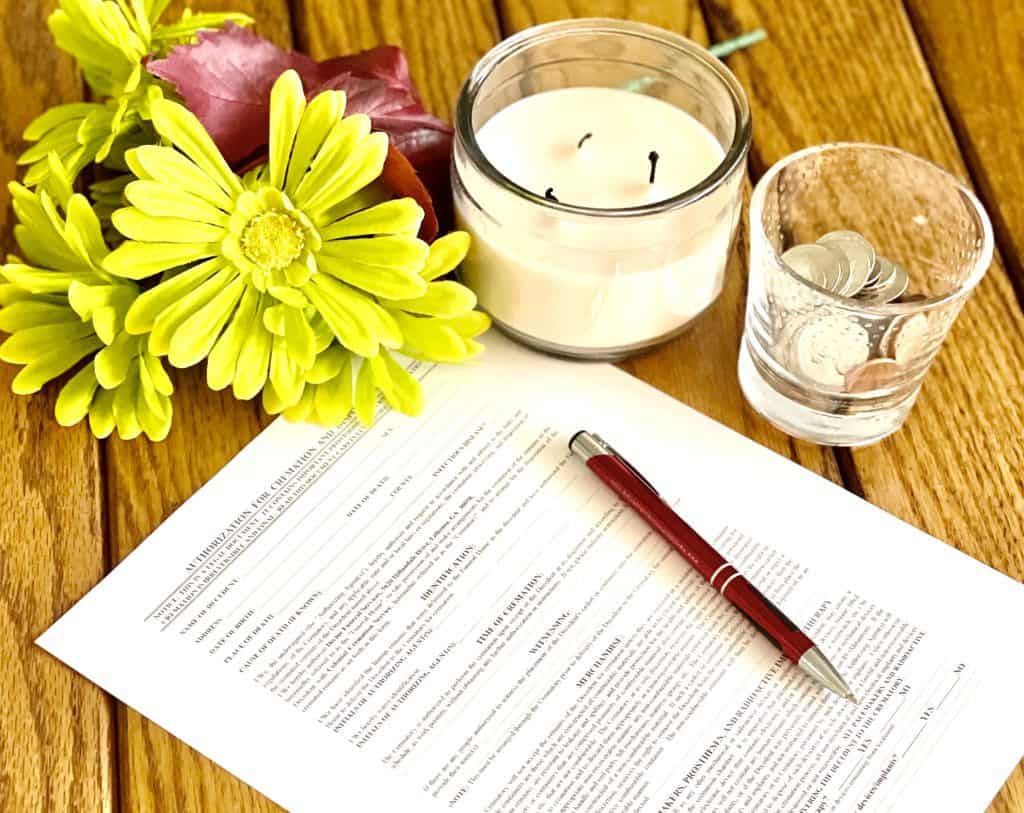
A few principles hold almost everywhere. A cremation must be authorized by the person with the legal right to make that decision, usually the next of kin or a legally designated agent, following an order of priority set out in state law.
A permit must be issued by the relevant local authority before the cremation can take place, and many states impose a short waiting period between death and cremation. And under the Federal Trade Commission’s Funeral Rule, any funeral provider must give you an itemized price list and may not require you to buy items or services you do not want — an important protection when arranging a cremation.
The specifics — who has the right of disposition in your state, waiting periods, and the authorization paperwork — are covered in our → complete guide to cremation laws and authorization.
💧Emerging Alternatives to flame cremation
Conventional flame-based cremation is no longer the only option for families who want an alternative to burial. Two newer methods are becoming more widely available, and quietly transforming our notion of what alternative eco-death options.
Water cremation — known technically as alkaline hydrolysis, and also called aquamation — uses water, alkali, and gentle heat rather than flame to reduce the body, leaving the same bone fragments that are then processed and returned to the family. Many families choose it for its markedly lower environmental footprint compared with flame cremation. It is now legal in a growing number of U.S. states, though availability still depends on where you live.
We cover the process, the environmental case, availability by state, and cost in our → Water Cremation Cost & Comparison: A 2026 Guide and compile and maintain a U.S. directory of Aquamation Providers, locations, current prices, and service area. Known water cremation providers in the U.S. today stand at ~52, but the number is increasing. [Last verified: July 2026]
Read our Guide to Aquamation: A Greener Alternative for full information about water cremation, including whether it is legal, the process, and the costs. The average cost of bio cremation is $1,995.
Natural organic reduction — sometimes called human composting — is a separate process that transforms the body into soil. It is legal in a smaller number of states and is the newest option to reach the market. It remains more expensive than direct cremation or water cremation, generally costing ~around $5,500 – $8,000. But for environmentally conscious individuals seeking an eco-death alternative, it can still be appealing. As a rather modern niche in controlled body disposition, there are only a few players leading this field in “terramation”. So, read our guide to human composting [NOR] to learn more.
🏞️ After the cremation: ashes and memorialization

One of cremation’s advantages is that it does not force families to make every decision at once. The ashes can be kept safely while a family decides — over weeks, months, or longer — how they would like to memorialize their loved one. Common choices include:
- Keeping the ashes at home in an urn chosen to suit the person and the family.
- Interring the ashes in a cemetery, either buried in a plot or placed in a columbarium niche, which gives family a permanent place to visit.
- Scattering the ashes in a meaningful place. Scattering is popular and moving, but it is subject to rules that vary by location, so it is worth checking what is permitted before you plan.
- Dividing the ashes among family members, so more than one person can keep or memorialize a portion.
- Keepsakes and memorial jewelry, in which a small quantity of ashes is incorporated into a piece of jewelry or another lasting object.
Because these choices are personal and there is no deadline, many families find this the part of the process where they can take their time and do something that feels genuinely right. More families are now considering holding a Family-Led Farewell Tribute as, when, and where they choose. Reclaiming the ownership of memorialization from the industry of death care.
Unclaimed Cremated Remains and Urns in the cupboard
Unfortunately, as some families are not sure what to do with the cremated remains (and often do not want to incur further costs arranging to inter the ashes), a growing problem is that funeral homes are being left with unclaimed cremated remains.
This is why more have had to add a ‘right to dispose of remains’ clause to a cremation contract. Storing remains for a long period of time can add to overhead costs for a funeral home and create additional human remains management issues.
This can sometimes be quite a confusing decision. The cremation rate is almost 63% today, but there is no easily accessible data on the different types of cremation services that make up this percentage.
Many funeral homes report that direct cremation is the most affordable cremation option and constitutes 70% of all cremations they perform.
Many funeral directors understand (and have embraced) the demand for simple, low-cost cremation services.
Realizing that changing times call for adapting to the needs of today’s families in the services they offer. Due to economic concerns, shifting values, and migrant and transplanted families, death care consumers today demand simplicity and affordability. Direct cremation seems to meet this demand.
The experience of the COVID pandemic has also drastically altered our funeral rituals. For many months, no funeral gatherings could occur. Even family arrangement meetings were being held by phone or online. Lots of families had no choice but to opt for a simple cremation service to attend to the disposition of a loved one.
You may also be interested in our post exploring the sustainability of flame cremation and its impact on the environment. How Environmentally Sustainable is Cremation?
What can you do with the cremated remains?
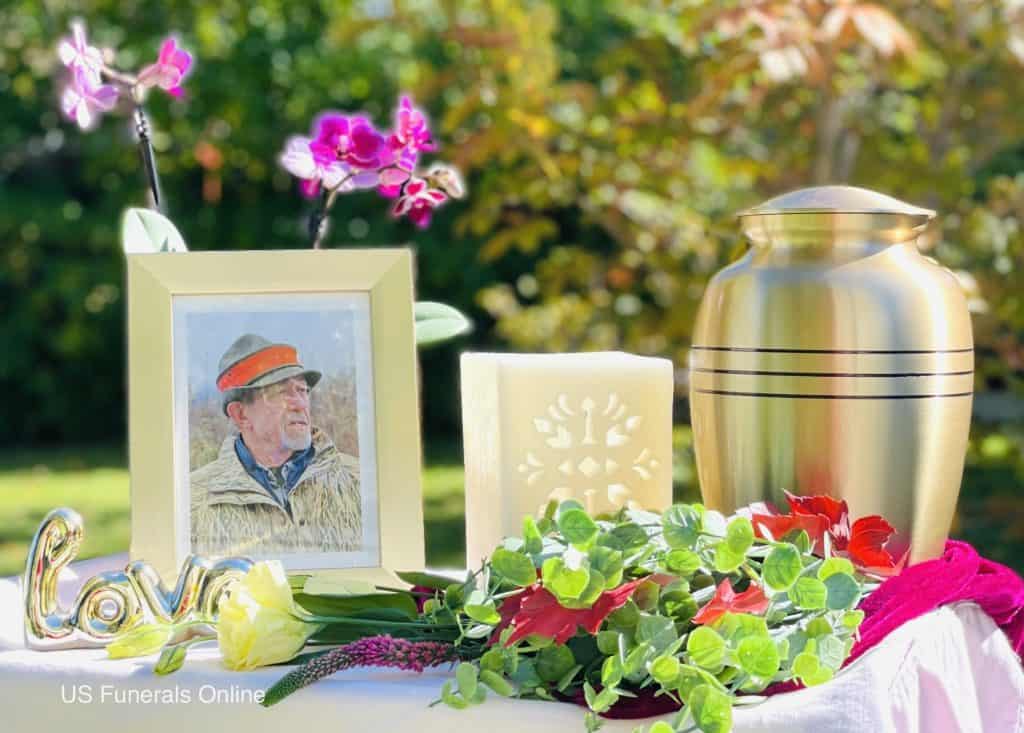
When you choose cremation for a loved one, you have a wide range of different and unique options for memorialization. You can still take a more traditional approach and inter a cremation urn at a cemetery.
You can keep the cremation urn at home, scatter the ashes, or choose from a wide array of personalized cremation memorial artifacts.
Visit our State Guides to Cremation and Funeral Planning to learn any rules for scattering ashes near you.
Our Guide to Ash Scattering will help you prepare for an ash-scattering memorial and safely scatter human ashes, along with the USF Guide to Cremation Urns, which will help you learn more about different urn options and prices.
And in our Funeral Products and Services Resource Section, you will find further articles about cremation memorialization, such as Memorial Reefs and Cremation Diamonds.
Handcrafted glass art and jewelry can be infused with a sample of cremation ashes to create beautiful and unique remembrance keepsakes. This is a more affordable permanent keepsake than a cremation diamond.
There is a wide array of options, including jewelry items, paperweights, hanging orbs, glass-blown flowers, wine glasses, and vases, to name but a few. Check out Spirit Pieces to learn more. The company was founded by many talented artists passionate about creating beautiful cremation artifacts for the modern era.
Religious and cultural considerations relating to cremation
Choosing cremation is a personal choice, but religious or cultural beliefs can also influence it. Over the last couple of decades, there has been a significant shift towards cremation, reflecting changing attitudes to religious and cultural belief systems. Below, we have summed up a brief guide to cremation and religions.
Cremation & Christianity
For a long time, the Christian Church opposed cremation, but in the 1960s changed its stance and accepted cremation in the belief that it did not impede resurrection. The Church still prefers burial but now accepts cremation as a disposition of the body. The Church still advocates for the interment of cremated remains.
Cremation & Mormons
The Church of the Latter-Day Saints (LDS) does not prohibit cremation, although they generally advise against it.
Cremation & Hinduism
The Hindu belief system centers on the soul detaching from the body at death. For this reason, their belief is that cremation is the preferred final disposition of the body, enabling the soul to be ‘released’ from its mortal attachment. Enabling the soul to achieve reincarnation.
Cremation & Buddhism
Many Buddhists choose cremation, as Buddha was cremated. However, Buddhism does not prescribe specific funeral practices to be followed.
Cremation & Judaism
Jewish law has prescribed for thousands of years that only ground burial is acceptable for those of the Jewish faith. Today, although discouraged, reform Judaism has begun to accept cremation if the cremated remains are buried in a Jewish cemetery.
Cremation & Islam
Islam is very strongly opposed to cremation. Muslims are prohibited from any association with cremation.
Cremation & Atheism
Although Atheism is not strictly a faith, it has been cited by Pew Research as the fastest-growing ‘religion’ in the U.S. This shift to a lack of faith is said to be a factor in the growth rate of cremation.
Choosing cremation artifacts for memorialization
Choosing cremation as a final disposition opens up many possibilities for memorialization. Cremated remains can still be interred in the form of a ‘traditional’ cemetery burial or cremation niche. Some families keep the cremation urn at home, either permanently or for a period, before deciding how and when to memorialize.
Cemeteries offer memorial scattering gardens, or ash scattering can be conducted in a whole variety of places and ways.
Read our Guide to Ash Scattering for Tips on How and Where to Safely Scatter.
There is now a whole array of other cremation memorial products that use a portion of cremated remains to make a permanent cremation keepsake of a loved one. Types of products and/or services you can consider include (but are not limited to) the suggestions below:
- Cremation diamond
- Memorial Reef ball
- Glass-blown items – paperweights, candle-holders, champagne flutes, Jewelry, etc
- Cement items – birdbaths, garden ornaments
- Portraits
- Gun cartridges
- Tattoos
- Fireworks
Some common questions about cremation:
The cremation itself generally takes about one and a half to three hours, depending on body size and the equipment used. Returning the processed ashes to the family usually takes anywhere from a few days to a couple of weeks once paperwork and permits are complete.
It varies by state. Many states require a short waiting period — often 24 to 48 hours — between death and cremation, and the timing also depends on how quickly the death is registered and the cremation permit is issued. In practice, a cremation commonly takes place within several days to a week or two of death.
Yes. At reputable providers, each body is cremated individually — the cremation chamber holds one person at a time, and providers use identification systems to ensure the ashes returned to a family are those of their loved one.
Because each cremation is carried out one at a time and the chamber needs time to heat and cool between them, a single chamber typically completes a handful of cremations in a day. Larger facilities operate more than one chamber.
They resemble coarse, pale sand and typically weigh between three and nine pounds, with around five pounds being common. The amount depends mainly on a person’s bone structure.
No. You need only a rigid, combustible container, which can be a simple cremation container made of reinforced cardboard or plain wood. A traditional casket is optional and is usually chosen only when there is a viewing or funeral service beforehand.
The person with the legal right of disposition — usually the next of kin or a legally designated agent — following the order of priority set out in your state’s law. See our → guide to cremation laws for the details in your state.
Generally, yes — often substantially. A direct cremation is the most affordable option of all, while even a full cremation funeral typically costs less than a comparable traditional burial. Use DFS Memorials Local Provider search for → cremation cost guide on transparent and affordable current figures.
Direct cremation is a cremation with no viewing and no prior funeral service — the simplest and most affordable option, leaving the family free to hold a memorial later if they wish. Learn more in our → direct cremation guide.
Strict ID measures and cross-checks are made at every step in the process, from when your loved one is received at the funeral home to when his or her cremated remains are handed back to you. A unique metal ID tag is assigned to the body. This tag is double-checked and remains with the deceased at all times. The ID tag will usually be included with the cremation urn.
Yes, the deceased is ordinarily clothed in the cremation container, although a cremation can be done without any clothing covering the deceased.
Today, cremation is commonly conducted using a simple reinforced cardboard container. The container burns with the body. Sometimes, wooden caskets are used, which can also be burned during cremation. If a funeral service were conducted first using a steel casket, the deceased would need to be transferred into a combustible container for cremation.
Yes, some families opt to have something personal cremated with the deceased. Any personal items would need to be small and combustible. Personal items from the deceased that you wish to keep, such as jewelry, should be removed before the cremation.
Yes, some crematories and funeral homes have established a special viewing area with their cremation machine for this purpose. It may serve those families who wish to confirm the cremation and ID of the body with their ‘own eyes.’ It also facilitates religious needs, such as Hindus who may wish to start the cremation as part of their faith ritual. As a cremation can take 3-5 hours, the viewing is usually just the beginning of the process.
This is quite interesting, as there is no specific correlation between the actual weight of the deceased and the amount/weight of the remaining cremation ashes. This is most probably due to the fact that the base remains after cremation are large bone remains and bone density. An average adult typically produces between 5 – 8 pounds of cremated remains.
Yes, many crematories can conduct cremation for overweight bodies. It requires a larger cremation retort and chamber door, additional lifting equipment, and a reinforced cremation container. This does mean that a barometric cremation will generally cost more than a standard cremation.
A cremation for a body over 300 pounds is likely to cost an additional $100 – $400 in surcharges.
Read our full article on Can An Obese Person Be Cremated for more information.
Visit our resource section on Cremation for further articles about Cremation.
If you have a specific question about cremation that we have not answered here, contact us, and we will help you find the answer.


