This guide walks through several real-world scenarios where death doula support makes a meaningful difference — for caregivers of a parent with dementia, for families navigating a sudden terminal diagnosis, for adult children supporting a dying parent from a distance, and for those considering Medical Aid in Dying.
For a general overview of what death doulas do and how to find one, see our complete death doula guide.
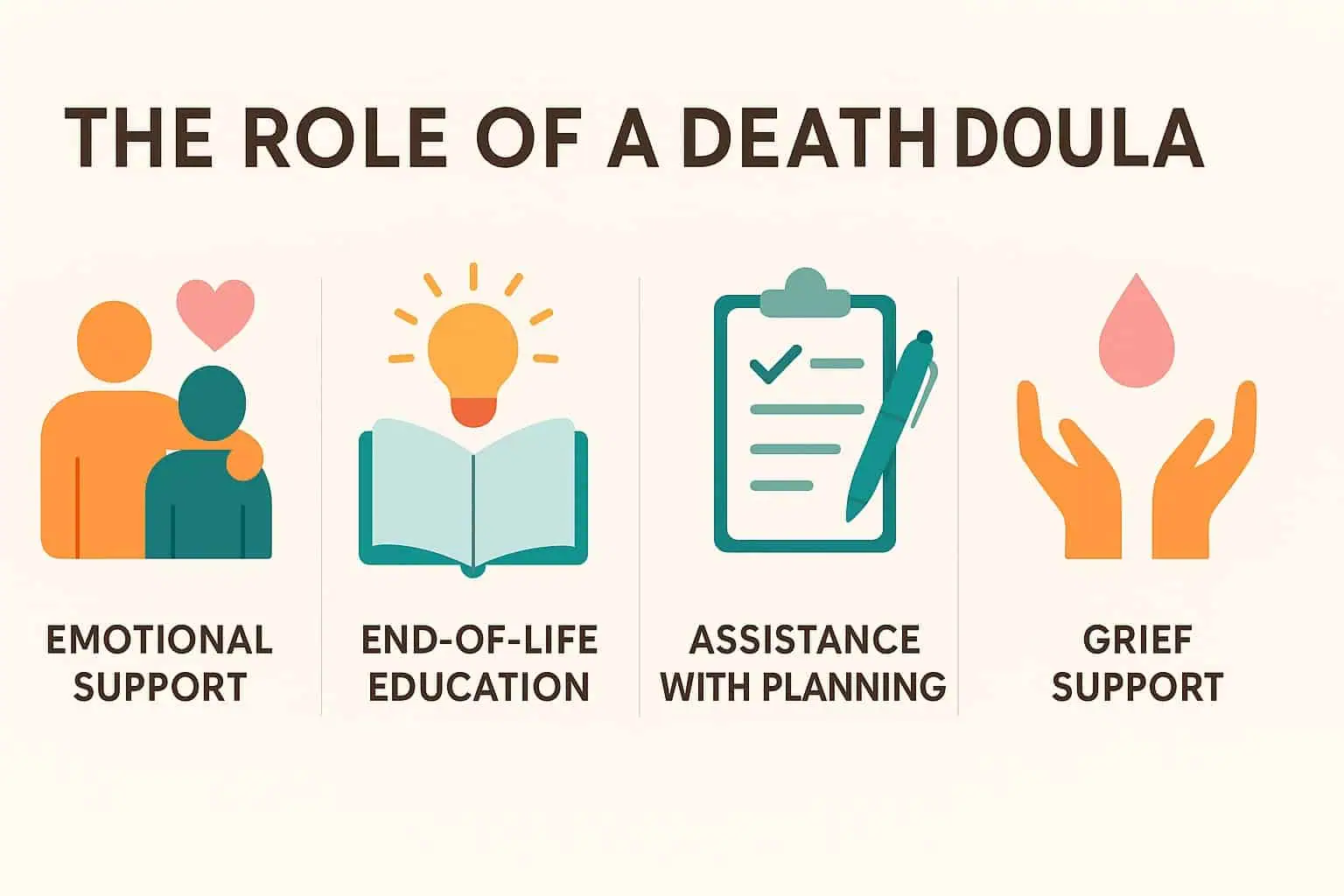
Death doulas, also known as end-of-life doulas, approach their support in a holistic, non-medical manner, focusing on emotional, spiritual, physical, and practical needs across the “pan-death spectrum”—before, during, and after death.
They begin by building a relationship with the dying person and their family, often through initial consultations to understand wishes, concerns, and cultural or spiritual preferences. This personalized process involves active listening, creating safe spaces for open conversations about death, and collaborating with medical teams, such as hospice, without providing clinical care themselves. The real-life examples below should help you get an idea of the different ways a doula can support those who are dying and their loved ones.
Real-life scenarios of EOLD support
Holding Space for a Peaceful Passing at Home
Margaret, an 82-year-old woman with advanced heart failure, had made it clear she wanted to die at home, surrounded by familiarity and comfort. Her daughter, Lisa, felt overwhelmed trying to manage her mother’s care while navigating the emotional weight of impending loss. A death doula was brought in during Margaret’s final weeks.
The doula began by creating a calm, supportive environment—soft lighting, Margaret’s favorite music, and meaningful objects placed around the room. She guided Lisa on what to expect physically as death approached, helping to reduce fear of the unknown. She also encouraged gentle conversations between mother and daughter, prompting expressions of love, gratitude, and closure.
As Margaret’s condition declined, the doula remained present, offering hands-on comfort measures like repositioning, moistening lips, and simply sitting quietly. She reassured Lisa that changes in breathing and responsiveness were natural. In Margaret’s final hours, the doula helped Lisa stay grounded, reminding her how to be present rather than fearful.
Margaret passed peacefully, with Lisa holding her hand. In the immediate aftermath, the doula guided Lisa through the next steps, allowing her time to grieve without feeling rushed. The experience, though deeply sad, was also meaningful and calm—just as Margaret had hoped.
Navigating a Sudden Terminal Diagnosis
James, a 58-year-old man, was diagnosed with late-stage pancreatic cancer and given only a few months to live. The speed and severity of the diagnosis left him and his partner, Daniel, in shock. They struggled to process medical information while also facing profound emotional distress.
A death doula stepped in to provide clarity and continuity. She helped James articulate his priorities—he wanted to remain at home, avoid aggressive treatments, and ensure Daniel would be supported after his death. The doula facilitated conversations with healthcare providers, ensuring James’ wishes were documented and respected.
Emotionally, she created a safe space for both men to express fear, anger, and sadness. She suggested legacy projects, and James chose to record video messages and write letters for loved ones. This gave him a sense of purpose and control during a time that felt otherwise chaotic.
For Daniel, the doula offered guidance on caregiving and self-care, reminding him that he didn’t have to carry everything alone. As James declined, the doula coordinated with hospice and remained a steady, reassuring presence.
When James died, Daniel felt heartbroken—but not lost. He understood what had happened, felt included in the process, and had meaningful keepsakes to hold onto.
Learn more about a death doula vs hospice care and roles.
Supporting a Family Through a Hospital Death
Maria, a 67-year-old grandmother, was in the ICU following a severe stroke. Her large, close-knit family struggled with conflicting emotions—some wanted to continue life support, while others believed Maria would not have wanted prolonged intervention.
A death doula was called to help mediate and support the family during this difficult time. She met with them collectively and individually, allowing each person to express their fears and hopes without judgment. By gently guiding the conversation, she helped the family focus on Maria’s known values and previously expressed wishes.
The doula also translated complex medical information into clear, understandable language, helping the family feel more confident in their decisions. Once a consensus was reached to withdraw life support, she helped prepare them emotionally for what to expect.
On the day of withdrawal, the doula created a more peaceful environment in the hospital—encouraging music, shared stories, and physical closeness. She reassured family members during the dying process, explaining changes in breathing and appearance so they were not frightened.
Maria’s passing became a shared, intimate moment rather than a clinical event. The family later expressed gratitude that, despite the hospital setting, they were able to say goodbye in a way that felt personal, respectful, and unified.
Helping a Person Find Meaning and Closure
Eleanor, a 74-year-old retired teacher with terminal lung disease, was not afraid of dying—but she was troubled by unresolved relationships and a sense of unfinished business. She lived alone, with limited family nearby.
A death doula worked closely with Eleanor over several months, focusing not just on physical comfort but also on emotional and spiritual well-being. Through regular visits, they explored Eleanor’s life story—her achievements, regrets, and values. The doula encouraged her to reconnect with estranged family members and facilitated phone calls and letter-writing.
Eleanor also wanted to leave something meaningful behind. With the doula’s support, she created a small “legacy project”—a collection of written reflections and recorded messages for former students and loved ones.
As her health declined, the doula ensured Eleanor remained comfortable and supported her wish to die at home. She coordinated with hospice, arranged a vigil plan, and made sure Eleanor’s environment reflected her personality—books, photos, and quiet music.
In her final days, Eleanor expressed a deep sense of peace. She had said what needed to be said and felt her life had been acknowledged and honored. The doula remained present through her passing, ensuring she was not alone.
Eleanor’s death was not defined by fear, but by completion—a life gently brought to its natural close.
Specific Services Offered By Death Doulas for End-of-Life Care
Death doulas tailor their services based on an individual’s needs and circumstances. Services can be divided into categories for the dying individual, their families, and post-death support. How much a Doula charges can vary by the hour, by the day, or be based on a flat fee, depending on the type of end-of-life support the family needs (or even on a volunteer basis in some cases).
To find a death doula serving your state, see our state-by-state directory of end-of-life doulas.
Doula Care & Services For the Dying Individual Can Include:
- Companionship, such as holding hands, conversing, reading aloud, watching TV, or simply being present, can reduce feelings of loneliness.
- Education on the dying process, including explanations of common signs and symptoms, as well as what to expect physically and emotionally.
- Legacy work, such as exploring life meaning, creating memory books, scrapbooks, or recorded stories, or facilitating closure through letters, calls, or resolving past wrongs.
- Spiritual or emotional guidance, including guided meditations, rituals aligned with faith, or counseling to alleviate anxiety, guilt, shame, or fear.
- Comfort measures, such as gentle touch, massage, or creating a soothing environment (e.g., adjusting lighting, sounds, and smells).
For Families and Caregivers – What Support a Doula Can Provide:

- Respite care, staying with the dying person to give family members breaks for rest or errands.
- Practical assistance, including household help, transportation, running errands, or coordinating visits from friends and family.
- Facilitating communication, helping with difficult conversations, supportive goodbyes, or advocating for the dying person’s wishes with medical providers.
- Referrals to community resources, such as additional care providers, acting as a mediator for insurance, Medicaid, and Social Services. Advising on legal advice (e.g., do-not-resuscitate orders, healthcare power of attorney), or funeral planning.
- Emotional support during vigils in the final hours, ensuring no one dies alone and providing comfort through presence.
Read further about the Benefits of hiring a death doula today.
Does a Death Doula Continue Support After a Death?

Yes, a doula may continue to offer services and support post-death. Depending on the family’s needs and the services a doula can provide. Such as:
- Assisting with immediate tasks like bathing and dressing the body (if not requiring a medical license), conducting wakes or viewings, and helping the family to navigate the process of contacting a cremation provider or funeral home. A doula may have prior experience arranging local, affordable cremation services and can help the family make objective decisions about disposition.
- Assisting the family with conducting a tribute or life celebration event and helping with obituaries or funeral arrangements.
- Grief counseling and companionship, offering sessions to process emotions, review the dying experience, and guide the family through the early stage of bereavement.
- Helping with guidance and direction to professional resources for estate settlement or ongoing support networks.
These services are flexible and can overlap with hospice care, but doulas focus on non-clinical aspects to fill gaps in emotional and logistical support.
How Long Does a Doula Support a Dying Person And Their Family?
The length of time a death doula serves varies widely, depending on the individual client’s needs, the doula’s preferences, and the stage of the illness. Unlike hospice services, which typically begin when a prognosis is six months or less, doulas can get involved at any point.
Sometimes this is after a life-changing illness diagnosis, upon a terminal prognosis, when death is imminent, or even just post-death for grief support. Their engagement is often structured in phases and can last from weeks to several months (or longer in some cases). Their support can extend beyond hospice services to allow for proactive planning.
There is typically a division between before a death occurs and after the passing.
- Pre-Death Phases: Support may begin months before death, with time spent “summing up and planning,” involving a life review and legacy projects, and continue through the “vigil” phase in the final days or hours, providing intensive companionship.
- Post-Death Phase: This can involve 1-3 sessions or extend for weeks to months, focusing on reprocessing events and early grief.
What Is a Typical Overall Timeline For Death Doula Involvement With a Dying Client?

Some doulas prefer shorter engagements (e.g., 3 months or less for intensive end-of-life work), while others provide ongoing support starting well before the terminal stage. It can be largely dictated by the doula’s specialisms and the specific needs of the client and family.
The total duration is client-driven, often spanning the entire end-of-life journey to ensure continuity, and can be part-time or 24/7 as needed.
Each individual’s final journey is different. Some doulas choose to offer support focused on more specific care, such as spiritual or maintaining vigils. Where others may excel in offering more practical support to the family as they cope with a loved one’s death.
Fortunately, the community of death doulas and the alliances that help support and train doulas is strong and collaborative, so doulas can find additional support and guidance where they may feel lacking.
It is important for a doula to maintain their own well-being during the emotional support journey.
I hope this information helps you to better understand what a death doula can do to help a dying individual and their family. Visit our other Death Doula & End of Life Resources to learn more about what doulas do, and how to find and hire a death doula.


