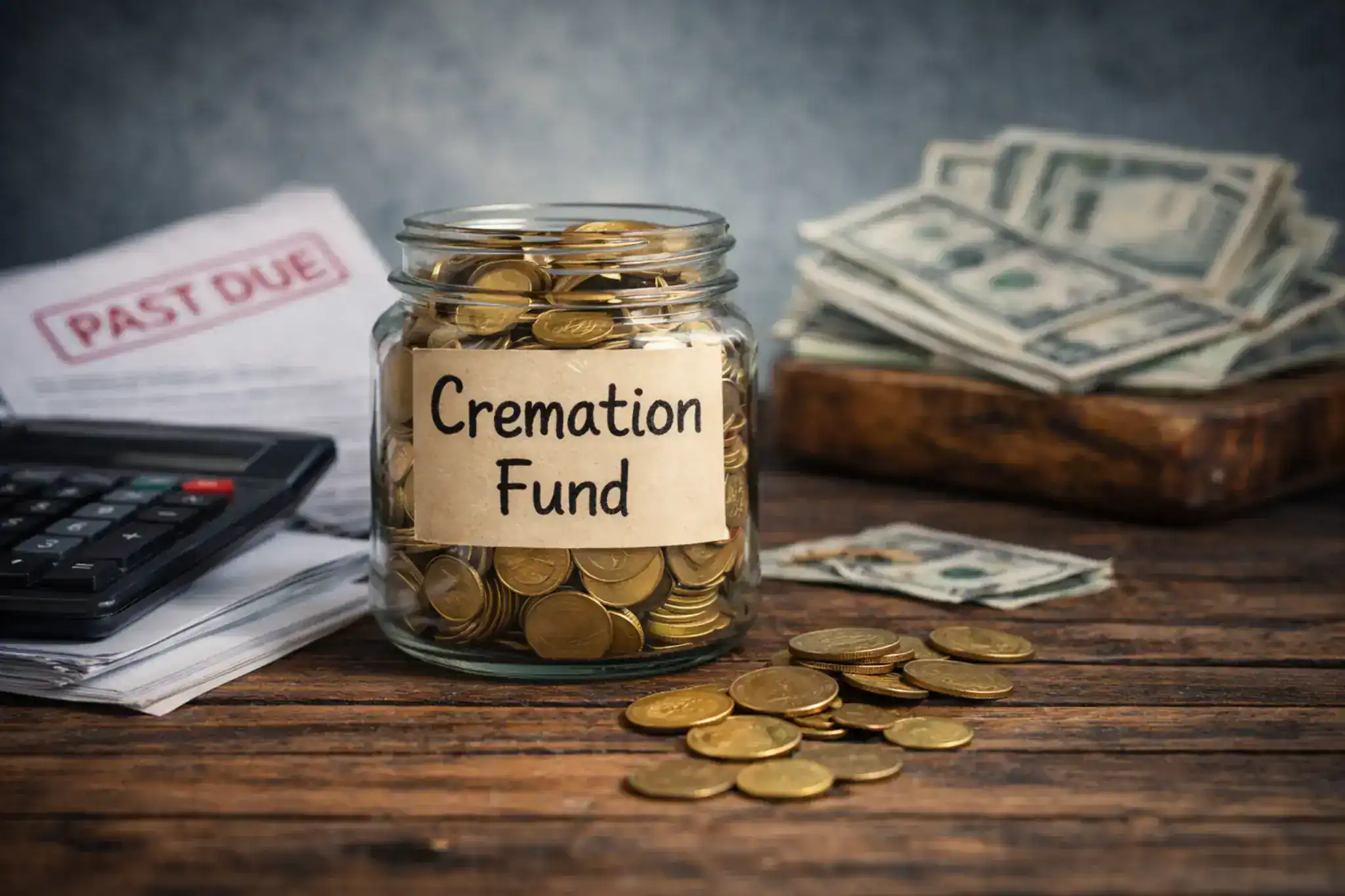
Most families pay for a funeral or cremation with a combination of sources: the deceased’s life insurance or prepaid plan, money from the estate, and cash or a card from the family. This guide explains each payment option, when the funeral home expects to be paid, and which option to use first.
Quick answer
You can pay for a funeral with cash, check, debit or credit card; by assigning a life insurance policy so the insurer pays the funeral home directly; with a prepaid funeral plan or burial insurance; from the deceased’s estate or a payable-on-death account; through a payment plan or loan; or with help from family or a fundraiser. Most funeral homes expect payment, or a verified insurance assignment, before services take place, and third-party costs such as permits and death certificates are usually due up front.
When do you have to pay for a funeral?
Most funeral homes and cremation providers ask for payment in full, or a verified life insurance assignment, before the funeral or cremation takes place. Many introduced this policy after too many families were left unable to pay afterward.
Part of every bill goes to third parties. These cash advance items include the death certificate, the burial or cremation permit, crematory and cemetery fees, obituary notices and flowers. The funeral home pays them on your behalf, so they are usually due up front even when the rest of the bill can wait. Under the FTC Funeral Rule, the funeral home must tell you if it adds a service charge to cash advance items or receives a discount or rebate on them.
The person who signs the contract pays the bill. Whoever signs as the responsible party is personally liable, even if the money is later reimbursed from the estate. Agree who is paying what before anyone signs.
What are the ways to pay for a funeral or cremation?
| Payment option | How it works | How fast | Watch out for |
|---|---|---|---|
| Cash, check or debit card | Paid directly by the family | Immediate | Get the itemized statement before you pay |
| Credit card | Accepted by most funeral homes | Immediate | Card interest averaged 21.4% in 2025; some providers add a card fee |
| Life insurance assignment | Beneficiary assigns part of the payout to the funeral home | Days to weeks (the funeral home waits) | Assign only the amount on the itemized statement |
| Prepaid plan or burial insurance | Pays the provider named in the plan | Already arranged | Non-guaranteed items may cost more today |
| Estate or payable-on-death account | Paid from the deceased’s money | POD: days; probate: months | Only reasonable costs are reimbursed |
| Funeral home payment plan | Installments agreed with the provider | Immediate, if offered | Deposit, interest or late fees |
| Funeral or personal loan | Third-party lender pays the bill | Days | Interest and credit checks |
| Splitting costs among family | Relatives each contribute | Immediate | Disagreement over what was arranged |
| Crowdfunding | Friends and community donate online | Days to weeks | Transaction fees; slow to arrive |
How does each funeral payment option work?
Can you pay for a funeral with cash, check or a debit card?
Paying directly is still the most common way families pay for a funeral, and it gives you the most control. Treat it like any other major purchase: compare prices from at least three providers, ask for the itemized General Price List, and don’t feel pressured to decide on the spot. You don’t need to tell a funeral home your budget before you have seen its prices.
Do funeral homes take credit cards?
Yes. Most funeral homes and cremation providers accept major credit and debit cards, though some add a processing fee, so ask first. A card is quick, but expensive if you carry the balance: the average credit card interest rate rose from 14.6% in 2022 to 21.4% in 2025, according to the Federal Reserve. Use a card only if you can pay it off quickly, or if a new card’s 0% introductory rate lasts long enough to clear the balance.
Can life insurance pay the funeral home directly?
If the person who died had life insurance, the beneficiary can sign an assignment that tells the insurer to pay part of the death benefit straight to the funeral home. The funeral home receives the amount of the bill, and the beneficiary receives the rest. Most funeral homes accept assignments and will verify the policy with the insurer before services go ahead.
- Assign only the funeral bill. The assignment should match the total on your itemized statement, not the full value of the policy. The funeral home doesn’t need to know how much the policy is worth.
- Newer policies can take longer. Most policies have a contestability period, usually the first two years, during which the insurer can review a claim before paying. A funeral home may be reluctant to accept an assignment on a very new policy.
- Group life insurance through an employer can usually be assigned too. Ask the employer’s HR department for the claim forms.
Does a prepaid funeral plan or burial insurance cover everything?
A prepaid (pre-need) funeral plan or a burial insurance policy can cover some or all of the cost. Look through the deceased’s paperwork, mail and bank statements for payments to a funeral home, cemetery or pre-need insurer. Then ask the provider for a copy of the contract and check which items are guaranteed. Older plans sometimes cover the services at the original price but not items added later, so the family may still owe a balance. If the plan is with a provider you don’t want to use, it can often be transferred to a lower-cost provider. Read more about burial insurance.
How do I use the deceased’s estate or bank accounts to pay for a funeral?
The deceased’s estate normally pays reasonable funeral expenses, and in most states these come ahead of ordinary debts such as credit cards. The catch is time: an estate that goes through probate can take months to release money.
- Payable-on-death (POD) accounts and Totten trusts pass straight to the named beneficiary without probate, often within days of the bank receiving a death certificate.
- Joint accounts usually pass to the surviving owner.
- Some banks will pay a funeral bill directly from the deceased’s account. Policies and state rules vary, so ask the bank.
- If you pay first, keep every receipt. The executor can reimburse reasonable funeral costs from the estate, and a funeral home may be more flexible on timing if you can show that funds are coming.
Do funeral homes offer payment plans?
Some funeral homes and cremation providers let families pay in installments, particularly for direct cremation, but many require a deposit before cremation or burial. Policies vary widely, so ask each provider when you call for prices. Get any plan in writing, including the number of payments, any interest or fees, and what happens if a payment is late.
Can you finance a funeral with a loan?
Some lenders specialize in funeral financing, and some funeral homes work with a lending partner. A personal loan from a bank or credit union is often cheaper, so compare the interest rate and total repayment before you sign. Borrowing can make sense to bridge a short wait for insurance or estate money. It is a poor choice for a funeral you can’t otherwise afford. If you do borrow, borrow only for the lowest-cost arrangement you would choose anyway.
How do families split the cost of a funeral?
When there is little or no money in the estate, relatives often share the cost. Agree before anyone signs: what is being arranged, the total, who pays what share, and who will sign the contract. Keep it in writing, even if only in a text message or email to everyone, because the person who signs is the one the funeral home will pursue for payment.
Can you crowdfund a funeral?
Online fundraisers let friends, coworkers and community members contribute, however small the amount. GoFundMe charges no platform fee for personal fundraisers in the U.S. but deducts a transaction fee of 2.9% plus $0.30 from each donation. Donations can take time to arrive, so set a specific goal based on a firm price, explain how the money will be used, and pay the provider directly from the funds where you can. Places of worship and community groups may also hold a collection or event.
Which payment option should you use first?
- Check what is already in place: a prepaid plan, burial insurance or life insurance.
- Use the deceased’s own money: payable-on-death accounts, joint accounts, then the estate.
- Claim benefits: VA burial allowances, the Social Security death payment and any employer or union benefit. See government benefits that help pay for a funeral.
- Pay the remainder with cash, debit or a card you can clear quickly.
- Ask about a payment plan before considering a loan.
- Borrow or fundraise last, and only for the lowest-cost arrangement you would choose anyway.
How can you lower the funeral bill before you pay it?
The cheapest bill is the easiest to pay. Under the FTC Funeral Rule, you can buy only the items you want, get prices over the phone, and use an alternative container instead of a casket for cremation. Direct cremation costs about $795 to $1,495 with many independent providers, against a national median of $6,280 for a funeral with viewing and cremation (NFDA). See how to save money arranging a funeral or cremation and, if money is very tight, help with funeral costs.
Every option from direct cremation to green burial with real price ranges, your rights under the Funeral Rule, a step-by-step planning checklist, and published direct cremation prices state by state. 28 pages, free, no sign-up.
Download the free planning guide (PDF)Frequently asked questions
Yes. Most funeral homes and cremation providers accept major credit and debit cards, though some add a processing fee. Because the average credit card interest rate was 21.4% in 2025, a card is best used only if you can pay off the balance quickly.
Some do, particularly for direct cremation, but many require a deposit before the cremation or burial. Ask each provider when you call for prices, and get any plan in writing, including the number of payments, interest and late fees.
Usually. Most funeral homes ask for payment in full, or a verified life insurance assignment, before services take place. Cash advance items paid to third parties, such as permits, death certificates and crematory fees, are typically due up front.
Yes. The beneficiary can sign an assignment telling the insurer to pay the funeral home directly. Assign only the amount on the itemized statement; the beneficiary receives the rest of the death benefit.
Sometimes. Money in a payable-on-death or joint account passes to the named beneficiary or surviving owner, who can use it. Some banks will also pay a funeral bill directly from the deceased’s account. Otherwise the executor can pay or reimburse reasonable funeral costs from the estate.
Yes. Some lenders offer funeral loans, and some funeral homes work with a lending partner. A personal loan from a bank or credit union may cost less. Borrow only for the lowest-cost arrangement you would choose anyway.
The person who signs the funeral contract is responsible for paying it, so families often share the cost. If no one can pay, many counties provide a basic cremation or burial through an indigent program. You usually must apply before any services are provided.
Bottom line
Use the money that is already set aside first (insurance, a prepaid plan, payable-on-death accounts and the estate), claim every benefit, and pay what is left in the cheapest way available to you. Agree within the family who is paying before anyone signs, and borrow only as a last resort.
Know the price before you choose how to pay.
Compare local direct cremation prices- Federal Trade Commission, The FTC Funeral Rule.
- Board of Governors of the Federal Reserve System, Changes in U.S. Family Finances from 2022 to 2025, October 2026 (credit card interest rates).
- National Funeral Directors Association, 2023 General Price List Study.
- GoFundMe help center, transaction fees (U.S.), updated January 2026.
- Direct cremation price range: independent providers in the DFS Memorials network, October 2026. See our sources and methodology.


