As the cost of traditional funerals continues to rise, many families in Indiana are turning to cremation as a more affordable and flexible alternative. Different cremation options are available to families, and deciding what type of cremation service is required is important.
Below is a breakdown of average & best direct cremation prices by city in Indiana.
| City | AVERAGE PRICE | BEST PRICE (DFS) | CALL NOW – DFS |
|---|---|---|---|
| Anderson | $2,384 | $850 | (317) 207-6929 |
| Bloomington | $2,131 | $950 | (812) 213-2009 |
| Carmel | $3,155 | $900 | (317) 207-6929 |
| Evansville | $2,525 | $1,175 | (812) 213-2009 |
| Fishers | $3,000 | $900 | (317) 207-6929 |
| Fort Wayne | $2,311 | $1,175 | (260) 366-6686 |
| Gary | $1,550 | $1,175 | (219) 200-0123 |
| Hammond | $2,418 | $1,175 | (219) 200-0123 |
| Indianapolis | $2,261 | $850 | (317) 207-6929 |
| South Bend | $1,848 | $1,175 | (574) 208-1280 |
Low-cost direct cremation prices above are offered by DFS Memorials – a network of affordable cremation service providers. Visit DFS Memorials – Indiana to check other locations and prices.
The most economical service is known as a “direct cremation,” where the deceased is taken into the care of a funeral home/cremation provider, all the necessary legal paperwork is completed, and the body is then cremated. There is generally no viewing or service with a direct cremation.

What are the different types of cremation service options and costs in Indiana?
There are three main types of cremation choices available to families in Indiana, and we have outlined the differences below.
⚱️ Direct Cremation
A direct cremation involves the immediate cremation of the deceased without a formal funeral service. This basic cremation service has become popular for its simplicity and cost-effectiveness. The average cost of a direct cremation in Indiana in 2026 is $2,295*
However, it is crucial to note that prices can vary significantly by location, with major metropolitan areas like Indianapolis generally offering lower costs than rural areas.
This discrepancy can be attributed to increased competition, higher population density, and greater availability of cremation facilities.
Direct cremation Indianapolis $850 📞 (317) 207-6929
🕯️ Cremation Memorial Service
A cremation memorial typically refers to a cremation taking place before a memorial service. The memorial service can be held at the funeral home, chapel, church, place of worship, or at any chosen location. Some families today choose to hold memorial services at community venues.
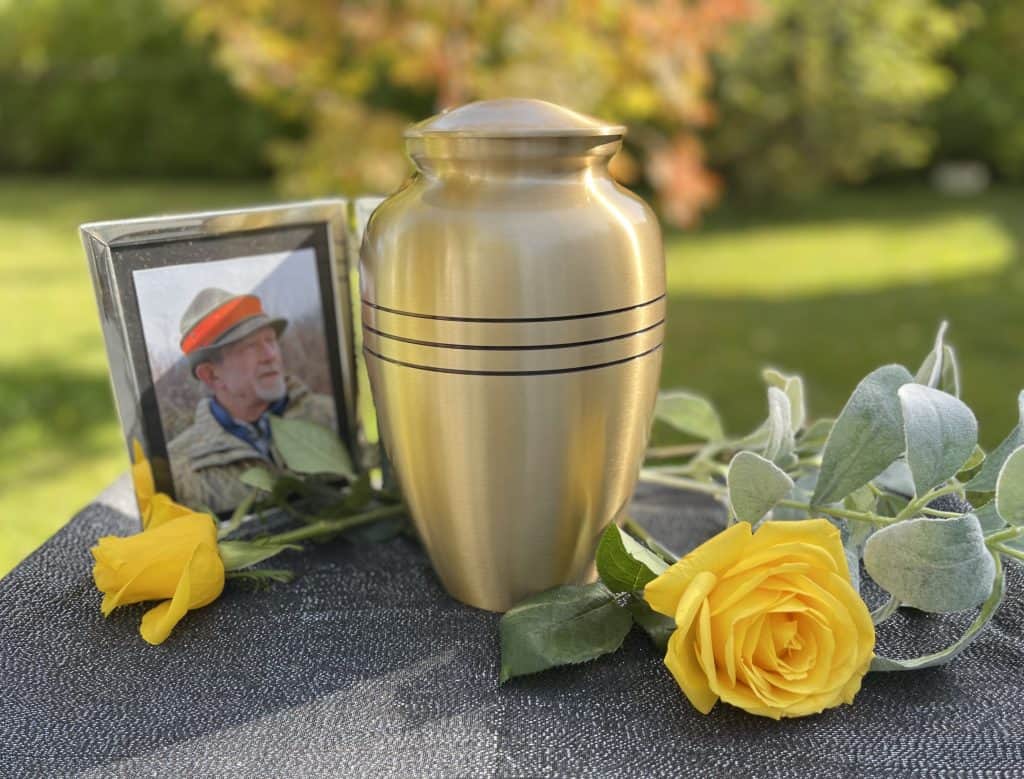
The memorial service will usually be held with the cremation urn present as a focal tribute to the deceased. However, memorial services are also held without the cremated remains present.
It is not as simple to give an overview of the costs of cremation memorial services, as the ‘variable’ of the memorial service will determine the final price. Much will depend on whether the funeral home and other ancillary services conduct the memorial service, such as the type of cremation urn selected, flowers, photographs, and other tribute materials.
⛪ Full-Service Cremation Funeral
This type of service is a full-service funeral, with the cremation conducted after the funeral service. Some families want to hold a visitation, wake, or formal funeral ceremony, even if they choose cremation.
A viewing, visitation, or vigil can be held at the funeral home. Family and friends can gather for a funeral service, typically with the deceased present. Following the funeral ritual, the deceased is transferred to the crematory for cremation, and the cremation ashes are then returned to the family.
This type of cremation service is like a traditional funeral service, except the deceased is cremated after the ceremony and services, rather than being transferred to the cemetery for burial.
This option enables a family to have all the traditional funeral rituals without the additional expense of a cemetery plot. Or a family may have a cemetery plot where they wish to inter the cremated remains.
Understanding average cremation costs in Indiana today?

As discussed, cremation service costs vary depending on the type of service and the provider. So, quoting “average” costs can be difficult. One funeral home can charge $850 for a direct cremation, yet another will charge $2,900. They are both offering the exact same service. Meaning the higher end of the pricing spectrum can skew an “average” price for direct cremation.
Summary – Cremation Options & Costs
- Cremation services have gained popularity as cremation offers a much more affordable death care alternative. Whether the cost is the driving factor, or for those families and individuals who want a simple, flexible, and more creative option.
- Direct cremation offers families an extremely cost-effective option to manage an immediate death or preplan for a simple cremation.
- Choosing cremation allows a family to personalize memorialization. There are many options for conducting a memorial service and creating memorial artifacts from cremated remains.
Pros:
- Offers the most economical cremation option.
- Can eliminate many ancillary funeral expenses.
- Can be arranged without visiting the funeral home.
- It is easy to make arrangements from out-of-state & have cremated remains shipped to the family for a memorial service elsewhere.
- Allows for the disposition of a body to be handled quickly yet with dignity. And enable the family to postpone a funeral memorial service until later.
Cons:
- May require the family to submit online forms with the information required to process the cremation. This often helps a direct cremation provider collate data and manage staff arrangement time/costs.
- The cremated remains are usually returned in a temporary cardboard container unless you add a cremation urn to your direct cremation service package.
Direct cremation in Indiana typically ranges from $850 to $2,500, depending on the provider and location. National providers like Neptune Society often charge toward the higher end of this range, particularly when additional services or prepaid plans are included.
Local funeral homes and independent cremation providers may offer more competitive pricing. Families can often find lower-cost options by comparing services and choosing a simple cremation package without extras.
Services such as DFS Memorials help families compare trusted local providers across Indiana, often securing more affordable direct cremation options without compromising on care.
Cremation Memorial Service
Pros:
- A family can still gather for a ceremony, but since cremation is conducted first, the time frame for a memorial service is more flexible.
- Memorial services can be uniquely personalized, allowing the family to be creative in their design.
- Offers a more affordable funeral celebration/ritual event.
Cons:
- As Memorial services, or a Life Celebration Memorial, can get quite creative, the ancillary costs for the memorialization can easily escalate.
Traditional Cremation Service
Pros:
- A funeral service is held at the time of passing and can help families to say goodbye.
- It will cost less than a traditional burial service.
- More funeral homes offer rental caskets for cremation services to help reduce casket costs.
Cons:
- As you are conducting a traditional service with the help of a funeral director, it can be easy to find that ancillary expenses can add up.
- A traditional cremation service is generally held relatively soon after the deceased passes. A direct cremation or cremation memorial can enable the family to defer the need for immediate services.
What You Can Do with Cremation Ashes
After a cremation service, a family has several options for what to do with the cremated remains. This may depend on their preferences and beliefs or the costs associated with cremation memorialization choices.
Listed below are the main options for you to consider:
1. Keep the ashes at home: Many families choose to keep the ashes in an urn or a special container at home. This allows them to create a comforting presence and keep their loved ones nearby. Some families even display the ashes in a special area or create a memorial space.
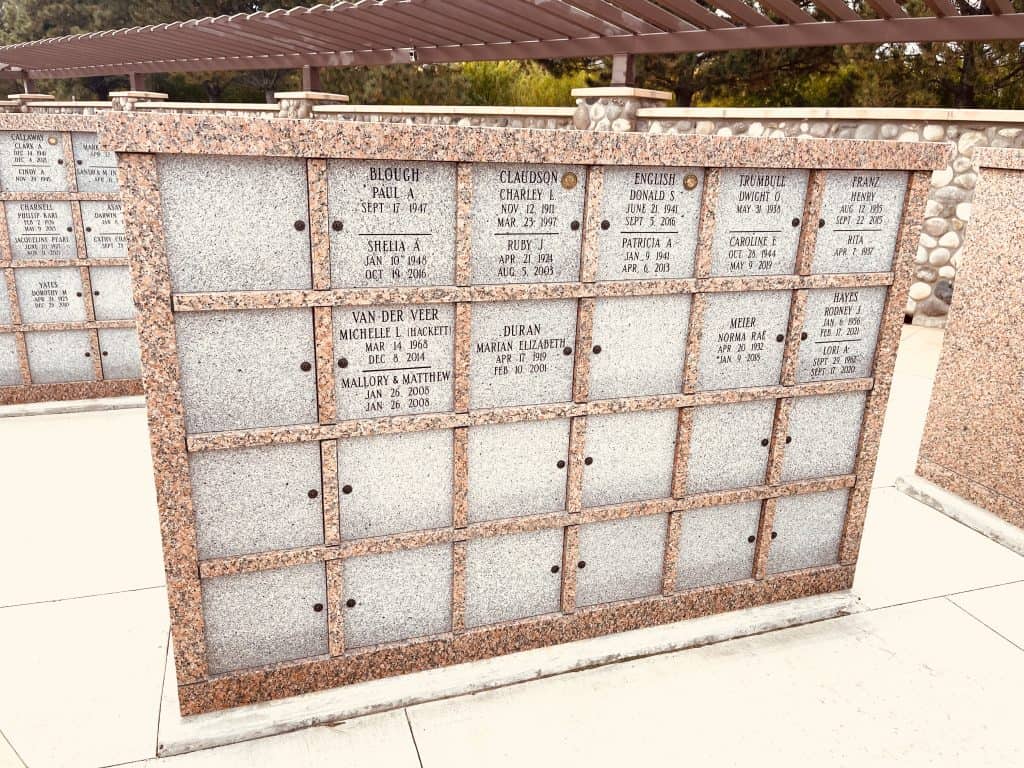
2. Bury the ashes: Families can choose to bury the ashes in a cemetery or a designated burial plot. This provides a more permanent resting place and allows for future visits and remembrance. Aside from cemetery burial plots, more cemeteries now offer dedicated cremation columbarium niches and bespoke memorial scattering gardens. Some gardens offer small plaques or benches to create a long-lasting tribute.
3. Scatter the ashes: Scattering the ashes can be a meaningful way to honor the deceased’s memory. Ash scattering is now a popular choice for many families. Scattering cremation ashes can hold great symbolism for many people. It represents releasing and returning a loved one’s physical remains to the elements, freeing their spirit. The act of scattering ashes can symbolize letting go, saying goodbye, and allowing the deceased to become part of the natural world.
These are just a few suggestions, and it ultimately depends on the family’s wishes and cultural or religious practices. It may be helpful to consult a funeral director, who can provide guidance and support as you decide.
Remember that there is no timeframe for when or how to memorialize a loved one. So, if you are unsure, do not make a rushed decision.
Ash Scattering in Indiana: Laws, Locations & Practical Guidance
Cremation provides families in Indiana with the flexibility to choose a final resting place that reflects personal connections, traditions, or a love of nature. While ash scattering is generally permitted, it’s important to understand where it can take place and any permissions that may be required.
Is Ash Scattering Allowed in Indiana?
Yes. There are no specific state laws prohibiting the scattering of cremated remains in Indiana. Ashes are considered non-hazardous, but scattering should always be carried out respectfully and in accordance with local rules or property rights.
Where Can You Scatter Ashes in Indiana?
- Indiana Dunes National Park – A stunning Lake Michigan shoreline setting with dunes, beaches, and expansive lake views.
- Brown County State Park – Known for its rolling hills and forests, offering a peaceful and natural environment for remembrance.
- Lake Monroe – Indiana’s largest lake, ideal for a quiet waterfront or boat-based scattering ceremony.
- White River (Indianapolis area) – A meaningful urban waterway with accessible locations for small, private ceremonies.
- Turkey Run State Park – Famous for its scenic sandstone ravines and wooded trails, providing a tranquil natural setting.
Always check local guidelines or obtain permission where required, especially for state parks or organized ceremonies.
Families have several meaningful options across the state:
Private Property
- Ashes may be scattered on private land with the owner’s consent
- Many families choose a family home, farm, or a place with personal significance
State Parks and Natural Areas
- Indiana offers beautiful natural settings, such as Brown County State Park and Turkey Run State Park
- Permission from the park authorities is typically required before scattering
Lakes and Rivers
- Popular locations include Lake Monroe and sections of the White River
- Water-based ceremonies can be especially meaningful for families
Public Land and Rural Settings
- Quiet countryside areas or wooded land can provide a peaceful backdrop
- Always confirm land ownership and obtain permission where necessary
Creating a Personal Scattering Ceremony
Whether simple or more structured, a scattering ceremony can be deeply meaningful. Families often include:
- A reading, prayer, or personal tribute
- Music that reflects their loved one’s life
- A moment of silence or shared reflection
- The release of flowers or biodegradable items
Many families find that choosing a natural location in Indiana allows for a more relaxed and personal farewell, away from the formality of a traditional funeral setting.
Memorial Service Ideas & Unique Venues in Indiana
With direct cremation, families are not restricted by timing or location. This allows for a thoughtful, personalized memorial service or celebration of life that can take place days or even weeks later, in a setting that feels right.
Memorable Locations for a Celebration of Life
State Parks and Scenic Outdoor Settings
Indiana’s parks and forests offer beautiful, tranquil places for reflection. A gathering surrounded by nature can create a calm and reflective atmosphere.
Lakefront and Waterside Gatherings
Lakes such as Lake Monroe offer ideal settings for small ceremonies, boat-based tributes, or informal family gatherings by the water.
Indianapolis Area Venues
In and around Indianapolis, families can find a range of venues—from parks and gardens to private event spaces and community halls.
Rustic Barns and Countryside Venues
Indiana’s rural landscape offers charming barns and farm venues that are perfect for a more relaxed, personal celebration of life.
Restaurants and Private Event Spaces
Many families choose to host a gathering in a private dining space, combining remembrance with shared food, conversation, and connection.
Planning a Meaningful Tribute After Direct Cremation
A family-led memorial service offers complete flexibility. You can:
- Choose a meaningful date that allows loved ones to attend
- Select a venue that reflects personality and lifestyle
- Create a formal ceremony or a casual celebration of life
- Incorporate photos, videos, music, and storytelling
Separating the cremation from the memorial often helps families focus on honoring a life rather than managing immediate logistics.
Arranging a simple cremation first through providers such as DFS Memorials allows families to reduce costs while planning a more personal and memorable tribute anywhere in Indiana.
What Indiana Legislation Governs Cremation Arrangements & Requirements?
The laws governing cremations in Indiana are primarily outlined by the Indiana State Board of Funeral and Cemetery Service. This article contains regulations and requirements for the cremation process to ensure it is conducted safely and legally.
The main key points are:
Authorization: Before a cremation can occur, the person with the legal authority to make decisions regarding the deceased’s remains must provide written authorization. This is generally referred to as the Authorization for Cremation & Disposition.
By law, a licensed funeral director must oversee the final disposition of a body in Indiana. For example, only a licensed funeral director may be issued a permit to move the body for final disposition. (See Indiana Code §§ 16-37-3-10 and 25-15-8-25.)
Identification: The deceased must be properly identified and labeled before cremation begins. This ensures your loved one is tracked throughout the whole cremation process.
Documentation: Detailed records must be maintained throughout the cremation process, including the deceased’s identity, the date and time of cremation, and any medical devices or implants present.
Crematory requirements: Crematories must meet specific standards and obtain the necessary permits and licenses to operate legally in Indiana.
Disposition of remains: After the cremation, the cremains must be properly handled in accordance with the wishes of the deceased or their authorized representative. A funeral home will require the family to sign a Designation of Intentions document.

Although a funeral director must arrange disposition, Indiana law determines who can make final decisions about a person’s body and funeral services.
This right and responsibility go to the following people, in order: a person you name in a “funeral planning declaration” made before your death, your agent under a health care power of attorney, your surviving spouse, your adult child, your surviving parent, your next of kin, your stepchild, or any other person willing to take on the legal and financial responsibility.
Cremation Container: A casket is NOT required by law for a cremation. All that is required is a suitable rigid container, usually a reinforced cardboard or plywood box. Some funeral homes offer rental caskets if you wish to hold a funeral service before the cremation.
These are the key aspects of the Indiana laws regarding cremation. For more specific information or if you have any additional questions, consult an attorney or contact the Indiana State Board of Funeral and Cemetery Service for official guidance.
402 W Washington St, Indianapolis, IN 46204 Phone (317) 234-3031
Do you have to employ a funeral director for a direct cremation? Can the family deal directly with the crematory?
Indiana funeral legislation requires that you arrange cremation through a funeral director, who will obtain the necessary permits. The law states that burial permits can only be issued to funeral directors.
How long does a cremation take in Indiana?
In Indiana, a 48-hour waiting period before cremation may occur, unless waived by the local health officer (Indiana Code § 23-14-31-36). However, completing the legally required paperwork usually takes at least 24 hours.
It is fair to say that cremation usually takes 5-7 days. (Longer if there are any issues with consent or issuing a death certificate)
The deceased will be sheltered in refrigerated storage during this time. A direct cremation service package generally includes refrigeration for 10-14 days. If the funeral home must store the deceased for longer, there may be an additional daily refrigeration fee.
What is the least expensive cremation service?

Direct cremation is the least expensive option. It is when cremation is carried out without a service or ceremony. It is a simple, dignified cremation of the deceased with minimal fuss and at a minimal cost.
The cremated remains are returned to the next of kin after everything has been taken care of. A family can hold a memorial service when ready, which can even be conducted at home for much less.
Direct cremation addresses the immediate need to arrange the deceased’s disposition. Still, it can also enable the family to defer the need for a memorial service or to craft their own bespoke, personalized ‘send off.’

Are there any additional fees for a low-cost cremation service in Indiana?
The service charge for a direct cremation is listed on the funeral provider’s General Price List. This should include the basic services of the funeral director, collection and transfer of the deceased, completing the legal paperwork, and conducting the cremation. It usually includes a simple cardboard cremation container and a temporary urn.
The funeral director will pay third-party fees to the local county to obtain the death certificate and pay for any permit charges. These fees are added to the direct cremation service fee.
The fee for a death certificate is $8.00 for the first copy and $4.00 for each additional copy ordered.
The funeral director must file the death certificate with the health officer in the jurisdiction where the death occurred. Indiana statutes do not provide a deadline for filing the death certificate, but the state uses an electronic death registration system to simplify the process.
After filing the death certificate, the funeral director will obtain the necessary permits for transporting the body and for burial or cremation. (Indiana Code § § 16-37-3-10 and 25-15-8-25)
You may need more than one death certificate if you must simultaneously send them to multiple institutions, organizations, or government offices.
Most authoritative bodies that need evidence of the death, such as a life insurance company, will require an original copy of a death certificate. Certified copies of a death certificate are usually available within ten days after the death.

There can be an additional charge if any of the following services are required:
- Residential collection
- Removal of a pacemaker
- Overweight surcharge (above 250 pounds)
- Family arrangement consultation
- Mailing of cremated remains
What about a “no-cost” cremation in Indiana?
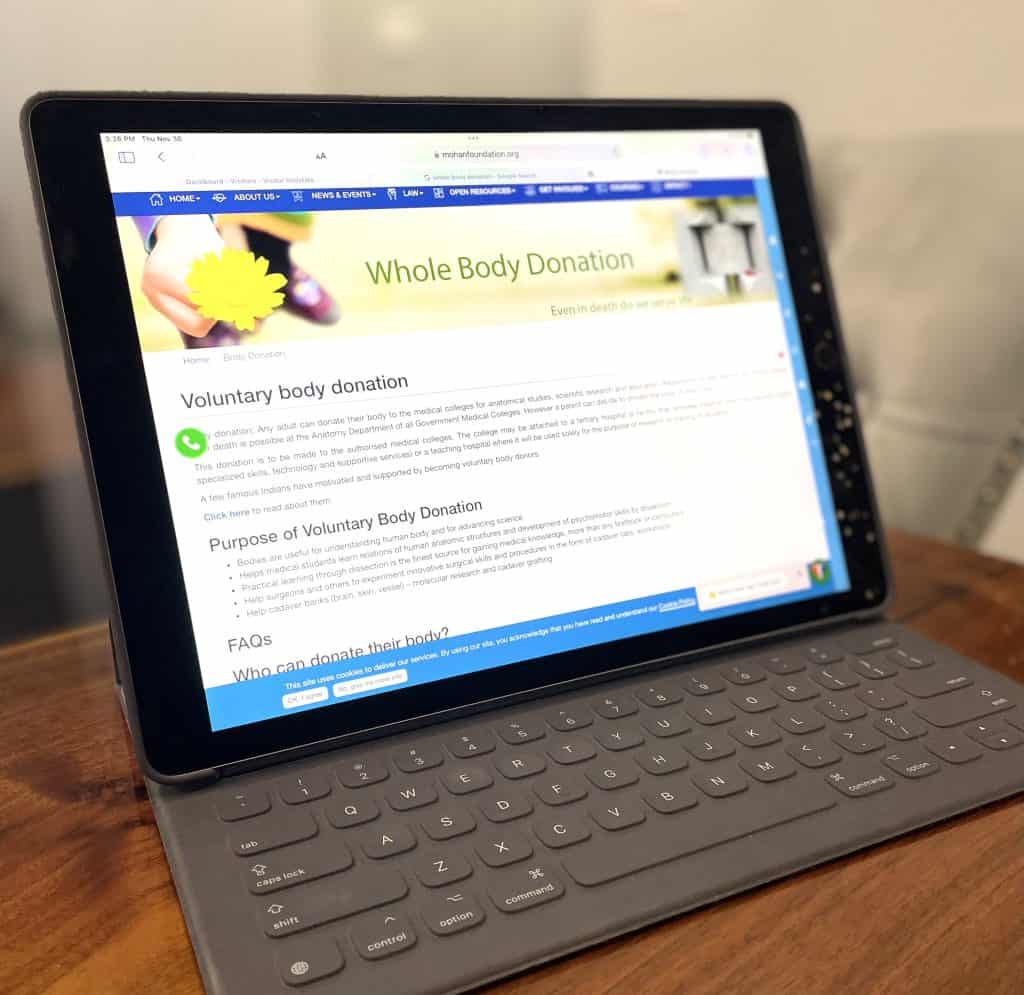
What is sometimes called a “free” cremation or “no-cost” cremation is a whole-body donation. Once the donation is performed, the remains are cremated free of charge. However, in some cases, there are costs associated with transporting the deceased and obtaining death certificates.
Donating your body to medical science has been an end-of-life choice for some time. However, it has undoubtedly gained more popularity in recent times. For many, it now seems a valuable disposition method, commonly called an “anatomical gift.”
Several national organizations offer an anatomical gift program through which you can donate your body to science for the benefit of future generations.
They arrange the collection of the deceased, medical donation, cremation of remains, and return of cremains to the family, usually at no charge. A number of Universities and Medical Schools in Indiana also operate whole-body donation programs.
Indiana University School of Medicine – IU School of Medicine – Anatomical Education Program, 635 Barnhill Dr. MS 304, Indianapolis, IN 46202 Phone (317) 274-7450
The IU Anatomical Education Program was created in 1903 by the Indiana General Assembly to ensure the quality of education for medical, dental, and health students across the State of Indiana. This program is administered by the Indiana University School of Medicine and is authorized to acquire and distribute donated human remains, as well as to formulate standards for their use.
Do understand that an anatomical donation cannot always be accepted at the time of death. It can be affected by the needs of medical and research institutions and transportation services at the time.
Visit our Body Donation page to read further about this option.
Does Indiana State offer any financial assistance with cremation costs?
The State of Indiana provides burial assistance to eligible individuals in specific Medicaid categories. Only funeral homes and cemeteries can file on behalf of the deceased, and the claim must be submitted within 90 days of death. The maximum paid is $1,200 for the funeral and $800 for the cemetery. Payment is sent directly to the funeral services provider.
Who qualifies: The program covers people who were receiving Indiana Medicaid in an eligible category at the time of death: Aged, Blind, Disabled, Disabled Working, SSI (disability), or the Residential Care Assistance Program. Families cannot apply or be reimbursed directly. The funeral home or cemetery files the claim (State Form 35937) and the state pays the provider. Because the 90-day deadline is strict, ask your funeral director to check eligibility as soon as possible. Details are on the FSSA Burial Assistance Program page.
Federal Resources: Social Security may pay a $255 lump-sum death benefit if qualifying, and certain veterans’ benefits are available.
County/Municipality Resources: Local townships may also offer assistance. The amounts vary. You should contact your local Family and Social Services Administration for more information. Indiana Family and Social Services Administration, 402 W. Washington Street, P.O. Box 7083, Indianapolis, IN 46207.
If you need help or want to apply: To learn more about Indiana Medicaid Burial Assistance or to apply, visit the FSSA website or call 1-800-457-8283.
What happens if I cannot pay for a cremation?
As covered above, the family can explore federal, state, and county programs to see if the deceased and the surviving family are eligible. If the deceased had no prepaid funeral plan or life insurance, the responsibility for paying the funeral bill fell to the immediate next of kin. This can be very stressful if you lose a family member and become responsible for the funeral arrangements without any resources.
Check out this guide to What to do if I cannot afford a funeral to learn about other possible funding and charity organizations.
What happens if the deceased is at the Medical Examiner’s morgue?
If the deceased is at the coroner’s office, you must arrange for a funeral director to collect the body when the coroner signs the release form. You must authorize the funeral director to collect your loved one and transfer him or her into their care.
Most funeral directors regularly deal with the coroner’s office, and the ME issues the authorization and permit to cremate, which can make the arrangements easier. For this reason, some funeral homes can offer a budget direct cremation when handling remains from the Medical Examiner.
There are 92 Coroners & Medical Examiners in Indiana. Visit the in.gov Coroners Directory to find your local County Coroner.

How to Make a Complaint if You Are Dissatisfied with a Cremation Service Provider in Indiana
If you had a bad experience with a cremation service in Indiana, you must notify the correct licensing and legal authorities. This way, appropriate action can be taken, and other consumers can be protected. Below are some steps you can take to register a complaint.
1. Gather information: Firstly, ensure you have all the necessary details about the cremation provider, such as their name, address, and contact information. Additionally, note down the specifics of your complaint and any supporting documentation you may have.
2. Contact the provider: Start by contacting the cremation provider directly. Explain your concerns and see if they can address and resolve the issue to your satisfaction. If they are unresponsive or you are not satisfied with their response, proceed to the next step.
3. File a complaint with the Indiana State Board of Funeral and Cemetery Service: The Indiana State Board of Funeral and Cemetery Service oversees funeral and cremation services. You can file a complaint with the Board. You can contact them directly for guidance on how to proceed.
Contact details: 402 W Washington St, Indianapolis, IN 46204 Phone (317) 234-3031
Do note: The Board can only take action if it finds sufficient evidence that the funeral director has violated Public Health Law in implementing cremation regulations. If the complaint concerns a dispute over cremation fees, please note that the Department has no jurisdiction over the fee amount charged; it applies only to the mandated disclosure of the fee, as per the FTC Funeral Rule.
If your complaint concerns fees charged or any other consumer issue, you may wish to file a formal complaint with the Federal Trade Commission. You can file a complaint with the FTC online or call 1-877-FTC-HELP (382-4357).
The FTC cannot resolve individual consumer problems, but it can act against a funeral/cremation company if it sees a pattern of violations of the law.
4. File a complaint with the Indiana Attorney General: Another option is to contact the Indiana Attorney General’s Office. Online complaints can be submitted here.
Indiana Government Center South
302 W. Washington St., 5th Floor
Indianapolis, IN 46204
Phone (800) 382-5516 or (317) 232-6330
5. Seek legal advice: If the issue remains unresolved or you feel further action should be taken, you might consider consulting with an attorney specializing in funeral law or consumer protection. They can provide you with legal guidance and help explore your options for further action
If you have further questions about cremation services or costs in Indiana that we have not answered, please get in touch with us. We are here to assist you.
For a comprehensive overview of all funeral, cremation, and burial options in Indiana — including laws, veterans benefits, body donation, and financial assistance — visit our Complete Guide to Funeral Costs & Options in Indiana.
Frequently Asked Questions About Cremation in Indiana
Direct cremation is the least expensive option. DFS Indianapolis offers direct cremation from $850, while the statewide average is $2,295. This service includes collection of the deceased, all required paperwork, the cremation itself, and a temporary urn – with no viewing or ceremony.
Yes. Indiana law mandates a 48-hour waiting period after death before cremation can proceed (IC 23-14-31-36). This can be waived by the local health officer in certain circumstances. No embalming is required and no storage fee should be charged during this period.
No. Indiana law does not require a casket for cremation. An alternative container – a rigid or non-rigid enclosure made of non-metallic material – is all that is required. In practice, a reinforced cardboard or plywood box is typically used and is included in most direct cremation packages.
No. Embalming is not required by Indiana state law. A funeral director may recommend embalming if a viewing or open-casket ceremony is planned, but it is a personal choice. Refrigeration is available as an alternative during any waiting period.
Indiana law establishes a priority order: a person named in a funeral planning declaration, a health care power of attorney agent, the surviving spouse, adult children, surviving parents, next of kin, stepchildren, or any other person willing to assume legal and financial responsibility. A pre-signed cremation authorization takes precedence.
Indiana allows scattering in a designated scattering area or memorial garden, on any private land with the landowner’s consent, or on any uninhabited public land or waterway. The Indiana Department of Health requires documentation of the date, manner, and location when scattering on private property. Lake Michigan scattering is also permitted.
A certified copy of a death certificate costs $8 for the first copy and $4 for each additional copy from the Indiana Department of Health. Most families order 5 to 10 copies to handle insurance claims, bank accounts, probate, and government notifications.
No. As of 2026, aquamation (alkaline hydrolysis) is not yet legal in Indiana. The state has not passed legislation authorizing this method of disposition. Human composting (natural organic reduction) is also not yet legal in Indiana.
No. Unlike many states, Indiana law requires a licensed funeral director to oversee all final dispositions. Only a licensed funeral director may be issued a permit to move or cremate a body (Indiana Code 16-37-3-10 and 25-15-8-25). Families cannot deal directly with a crematory.
Yes. The primary program is the Indiana University School of Medicine Anatomical Education Program in Indianapolis, which was established in 1903. IU typically covers all costs of cremation and transportation. National organizations such as Science Care and MedCure also accept donations in Indiana. Have a backup funeral plan as donations are not always accepted.
Part of our Complete Guide to Cremation
This Indiana guide is one of our state-by-state cremation resources. Explore more:
- The Complete Guide to Cremation — how cremation works, costs, options & your rights
- Average Cost of Cremation — national & state-by-state pricing
- Compare Cremation Providers — top U.S. cremation brands & prices
- Cremation Laws Explained — the rules that govern the process
- Nearby states: Illinois, Ohio, Kentucky


