Funeral Costs & Options in Michigan: 2026 Guide
End of Life Planning Guide | By Sara Marsden-Ille | Updated October 2026
Planning a funeral in Michigan — whether for yourself or a loved one — can feel overwhelming, especially when you’re also navigating grief and urgent decisions. Michigan has some of the strictest funeral laws in the country (it’s the only state where a funeral director must certify the death certificate, and one of just a handful that requires a licensed FD to supervise every disposition).
This comprehensive guide explains what funerals actually cost in Michigan, how to compare burial and cremation options, how to work within Michigan’s unique legal framework, and where to find help if money is tight.
With average traditional funerals in Michigan running close to $9,000 and direct cremation available from as little as $1,099 in Detroit and Grand Rapids, understanding your options can save thousands of dollars and bring peace of mind.
Key Takeaways – Funeral & Cremation Planning in Michigan
- Funeral costs vary widely: Traditional funerals in Michigan can exceed $8,000, while direct cremation may cost under $1,500 depending on the provider.
- Direct cremation is the most affordable option: Many families choose cremation first and hold a memorial service later at home, a church, or an outdoor location.
- Michigan law requires a licensed funeral director to handle the disposition of a body and complete official paperwork.
- Families have many memorial options: From cemetery burial and cremation services to ash scattering or green burial.
- Comparing providers can save thousands: Prices for identical services can vary dramatically between funeral homes.
- Affordable providers are available: Families can use consumer resources like DFS Memorials to locate transparent, low-cost cremation providers in Michigan.

Quick Facts: Funeral Costs in Michigan
Before diving into the details, here’s a simple overview of the costs of common funeral service types in Michigan in 2026. These figures are based on Funeralocity’s 2026 pricing data and the DFS Memorials provider network.
| Service Option | Typical Michigan Cost (2026) |
|---|---|
| Direct Cremation | From $1,099 (DFS Memorials, Detroit & Grand Rapids) State average: $2,264 |
| Cremation with Memorial Service | $2,000 – $5,249 |
| Full-Service Cremation Funeral | $6,548+ (state average) |
| Affordable Burial | $5,004 (simple burial package) |
| Traditional Full Funeral & Burial | $8,950+ (state average, plus cemetery plot) |
Sources: Funeralocity 2026 pricing data, DFS Memorials Michigan provider network.
Families seeking affordable cremation options can compare providers through the DFS Memorials network, which connects families with licensed cremation providers offering transparent pricing.
Understanding Your Options: Burial vs Cremation in Michigan
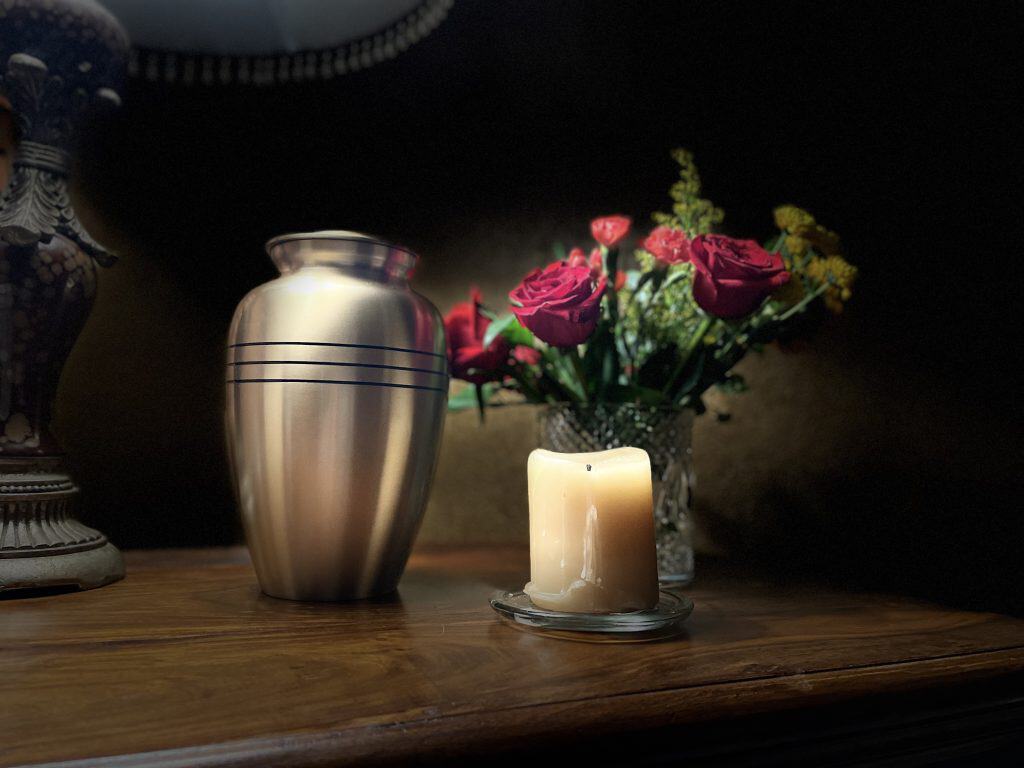
The choice between burial and cremation is deeply personal, shaped by religious beliefs, cultural traditions, family expectations, and — increasingly — financial reality. In Michigan, cremation has overtaken burial as the most common choice, driven by cost, flexibility, and changing attitudes toward death and memorial.
A burial involves significantly more expense: a casket, a cemetery plot, a grave liner or vault, opening and closing fees, a headstone, and, often, embalming for viewing. When you add these together, a traditional burial in Michigan easily exceeds $10,000.
A cremation, by comparison, can cost as little as $1,099 through a DFS Memorials provider in Detroit or Grand Rapids. For families who want the dignity of a service but need to manage costs, cremation with a separate memorial offers the best of both worlds.
The sections below walk through each option in detail, including what’s typically included, what costs to watch for, and how Michigan’s unique funeral laws affect your choices.
Direct Cremation: The Most Affordable Option in Michigan

Direct cremation is the simplest and most affordable cremation option. The deceased is taken into the care of a licensed funeral director, the necessary paperwork is completed, the medical examiner signs the cremation authorization, and the body is cremated without a formal viewing or service. The cremated remains are then returned to the family in a temporary container (usually a cardboard or plastic box) or in a basic urn if one is selected.
What’s included in a direct cremation package:
- Basic services of the funeral director and staff
- Transfer of the deceased from the place of death
- Refrigeration and shelter of remains
- Completion of the death certificate and cremation permit
- A simple combustible cremation container
- The cremation process itself
- Return of the cremated remains in a temporary container
Direct Cremation Prices in Michigan Today
The best prices for direct cremation in Michigan start from $1,099 through the DFS Memorials network in the Detroit and Grand Rapids metro areas. The state average, according to Funeralocity 2026 data, is $2,264 — but prices range from under $1,300 in competitive urban markets to well over $3,000 in rural areas and through some traditional funeral homes.
Because Michigan requires a licensed funeral director for every disposition, you cannot go directly to a crematory as you can in some other states — but you can still save significantly by shopping around among cremation-focused providers.
Direct cremation is popular precisely because it separates the legal requirements of disposition from the emotional and personal elements of memorializing a loved one. Families can hold a memorial service whenever and wherever they choose — at home, in a park, at a lake, or in a place of worship — often at a fraction of the cost of a funeral home service.
For a detailed breakdown of cremation pricing by city, including Detroit, Grand Rapids, Warren, Ann Arbor, Lansing, and Flint, see our dedicated Cremation Costs in Michigan guide.
Cremation with Memorial Service
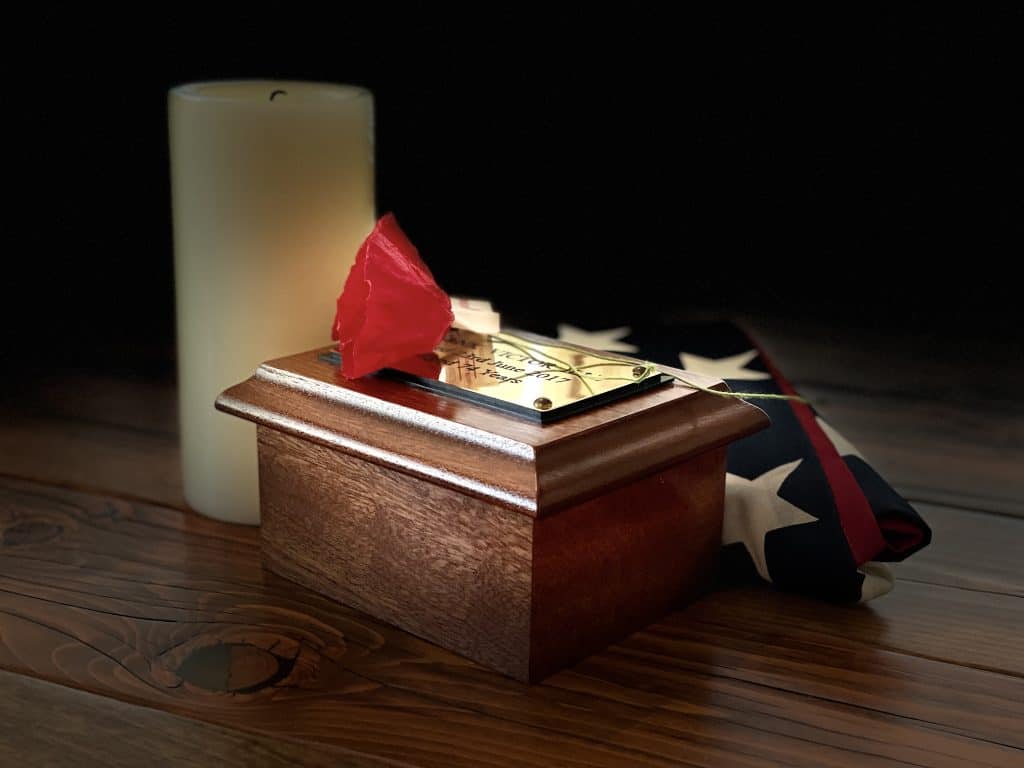
A cremation with a memorial service combines the affordability of direct cremation with a meaningful gathering to honor the deceased. Cremation takes place first, and the memorial service is held afterward — typically with the urn as a focal point, though some families hold memorials without the cremated remains. This option gives families full flexibility on timing and location.
Typical Cost Range: A cremation memorial service in Michigan typically costs $2,000 to $5,249, depending on the venue, catering, officiant, and any ancillary services. The memorial service itself can be held at a funeral home (most expensive), a place of worship, a community hall, a family home, or outdoors at a meaningful location — costs vary dramatically based on your choices.
What affects the cost: The biggest cost drivers are venue rental, catering, printed programs, flowers, music, an officiant’s honorarium, and a cremation urn. Families on tight budgets can significantly reduce expenses by hosting the memorial at home or at a church, skipping professional catering, and choosing a modest urn ($50–$200) rather than an elaborate one.
Full-Service Cremation Funeral
A full-service cremation funeral is a traditional funeral with all the familiar rituals — visitation, viewing, ceremony, and family gathering — followed by cremation instead of burial. This option allows families to have the full experience of a traditional funeral without the ongoing costs of a cemetery plot, a grave liner, and a headstone.
What’s typically included:
- Embalming and cosmetic preparation for viewing
- Use of the funeral home facilities for visitation and service
- A casket (many funeral homes offer rental caskets for cremation services at significant savings)
- Hearse and transportation
- Coordination of the funeral director and staff
- Cremation after the service
- Return of the cremated remains to the family
Typical Cost: A full-service cremation funeral in Michigan averages $6,548, according to recent data from Funeralocity. This includes embalming, visitation, funeral service, and cremation — but does not include flowers, catering, or a premium casket. Rental caskets for cremation services typically save $1,000–$3,000 compared to purchasing a traditional casket.
Money-saving tip: Ask your funeral director about “cremation caskets” specifically designed for this type of service, or rental caskets where the body is displayed in a high-quality casket during the viewing but cremated in a simple combustible container. Both approaches can dramatically reduce the overall cost without compromising the dignity of the service.
Traditional Burial in Michigan
A traditional burial remains the choice of many Michigan families, particularly those with strong religious or cultural ties to in-ground interment. Traditional burial typically includes embalming, a viewing or visitation, a formal funeral ceremony, a hearse procession to the cemetery, and graveside committal services. While deeply meaningful, a full traditional burial is also the most expensive funeral option in Michigan — averaging $8,950 or more before cemetery costs are added.
What’s included in a traditional burial package:
- Basic services of the funeral director and staff
- Transfer of the deceased from the place of death
- Embalming and cosmetic preparation
- Use of facilities for viewing and visitation
- Use of facilities and staff for the funeral ceremony
- Hearse and additional vehicles
- A casket (metal or hardwood)
- Graveside committal service
Additional cemetery costs: Beyond the funeral home charges, families must also pay for the cemetery plot ($1,000–$5,000+ depending on location), a grave liner or burial vault (typically required, $1,200–$2,500), opening and closing fees ($800–$1,500), and a headstone or grave marker ($1,000–$5,000+). When all these elements are added together, a complete traditional burial in Michigan often exceeds $12,000.
Affordable burial option: Families who want in-ground burial but need to manage costs can choose a simpler burial package — often called an “immediate burial” or “simple burial.” This typically runs around $5,004 in Michigan and includes basic funeral director services, transportation, a simple casket, and graveside committal, without embalming, viewing, or a formal indoor ceremony. The cemetery plot and related fees are still additional.
Michigan’s Unique Funeral Laws
Michigan has some of the most restrictive funeral laws in the United States. Understanding these rules is essential because they directly affect what you can and cannot do when arranging a funeral — and they explain why certain money-saving options available in other states are not available in Michigan.
Funeral Director Required for Every Disposition: Under Michigan Compiled Laws (MCL 339.1801 and MCL 333.2843), a licensed funeral director must supervise every final disposition in Michigan — whether burial, cremation, or body donation. This means families cannot arrange a fully independent home funeral or take a body directly to a crematory, as they can in many other states. A licensed funeral director must be involved in the chain of custody, filing of paperwork, and transportation to the place of disposition.
Funeral Director Certifies the Death Certificate: Michigan is the only state in the nation where the funeral director (not the physician or medical examiner alone) must certify the death certificate before it can be filed. The attending physician certifies the medical cause of death, but the funeral director signs off on the disposition and files the certificate with the local registrar. This is codified in MCL 333.2843 and the Michigan Public Health Code.
Medical Examiner Approval for Cremation: In Michigan, the county medical examiner must sign the authorization for final disposition before any cremation (MCL 333.2848). This allows time for identification, paperwork, and any potential legal investigation. The waiting period cannot be waived.
Embalming Not Required: Despite the strict FD supervision rules, Michigan does NOT require embalming in most circumstances. Embalming is only required if the body is to be transported by common carrier (airline), if there is an extended delay before disposition, or if a funeral home policy requires it for viewing. Refrigeration is an acceptable alternative for short-term preservation, and direct cremation does not require embalming.
What this means for families: Because every disposition must be handled by a licensed funeral director, Michigan families cannot achieve the rock-bottom “direct-to-crematory” pricing available in some other states. However, competitive pricing still exists — and the DFS Memorials network in Detroit and Grand Rapids offers direct cremation for $1,099, well below the state average, demonstrating that significant savings are possible even within Michigan’s strict regulatory framework.
Funeral Caskets: Options, Pricing, and Savings
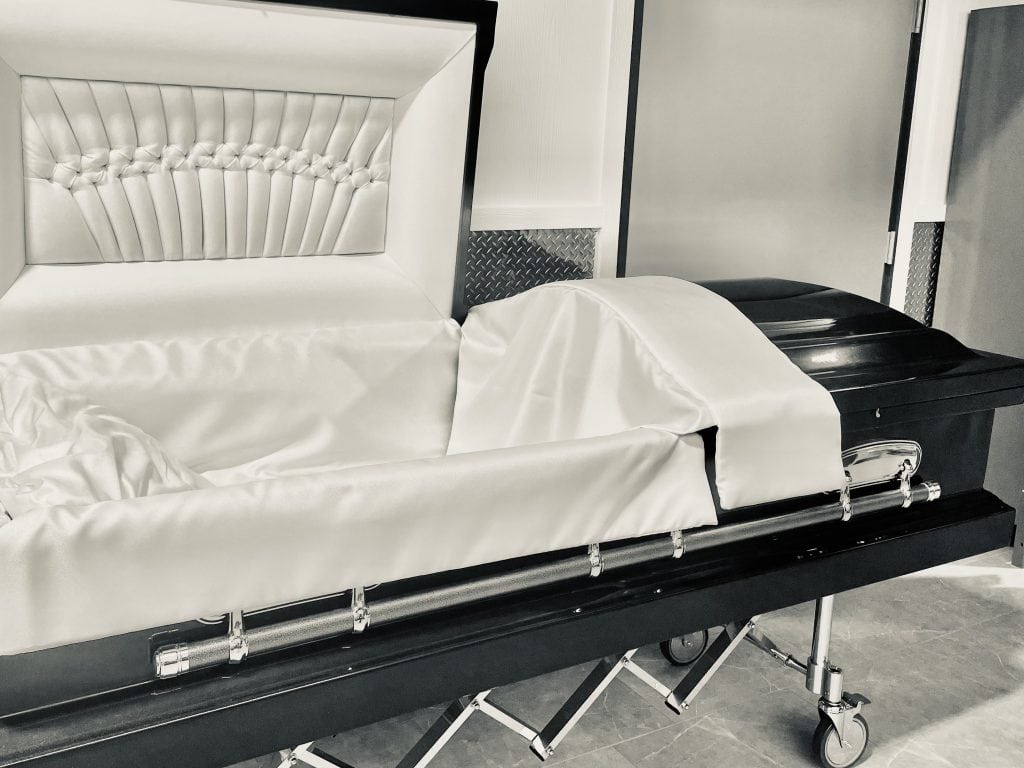
The casket is often the single most expensive item in a traditional funeral. Understanding your options — and your rights under federal law — can save families thousands of dollars.
Typical Casket Price Ranges: Caskets at Michigan funeral homes typically range from $1,500 for basic metal or cloth-covered caskets to $10,000 or more for premium hardwood (mahogany, cherry, walnut) or bronze/copper models. A mid-range steel casket usually runs $2,500–$4,500, and a solid oak casket $3,500–$6,000. Most families spend between $2,000 and $5,000 on a casket.
Your Right to Buy a Casket Elsewhere: Under the FTC Funeral Rule, funeral homes in Michigan (and nationwide) must accept a casket that you purchase from a third-party vendor without charging you an extra handling fee. You can buy caskets online from retailers like Costco, Walmart, Amazon, or dedicated casket websites — often at 40–70% less than funeral home prices. The funeral home is legally required to use the casket you provide.
Rental Caskets for Cremation Services: If you’re holding a traditional service before cremation, ask about renting a casket. The body is placed in a rental casket (with a removable inner liner) for the viewing and service, then transferred to a simple combustible container for the cremation itself. Rental caskets typically cost $800–$1,500, compared with $3,000+ for a similar-quality casket.
Our detailed casket buying guide explains what to look for and how to save.
Cemetery Costs in Michigan
Cemetery expenses are often overlooked when families compare funeral prices, but they can add $3,000–$8,000 or more to the total burial cost. Understanding cemetery charges in advance helps you avoid sticker shock and budget realistically.
Plot Costs: A single grave plot in a Michigan cemetery typically costs $1,000–$3,000 in smaller rural and township cemeteries, and $2,500–$6,000+ in larger metropolitan cemeteries near Detroit, Grand Rapids, Ann Arbor, and Lansing. Prestigious memorial parks can charge $8,000 or more for premium locations. Already own a plot you no longer need? See our guide to buying and selling cemetery plots.
Grave Liner or Burial Vault: Most Michigan cemeteries require either a grave liner or a burial vault (a sealed concrete box that prevents the grave from settling). Grave liners cost $1,000–$1,500; burial vaults cost $1,500–$4,000+. This is a cemetery requirement, not a legal one — Michigan state law does not mandate vaults, but most cemeteries do.
Opening and Closing Fees: Cemeteries charge separately for digging and filling the grave — typically $800–$1,500 for a standard weekday service, with premium charges for weekends and holidays.
Headstones and Grave Markers: A simple flat bronze or granite marker starts around $800–$1,200. Upright granite headstones typically run $2,000–$5,000, and elaborate custom monuments can cost $10,000 or more.
Our grave markers and memorials guide covers options and pricing in detail.
Cremation Memorialization: If you choose cremation but still want a permanent memorial, many Michigan cemeteries offer columbarium niches ($500–$2,500) and cremation garden plots ($500–$2,000) at a fraction of the cost of a traditional burial plot.
Green Burial and Alkaline Hydrolysis in Michigan
For families looking for eco-friendly alternatives to traditional burial and flame cremation, Michigan offers a small but growing number of green burial grounds and alkaline hydrolysis (water cremation) providers.
Green Burial in Michigan: Green burial — also called natural burial — involves interring the body without embalming, in a biodegradable casket or shroud, directly in the earth without a grave liner or vault. Michigan has several certified green burial grounds and a growing number of hybrid cemeteries that offer green burial sections. Green Burial Council–certified providers in Michigan include sites in Ann Arbor, Grand Rapids, and Northern Michigan. Costs are typically comparable to or lower than traditional burial, with plots ranging from $1,000 to $3,500. Our green burial directory lists providers and certified grounds nationally.
Alkaline Hydrolysis (Water Cremation): Michigan legalized alkaline hydrolysis — also known as aquamation, water cremation, or flameless cremation — in 2014. This process uses water, alkali, heat, and pressure to break down the body, leaving only bone fragments that are processed into a white powder similar to traditional cremated remains. Alkaline hydrolysis uses about 90% less energy than flame cremation and produces no direct emissions. A handful of Michigan funeral homes now offer this service, typically priced at $2,000–$3,500, slightly higher than direct flame cremation. Ask local providers whether they offer aquamation if this is important to your family.
Natural Organic Reduction (Human Composting): Human composting, or natural organic reduction, is NOT currently legal in Michigan as of 2026. Only a handful of states (Washington, Colorado, Oregon, Vermont, California, New York, Nevada, Arizona, and Maine) have legalized this practice. Legislation has been introduced in Michigan, but has not yet passed.
Pre-Planning Your Funeral in Michigan

Pre-planning your funeral while you’re healthy gives you control over your final wishes, locks in current pricing, and spares your loved ones from making expensive decisions under the weight of grief. It’s one of the most thoughtful gifts you can give your family.
Discussing Your Wishes: Begin with candid conversations with close family about what matters to you — burial or cremation, religious preferences, the type of service you’d like, whether you want flowers or donations to a charity, and any specific music, readings, or traditions. Write these preferences down and share copies with your executor and closest family members.
Pre-Need Funeral Contracts in Michigan: Michigan regulates pre-need funeral contracts under the Prepaid Funeral and Cemetery Sales Act (MCL 328.211). Funds from pre-need contracts must be placed in an escrow account with 100% of the principal protected, and the contract must be transferable if you move. Despite these protections, pre-need contracts carry risks — the funeral home could close, prices may change, and transferring across state lines can be complicated. Read the contract carefully and understand your cancellation rights before signing.
Funeral Savings Account or POD Account: A safer alternative to pre-need contracts is a dedicated savings account or a Payable-On-Death (POD) account at your bank. You keep control of the money, it passes directly to your beneficiary outside of probate, and your family can use the funds for whatever funeral arrangements they choose at the time. Learn more about funeral savings options that protect your funeral funds.
Organize Important Documents: Create a file containing your life insurance policies, cemetery plot deed (if applicable), pre-need contract, Social Security card, birth certificate, marriage license, will, advance directive, and a list of accounts and beneficiaries. Let your executor know where to find it.
Death Away from Home: Funeral Shipping
If a loved one passes away outside Michigan — while traveling, vacationing, or living elsewhere — transporting the body back home involves significant cost and coordination between two funeral homes.
Domestic Funeral Shipping Costs: Transporting remains within the United States typically costs $3,000–$5,000 or more. This includes embalming (required for air transport), an air tray or shipping container, airline fees, ground transportation on both ends, permits, and coordination fees between the two funeral homes. Because of this expense, many families choose to cremate at the place of death and have the cremated remains shipped home. Cremated remains can be mailed via USPS Priority Mail Express at a small fraction of the cost.
International Funeral Shipping: If death occurs outside the United States, costs can escalate to $6,900–$15,000 or more, depending on the country, consular requirements, and document translation.
Our funeral shipping guide walks through the process and cost-saving options.
Travel Protection Plan: For travelers and snowbirds, the DFS Memorials Travel Protection Plan offers affordable coverage — from just $450 for an individual lifetime policy — that covers transportation costs when death occurs 75+ miles from home, including international coverage. It provides up to $5,000 in transportation reimbursement.
Learn more about Travel Protection Plan coverage.
End-of-Life Support & Death Doula Services in Michigan

End-of-life planning in Michigan is about more than legal paperwork or funeral arrangements — it’s about comfort, dignity, and clarity during one of life’s most vulnerable transitions. End-of-life support professionals known as death doulas or end-of-life doulas provide non-medical, holistic guidance to individuals and families before, during, and after death. Their services can include advance care planning, emotional and spiritual support, legacy projects, family advocacy, vigil and bedside presence, and grief support.
Michigan has a growing community of trained death doulas working alongside hospice teams or supporting families independently. They help reduce fear, ease decision-making, and ensure that a person’s final wishes are understood and honored.
Families can explore local end-of-life doulas and support services through our Michigan Death Doula Directory.
Veteran Benefits and Military Funeral Honors
Michigan is home to hundreds of thousands of veterans, and those who served honorably are entitled to significant funeral benefits that can substantially reduce out-of-pocket costs.
National Cemetery Burial: Eligible veterans can be buried at no cost at a VA national cemetery. Michigan’s two national cemeteries are:
• Great Lakes National Cemetery, 4200 Belford Road, Holly, MI 48442
• Fort Custer National Cemetery, 15501 Dickman Road, Augusta, MI 49012
Both cemeteries provide the gravesite, opening and closing of the grave, a government-furnished headstone or marker, a burial flag, and perpetual care — all at no cost to the family. The family is responsible for the casket (or urn) and transportation to the cemetery.
Michigan State Veterans Cemeteries: Michigan also operates state veterans cemeteries that offer similar benefits to eligible veterans and their spouses. Check with the Michigan Department of Military and Veterans Affairs for current locations and eligibility.
Military Funeral Honors: Every honorably discharged veteran is entitled to military funeral honors at no cost — including the playing of Taps, the folding and presentation of the American flag, and a two-person uniformed honor guard. The funeral home coordinates honors with the appropriate military branch. Call the VA at 1-800-827-1000 for eligibility and arrangements.
VA Burial Allowance: Eligible veterans’ families may also receive a VA burial allowance — typically $948 for non-service-connected deaths and up to $2,000 for service-connected deaths (plus a plot allowance for burial in a non-VA cemetery). Contact the VA or visit www.va.gov for current benefit amounts and eligibility.
Body Donation in Michigan
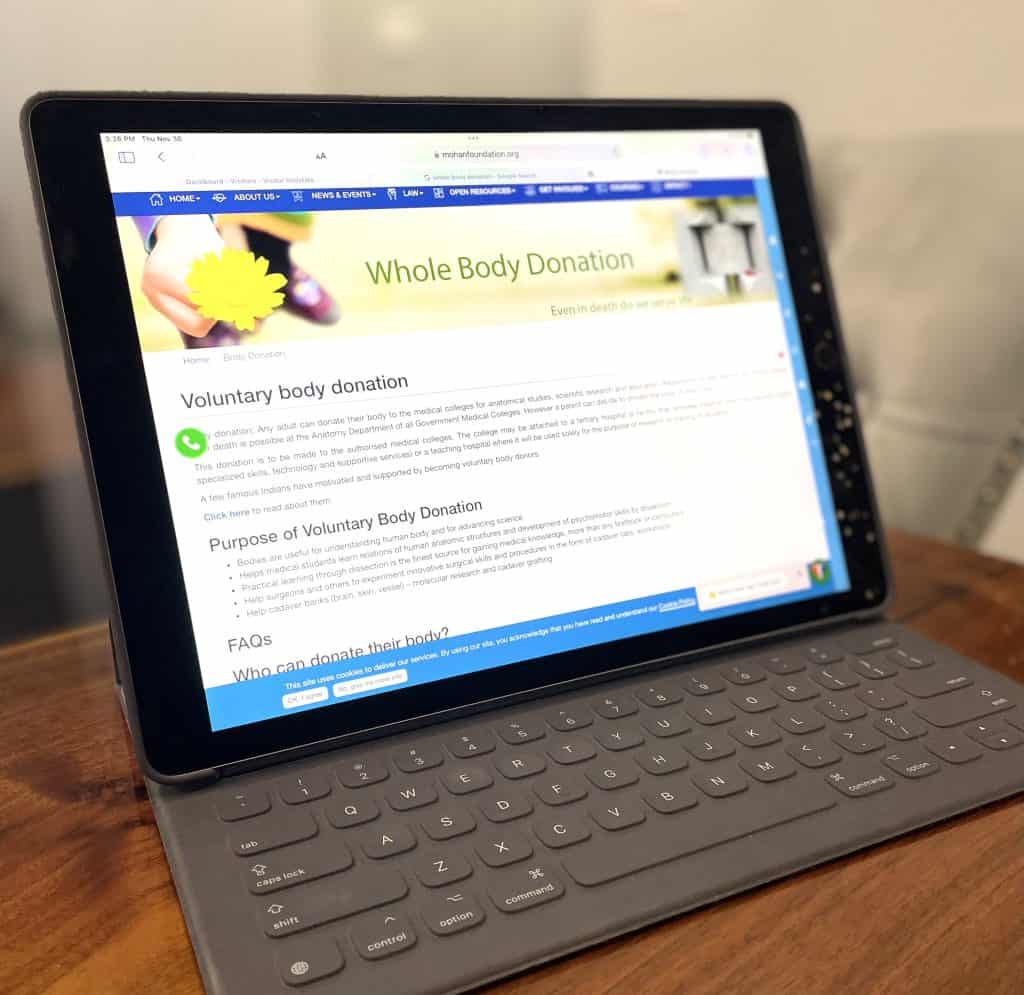
Whole-body donation to medical research and education is a meaningful end-of-life choice that also eliminates most funeral expenses. In most cases, the receiving medical school handles transportation, cremation after anatomical study, and return of the cremated remains to the family at no charge.
Michigan Medical School Body Donation Programs: Michigan has three university-based body donation programs:
Wayne State University School of Medicine — Body Bequest Program
540 E. Canfield, Scott Hall, Room 7374
Detroit, MI 48201
Phone: (313) 577-1188
Michigan State University — Willed Body Program
Department of Radiology, College of Human Medicine
East Lansing, MI 48824
Phone: (517) 884-0624
University of Michigan Medical School — Anatomical Donations Program
3767 Medical Sciences Building II
Ann Arbor, MI 48109
Phone: (734) 764-4359
Each program has its own registration process, eligibility criteria, and restrictions (for example, bodies that have undergone extensive surgery, have certain infectious diseases, or have sustained severe trauma may not be accepted). National body donation organizations such as Science Care and MedCure also accept donations from Michigan residents. Because acceptance is never guaranteed at the time of death, always have a backup disposition plan.
Our body donation guide explains the full process and how to register.
Ash Scattering and Memorial Options After Cremation

After cremation, Michigan law gives families significant freedom to handle and memorialize cremated remains. With the Great Lakes, 79 state parks, and vast stretches of forest and farmland, Michigan offers some of the most beautiful scattering locations in the country.
Legal Options for Cremated Remains in Michigan:
• Keep the remains at home in an urn or container
• Bury the cremated remains in a cemetery plot or family grave
• Inter the remains in a columbarium niche
• Entomb the remains in a mausoleum
• Scatter on private land with the owner’s permission
• Scatter on public land using common-sense guidelines
• Divide the remains among keepsake urns for family members
• Incorporate the remains into memorial jewelry or glass art
Scattering on the Great Lakes: The Great Lakes are not treated like the ocean. The familiar “burial at sea” rules (scatter at least three nautical miles from shore, then report it to the EPA within 30 days) come from an EPA general permit under the Marine Protection, Research, and Sanctuaries Act that applies only to ocean waters. The EPA confirms that scattering in lakes, rivers, and other inland waters is not regulated under that permit, and it directs families to their state instead. So there is no federal three-mile rule and no EPA report to file for a scattering on Lake Michigan, Lake Huron, Lake Superior, or Lake Erie.
Michigan law does not set specific rules for scattering in the Great Lakes. If you have questions about a particular stretch of water, contact the Michigan Department of Environment, Great Lakes, and Energy (EGLE), and check the rules of whoever manages the shoreline or launch you plan to use, such as a state park, a national lakeshore, a city beach, or a marina. Use only a fully biodegradable urn and natural flowers, and leave nothing behind. Many Michigan charter boat captains offer scattering trips on all four of Michigan’s Great Lakes.
Michigan State Parks: The Michigan DNR allows cremated remains to be scattered in state parks, recreation areas, and boating access sites, from Tahquamenon Falls to the Porcupine Mountains, under set conditions. Keep it a small, private gathering away from busy areas. Scatter only in undeveloped areas at least 50 feet from mowed picnic areas, swimming beaches, parking lots, boat launches, playgrounds, and campgrounds. Disperse the ashes completely (no piles and no burial), and leave no urn or container behind.
National Parks and Lakeshores: Sleeping Bear Dunes, Pictured Rocks, and Isle Royale are run by the National Park Service, not the DNR, so they need separate permission. Sleeping Bear Dunes National Lakeshore allows scattering, with limitations, through a free Memorial Permit: email [email protected] or call (231) 326-4741 before your visit. Contact Pictured Rocks or Isle Royale directly for their conditions.
Cemetery Memorialization: Many Michigan cemeteries now offer dedicated cremation columbarium niches and memorial scattering gardens with small plaques or benches as a permanent tribute.
Our detailed ash scattering guide covers regulations and memorialization options.
Death Certificates: What You Need to Know

Death certificates are essential legal documents that families need for estate settlement, insurance claims, Social Security benefits, pension applications, property transfers, and many other purposes. Understanding Michigan’s specific requirements helps you avoid delays and order the right number of copies upfront.
Michigan Death Certificate Costs: The first certified copy of a Michigan death certificate costs $34, and each additional copy ordered at the same time costs $16. Orders from the state Vital Records office take 4–8 weeks by mail; same-day or expedited service is available for an additional fee. Local county clerks’ offices often provide faster turnaround — typically same-day or next-day service — at the same per-copy pricing.
Who Files the Death Certificate: As discussed earlier, Michigan is unique: the licensed funeral director in charge of the disposition must file the death certificate with the local registrar within 72 hours of the death. The attending physician or medical examiner provides the medical cause of death, and the funeral director certifies the disposition details.
Where to Obtain Death Certificates: Certified copies can be obtained from the Michigan Department of Health and Human Services — Vital Records, or from the county clerk in the county where the death occurred.
Michigan Vital Records
Michigan Department of Health and Human Services
P.O. Box 30721
Lansing, MI 48909
Phone: (517) 335-8666
How Many Copies Do You Need? Most families underestimate how many certified death certificates they’ll need. Order at least 10–15 certified copies upfront. You’ll need originals for: each life insurance policy, Social Security benefits, veterans benefits, bank account closures, investment accounts, mortgage payoff, vehicle title transfer, pension benefits, and government benefit applications. Most authoritative bodies require an original certified death certificate, not a photocopy. Having extra copies available prevents costly repeat orders later.
Financial Assistance for Funeral Costs in Michigan

If funeral costs feel overwhelming, several federal, state, and community programs can help Michigan families manage expenses. It’s worth exploring every available resource before committing to a funeral plan you can’t afford.
Michigan State Emergency Relief (SER) — Burial Services: Michigan’s Department of Health and Human Services administers the State Emergency Relief program, which provides financial assistance for burial and cremation expenses for eligible low-income residents. Through the SER Burial Services program, DHHS can pay up to $555 toward funeral home charges and up to $145 toward cemetery or crematory costs — for a combined maximum of approximately $700. To qualify, the deceased’s estate and the family arranging services must meet income and asset limits. Applications must be submitted within 10 business days of the funeral. Contact your local Michigan DHHS office or apply through MI Bridges.
Social Security Death Benefit: The federal government provides a one-time lump-sum death payment of $255 to the surviving spouse or dependent children of a deceased worker who had enough Social Security credits. While modest, this benefit can be applied directly to funeral costs. Contact the Social Security Administration at 1-800-772-1213 to apply.
Veterans Benefits: As discussed above, VA burial benefits for eligible veterans include free burial at a national cemetery, military honors, a burial flag, and in some cases a cash allowance of $948–$2,000+ toward funeral costs. Contact the VA at 1-800-827-1000.
Crime Victim Compensation: If your loved one died as a result of a violent crime, the Michigan Crime Victim Services Commission can reimburse funeral and burial expenses up to $8,000. Apply through the Michigan Department of Health and Human Services Crime Victim Services Commission.
Religious Organizations and Nonprofits: Churches, synagogues, mosques, and community organizations often have benevolent funds to help members with funeral expenses. Reach out to your religious community for guidance. Some nonprofits also provide direct funeral assistance to qualifying families.
Affordable Cremation Services: DFS Memorials providers in Michigan offer direct cremation for as low as $1,099 in Detroit and Grand Rapids — making professional cremation accessible even to families with limited budgets. This is often the single most effective way to reduce total funeral costs without compromising dignity or legal compliance.
Our comprehensive guide to affording a funeral explores every available assistance program, money-saving strategy, and resource for families in financial hardship.
Conclusion: Planning Ahead Brings Peace of Mind
Understanding funeral costs and options empowers you to make informed decisions that honor your loved one while respecting your family’s financial situation. Michigan’s unique legal framework — with its strict requirement that a licensed funeral director be involved in every disposition — means some of the cheapest options available in other states (such as direct-to-crematory arrangements) are not possible here.
But within those rules, significant savings are still achievable: affordable direct cremation through a DFS Memorials Provider is a fraction of the state average, and cremation with a family-hosted memorial service delivers a meaningful farewell at a manageable cost.
The key is education and intentional planning. Take time to understand what services actually cost, what’s legally required versus optional, and where you have room to negotiate. Don’t hesitate to ask funeral directors for itemized General Price Lists — the FTC Funeral Rule protects your right to this information, and Michigan’s competitive markets in Detroit, Grand Rapids, Ann Arbor, Lansing, and Flint mean prices vary dramatically for identical services.
If you’re pre-planning, act now: document your wishes, set aside funds in a POD account or a dedicated savings account, and talk openly with family about what you want. If you’re arranging services in the aftermath of a loss, give yourself permission to shop around, ask hard questions, and choose less expensive alternatives that still honor the person you love. Cremation, green burial, and body donation are all legal, meaningful, and affordable paths — and Michigan families have access to all of them. With the information in this guide, you can navigate funeral planning with confidence and clarity.
Resources and Related Guides
Cremation Costs in Michigan – Full cremation pricing, regulations, and provider options in Michigan
Michigan Funeral Homes – Directory of licensed funeral homes across Michigan with contact information
Caskets: Styles, Pricing, and Savings – Comprehensive guide to casket options, materials, and cost-effective purchasing
Grave Markers and Monuments – Headstone styles, materials, design options, and pricing
Funeral Shipping and Transporting a Body – Guide to arranging body transport, costs, and international shipping considerations
Body Donation – Information about donating your body to medical schools and research institutions
Ash Scattering – Guide to scattering cremains, regulations, and memorial options
Death Doulas in Michigan – Directory of end-of-life support professionals and death doula services in Michigan
DFS Memorials Michigan – Affordable cremation services starting from $1,099 in Detroit and Grand Rapids
Green Burial Directory – Find green and natural burial grounds and eco-friendly funeral providers
Michigan Department of Licensing and Regulatory Affairs (LARA) – Bureau of Professional Licensing; regulates funeral directors and handles consumer complaints. Phone: (517) 241-0199
Funeral Consumers Alliance of Michigan – Consumer advocacy and funeral pricing information for Michigan residents. Visit funerals.org for local chapter details.
FTC Funeral Rule – Detailed explanation of your federal consumer rights when arranging funeral services
Sending flowers to a funeral in Michigan? Our funeral flowers guide covers what to send, typical costs, card messages, and how to make sure flowers reach the funeral home in time.


